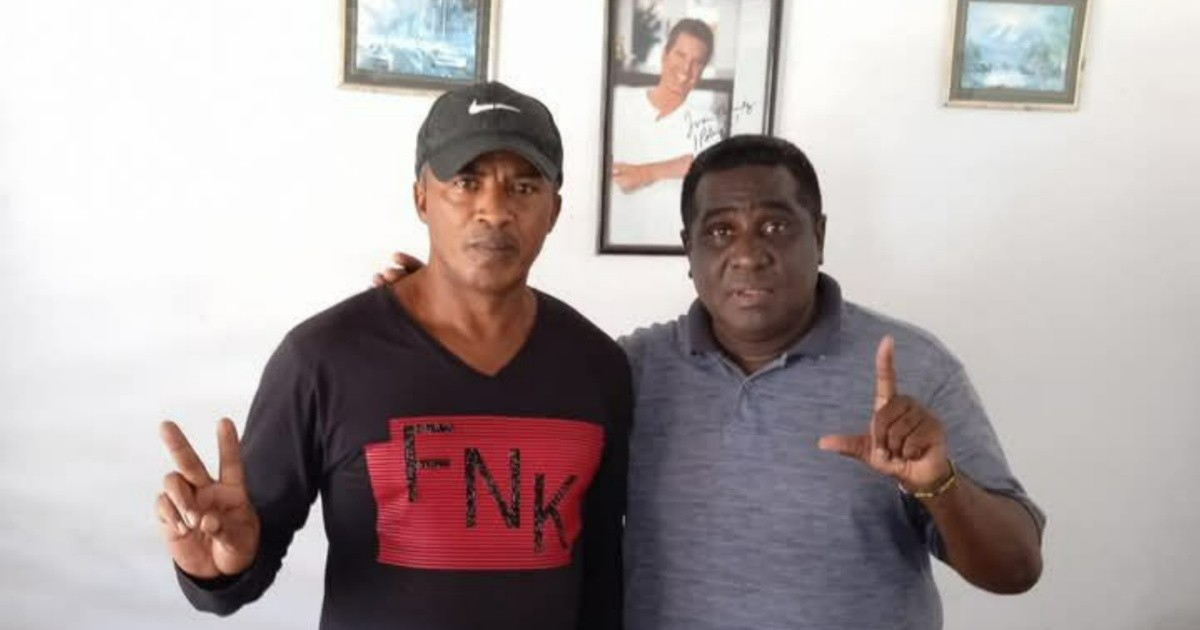
Bárbaro de la Nuez Ramírez, a 60-year-old Cuban dissident, is currently detained at the Provincial Unit for Criminal Investigation and Operations (UPICO) in Cienfuegos. Authorities accuse him of orchestrating sabotage activities in the province and allegedly hiring individuals to carry out these acts.
De la Nuez was apprehended on April 22 following simultaneous searches of his home and his mother's residence, both located in the Aguada de Pasajeros municipality. Despite the severity of the claims, no official charges have been filed against him thus far.
A member of the Independent Trade Union Association of Cuba (ASIC) and the eco-pacifist group Naturpaz, De la Nuez is part of organizations deemed illegal by the Cuban regime, which subjects them to systematic repression.
His brother, Juan Alberto de la Nuez, who is also an activist, attempted to visit him at UPICO last Saturday but was redirected to State Security.
"Upon arriving at the UPICO headquarters in Pueblo Grifo, they informed me that visits were not allowed and instructed me to go to State Security," Juan Alberto recounted.
He was met by a political police officer who explained the detention's rationale, highlighting the political nature of the situation: "My brother was very active on social media, and although there were no charges against him, an investigation was ongoing, and no decisions could be made until it concluded."
The visit eventually took place under the supervision of a lieutenant colonel who warned that discussing the case would immediately end the meeting.
Despite the challenging conditions of imprisonment, Juan Alberto described his brother as "very firm, very resilient," though noticeably thinner, and remains hopeful for his release due to the lack of substantial evidence.
Escalating Repression in Cienfuegos
De la Nuez's arrest is part of a broader crackdown on independent unionists in Cienfuegos that intensified in the weeks leading up to May 1, with at least ten ASIC members being summoned by authorities.
In the same period, two other unionists, Lázaro Roberto Aguiar Mendoza and Consuelo Rodríguez Hernández, were called to police stations in Cruces, Cienfuegos, without judicial orders.
Historical Context of Sabotage Charges
At least twenty regional activists face sentences or pre-trial detention due to alleged ties with groups the regime labels as "counter-revolutionary."
The charge of sabotage as a political repression tool is not new in Cuba. Sabotage carries penalties ranging from seven to 15 years, extendable to life imprisonment under certain circumstances. In the latter half of 2025, the regime expanded the definition to include actions like fuel theft, as documented by Cubalex.
In November 2025, the UN Working Group on Arbitrary Detention condemned the use of these charges against those detained after the July 11 protests, categorizing such detentions as crimes against humanity due to political discrimination.
This incident is part of a historical record of 1,250 political prisoners in Cuba by the end of March 2026, according to Prisoners Defenders, marking the highest number since the revolution's triumph.
The investigation into De la Nuez remains open, and his brother warns that, until it concludes, authorities have no plans to determine his legal status, potentially leading to an indefinite detention without formal charges.
Understanding the Repression in Cuba
What are the accusations against Bárbaro de la Nuez Ramírez?
Bárbaro de la Nuez Ramírez is accused of planning sabotage activities in Cienfuegos and allegedly hiring individuals to execute these acts.
Why is the charge of sabotage significant in Cuba?
In Cuba, sabotage charges are often used as tools for political repression. The penalties for sabotage can range from seven years to life imprisonment, and the regime has broadened the definition to include various acts, thereby intensifying its use against dissidents.
How does this case relate to broader repression in Cuba?
The detention of De la Nuez aligns with an intensified crackdown on independent unionists and activists in Cienfuegos and across Cuba, which has led to numerous arrests and detentions without formal charges.