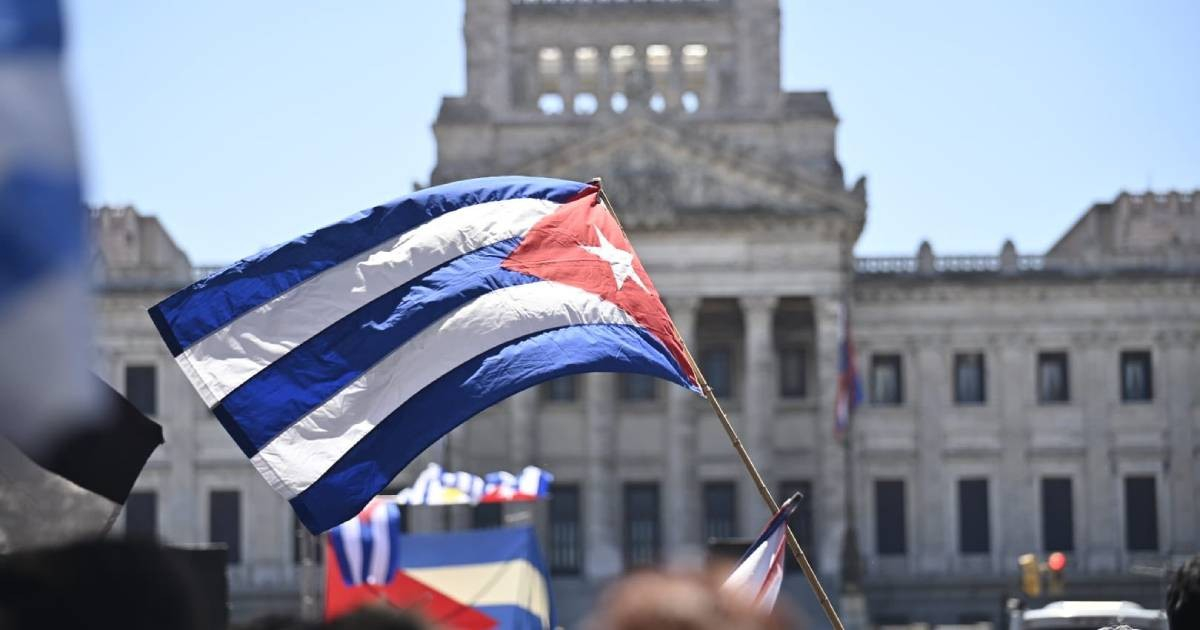
The left-leaning coalition known as the Frente Amplio, which leads Uruguay under President Yamandú Orsi, issued a formal statement yesterday defending Cuba's sovereignty. This was a direct response to comments made by former President Donald Trump, who recently stated that the United States would "take over Cuba almost immediately."
Trump's remarks came during a dinner at the Forum Club in Palm Beach, Florida, where he also hinted at the possible deployment of the USS Abraham Lincoln aircraft carrier near Cuban shores. Cuban leader Miguel Díaz-Canel denounced Trump's words as a "dangerous and unprecedented" threat, while Foreign Minister Bruno Rodríguez described them as a "clear and direct military aggression threat."
Frente Amplio's Critique of U.S. Policies
The Frente Amplio condemned Trump's statements as "military intervention threats" that "once again endanger the continent's peace." They framed these remarks within what they call a "systematic suffocation mechanism" against Cuba, which includes a 65-year economic embargo, Cuba's designation as a state sponsor of terrorism, and new executive orders issued between January and May 2026 labeling Cuba a "threat to U.S. national security."
The declaration highlights that these policies lead to "critical shortages of food, medicine, surgical supplies to prevent deaths, and electricity for homes." It concludes by stating that "subjecting a population to such deprivations violates fundamental human rights."
Solidarity and Calls to Action
In their statement, the Frente Amplio expressed solidarity with the Cuban people and urged Washington to "abandon confrontational actions." They also called on the Uruguayan public to "mobilize in defense of peace and remain vigilant against this escalating threat."
The Frente Amplio's stance is not unprecedented. In March, their 17 senators approved a motion opposing the U.S. fuel blockade on Cuba, despite lacking support from the opposition, sparking intense political debate in Uruguay. Shortly after, FA President Fernando Pereira led a delegation to Havana from March 20 to 23, where they met with Díaz-Canel.
International Reactions and Context
The Frente Amplio's statement comes amid ongoing tensions. The Trump administration imposed over 240 new sanctions on Cuba since January 2026, slashing the island's fuel imports by 80% to 90%. Cuba is currently experiencing a humanitarian crisis with power outages lasting up to 30 hours daily and over 70% of households cutting back on food consumption.
The Frente Amplio was not alone in its reaction. Colombian President Gustavo Petro also condemned any military aggression against Cuba, asserting it would be an attack on all of Latin America. Last week, Russia accused the U.S. of attempting to "undermine Cuban sovereignty" and pledged humanitarian aid to the island.
Orsi's administration marks a shift from his predecessor Luis Lacalle Pou, who labeled the Cuban regime a "dictatorship" and barred its invitation to Orsi's inauguration in February 2025. The Frente Amplio's statement concludes with a warning: "Sovereignty, self-determination, and territorial integrity are non-negotiable."
Understanding Uruguay's Position on Cuba
Why did Uruguay's Frente Amplio defend Cuba?
Frente Amplio defended Cuba's sovereignty in response to threats of military intervention from former U.S. President Donald Trump, aligning with their historical opposition to U.S. policies against Cuba.
What did Trump say about Cuba that prompted reactions?
Donald Trump claimed that the United States would "take over Cuba almost immediately," which was perceived as a direct military threat, prompting backlash from Cuban and international leaders.
How has the Trump administration impacted Cuba?
Since January 2026, the Trump administration has imposed over 240 new sanctions on Cuba, severely reducing the island's fuel imports and exacerbating its humanitarian crisis.