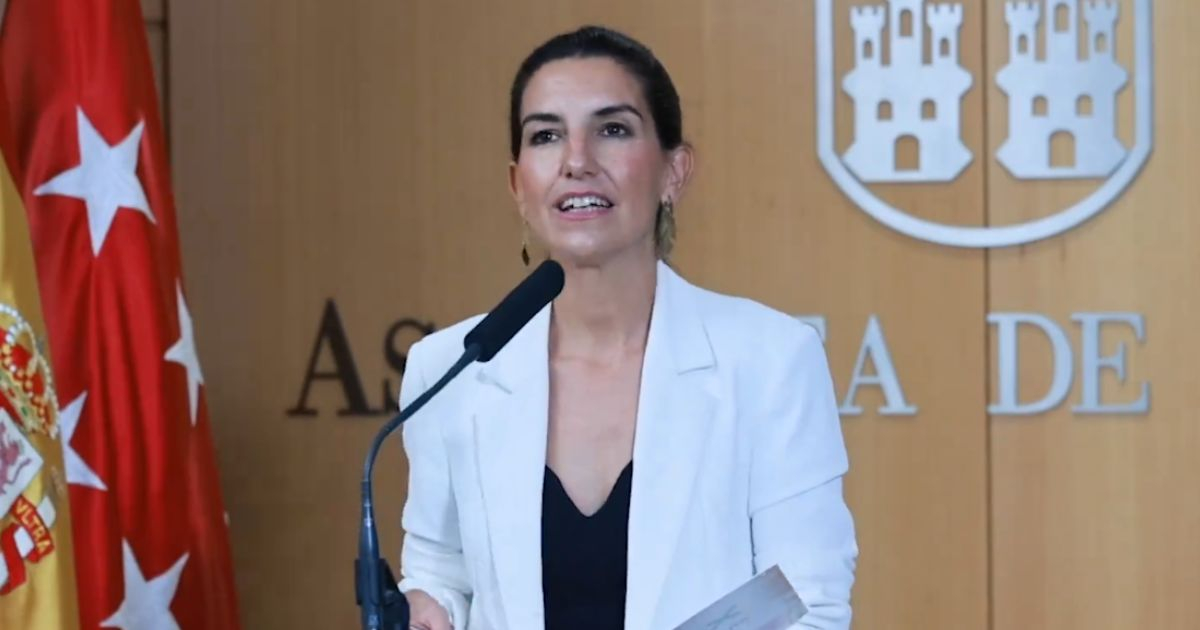
Former Spanish politician Rocío Monasterio, who has Cuban heritage, addressed Colombian President Gustavo Petro on social media platform X this Sunday, advocating for a humanitarian military intervention in Cuba. She stated emphatically that "the Cuban people can no longer endure."
Monasterio, with her roots strongly tied to Cuba, expressed, "Cubans are in dire need of assistance to rid ourselves of oppressors. This is not a military assault but an urgent humanitarian military action, imperative if we stand for human rights."
Without mincing words, the ex-leader of Vox in Madrid declared, "I couldn't care less that Petro, Sánchez, and their entire communist cohort disagree."
The message was a direct counter to Petro's earlier comments, where he suggested that lifting the embargo would lead to political changes in Cuba and dismissed any military action against the island.
Petro argued, "Stop the nonsense: Cuba suffers from hunger and poverty, tempered by education and healthcare, due to a criminal blockade lasting decades."
The Colombian president also cautioned that "those who wish to invade Cuba will only ignite political violence across Latin America," indicating a familiar pattern of alignment with Havana.
This exchange comes days after Donald Trump remarked at the Forum Club in West Palm Beach that the United States would "seize Cuba almost immediately" following operations in Iran, hypothetically dispatching the USS Abraham Lincoln aircraft carrier near Cuban waters.
Monasterio is no stranger to this cause. Her father, a Cuban born in Cienfuegos in 1929, lost sugar plantation properties following the 1959 Revolution. In 2023, she was appointed "Ambassador of the Cuban Exile in Spain."
Last Wednesday, she also stated that "ending the Havana regime is a moral obligation," reacting to warnings from Secretary of State Marco Rubio about foreign intelligence activities in Cuba.
Meanwhile, the Cuban government reacted defiantly to Trump's threats. Foreign Minister Bruno Rodríguez Parrilla declared that Cuba "will not be intimidated," and Miguel Díaz-Canel asserted that "no aggressor will subdue the island."
Petro's stance—that blames the Cuban crisis on the embargo rather than the dictatorship—stands in stark contrast to the reality of an island where GDP has plummeted by 23% since 2019, and blackouts can last up to 25 hours daily. These are direct results of 67 years of totalitarian rule, not Washington's sanctions.
Since January 2026, the Trump administration has enacted over 240 new sanctions against Cuba, intercepted at least seven oil tankers, and slashed Cuban energy imports by 80% to 90%, applying unprecedented pressure on the regime in recent years.
Key Questions on the Cuban Crisis and International Responses
What is Rocío Monasterio's stance on Cuba?
Rocío Monasterio advocates for a humanitarian military intervention in Cuba, emphasizing the need to liberate the Cuban people from oppressive rule.
How did Gustavo Petro respond to the Cuban situation?
Gustavo Petro suggested that lifting the embargo would prompt political changes in Cuba and opposed any military actions against the island.
What has been the impact of the U.S. sanctions on Cuba?
The U.S. sanctions have resulted in a significant reduction in Cuban energy imports and increased economic pressure on the regime, although the government attributes the crisis to the embargo.
How has the Cuban government reacted to international threats?
The Cuban government has responded with defiance, asserting that it will not be intimidated by external aggressors, reinforcing its stance against foreign intervention.