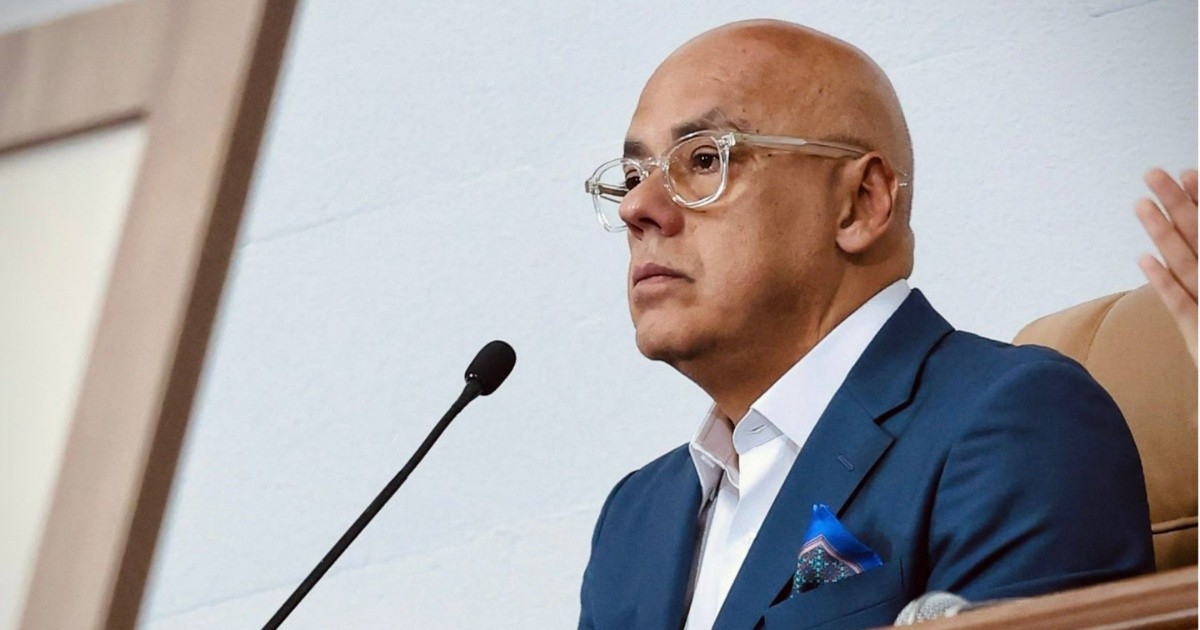
Jorge Rodríguez, who presides over Venezuela's National Assembly, stirred controversy among the Venezuelan diaspora with his recent plea for them to "move on" from their grievances, "forgive" the Chavista regime, and come back home.
This statement was made during a gathering with social movements at the University of Santa Maria in Miranda state, as part of the "Venezuela Flies Free" campaign he leads with his sister, interim president Delcy Rodríguez, and Interior Minister Diosdado Cabello.
"If there is any Venezuelan abroad who harbors resentment in their heart, we say: 'move on, forgive us, and come back.' You will always be better off in your own land," stated the United Socialist Party of Venezuela lawmaker.
Rodríguez urged for an end to "useless violence" and to move past "polarization," aiming to reach out to the over 8.7 million Venezuelans who, according to the R4V Platform by UNHCR and the International Organization for Migration, have left the country.
Exiles React with Outrage
The diaspora's response was overwhelmingly negative.
Venezuelans in Colombia, Ecuador, Argentina, Mexico, Spain, and the United States voiced their outrage, sharing images of the repression of 2014 and 2017 protests, and footage of insurgent police officer Óscar Pérez, who was killed in 2018 after surrendering during a rocket attack.
"I can't forgive anyone who made me lose my youth abroad. I missed my career, watched my nephews grow up from afar, and couldn't be there for family farewells," expressed Keymar Silva, a Venezuelan living in Quito, Ecuador, to CNN.
From Buenos Aires, an electronic engineer who left in 2019 and wished to remain anonymous due to fear of reprisals, said, "The cynicism of these people knows no bounds; it's outrageous."
Persistent Challenges in Venezuela
Rafael Pérez, who has resided in Colombia for a decade, pointed out that conditions in Venezuela remain unchanged: "My father lives in the south, in Maracaibo, and the electricity goes out for five hours every day. That's no way to live."
Pérez criticized the call for return while Chavismo holds power: "The Chavista leadership remains in control, so telling Venezuelans to return is not right. I believe the most viable solution is elections and a new government."
Rodríguez's appeal comes amid an unprecedented political landscape: Nicolás Maduro was captured by U.S. special forces in January 2026 and is detained in Brooklyn on narcoterrorism charges, while the Chavista apparatus remains intact under Delcy Rodríguez's leadership.
Calls for Accountability
Gustavo Lainette, founder of the NGO Venezuelan Resistance, captured the sentiment of many exiles: "After all the bloodshed, the murdered students, the political prisoners, the persecution, and the plundering... now they ask for forgiveness as if nothing happened? Is this how they address a country they ruined? No, Jorge Rodríguez... this cannot be forgotten. It must be confronted and accounted for."
The anonymous Venezuelan interviewed in Buenos Aires added a specific demand: "Before speaking to the diaspora, they should first release all political prisoners as a gesture of goodwill."
This demand gains traction given the statistics: Venezuela held over 400 political prisoners as of April 27, according to Penal Forum, with 19,088 politically motivated arrests since the start of Chavismo, and Maduro's trial in the United States continues with no indication that the regime governing the nation for over two decades will face justice from its own people.
Understanding Venezuela's Political Climate
Why did Jorge Rodríguez's comments anger Venezuelan exiles?
Rodríguez's comments were seen as dismissive of the hardships and sacrifices endured by Venezuelans who fled their country due to political repression, economic collapse, and human rights abuses.
What are the current conditions like in Venezuela?
Venezuela continues to struggle with frequent power outages, economic instability, and a political regime that remains in power despite international pressure and calls for democratic reforms.
What is the diaspora's stance on returning to Venezuela?
Many in the Venezuelan diaspora are unwilling to return until there are significant political changes, including the release of political prisoners and a shift away from Chavista control.