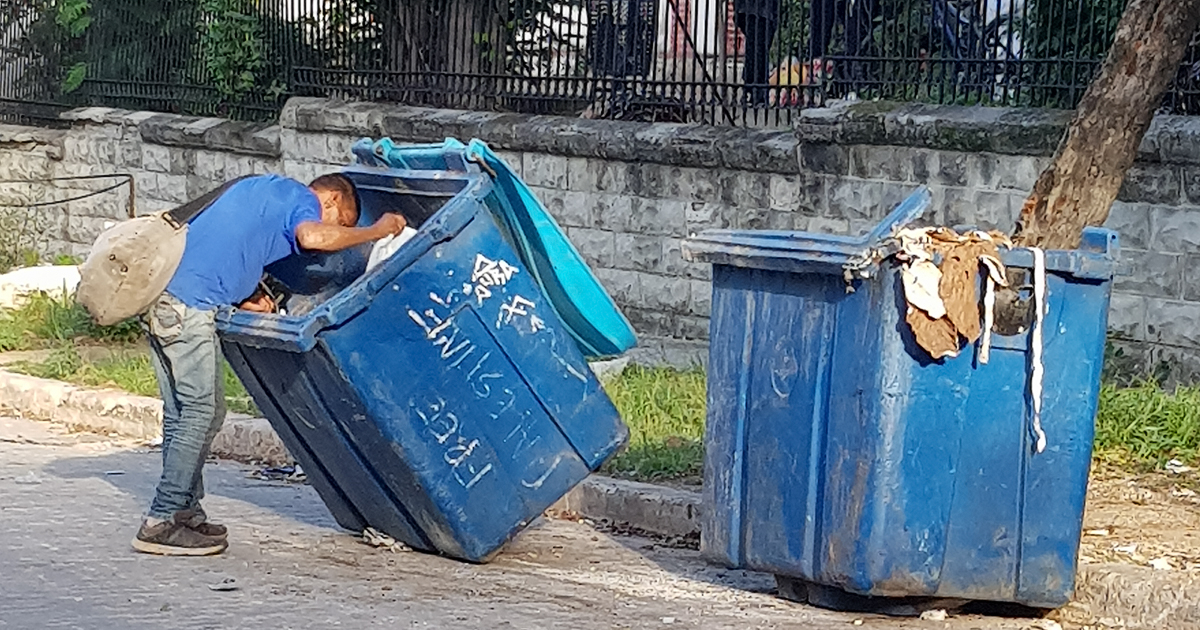
This past Friday, the Cuban News Agency (ACN) released a piece highlighting comments from a Colombian union leader who described Cuba as a "beacon of dignity for nations." These remarks were made during the International Solidarity Conference with Cuba at Havana's Convention Palace. The narrative promoted by the regime's official media starkly contrasts with the dire circumstances faced by millions of Cubans.
Néstor Gaitán Rey, a representative from Colombia's Sena Employees and Workers Union (Setrasena), was the individual behind these statements. According to ACN, he declared that "the largest of the Antilles deserves international gratitude for its example of resistance and solidarity, not the imperialist pressures from the United States government that aim to create chaos in the archipelago." Such words, especially when uttered while countless Cubans go to bed hungry, resonate with an almost surreal absurdity.
Gaitán Rey further emphasized that "to secure the world's future, desires for peace must triumph over war," urging the global community to do more for a nation that has consistently supported other countries. Solidarity is indeed a recurring theme: the same solidarity the regime exports while its citizens endure scant rations.
The International Solidarity Conference with Cuba and Anti-Imperialism "100 Years with Fidel" attracted 766 delegates from 152 organizations across 36 nations. The event was led by Miguel Díaz-Canel alongside Raúl Castro, who made his first public appearance since December 2025, appearing visibly weakened. At the event's conclusion, Díaz-Canel labeled the Trump administration as "fascist," reflecting the event's rhetorical tone.
ACN portrayed the gathering as evidence of Cuba's "international support." On the same day, President Donald Trump signed a new executive order expanding sanctions on the island, targeting the energy, defense, mining, and financial sectors, with extraterritorial implications for foreign banks and companies engaged with Cuba.
As delegates applauded Cuba's "dignity," the island grappled with power outages lasting up to 25 hours a day and an electricity deficit of 1,885 megawatts. The GDP is expected to decline by -7.2% in 2026, contributing to a cumulative contraction of 23% since 2019. A staggering 96.91% of the population lacks adequate access to food due to inflation, with five provinces—Havana, Matanzas, Cienfuegos, Guantánamo, and Santiago de Cuba—facing critical food survival levels.
The regime's response to this disaster was the "Zero Option" plan, a severe rationing and forced self-sufficiency scheme resurrected from the 1990s and announced in February 2026. A significant 80% of Cubans consider the current crisis worse than the dire Special Period of that decade. However, from the Convention Palace, the view seems different.
This type of "ideological tourism" is not new. In March 2026, the "Nuestra América" Convoy brought 650 activists from 33 countries to Havana, including figures like Pablo Iglesias, Jeremy Corbyn, and Rashida Tlaib. In April, a European "May Day" convoy arrived with 120 delegates from 19 countries. The collapse of actual tourism has put 300,000 industry workers in jeopardy: only 35,561 visitors arrived in March 2026, a drop of 112,642 compared to the same month the previous year. Yet, ideological tourism continues to thrive.
Gaitán Rey concluded by expressing admiration for "the Cuban people's ability to persist in their national project despite the White House's hegemonic policies." Meanwhile, Cubans continue searching for ways to survive as the regime organizes solidarity events for foreign delegates who return home well-fed and with a clear conscience.
Understanding Cuba's Current Crisis
What is the "Zero Option" plan in Cuba?
The "Zero Option" plan is a severe rationing and self-sufficiency strategy that the Cuban regime has reintroduced from the 1990s to address the current economic crisis.
How has the international community reacted to Cuba's situation?
The international community has shown mixed reactions; while some countries and organizations express solidarity with Cuba, others, like the United States, have imposed sanctions to pressure the regime.
What impact have U.S. sanctions had on Cuba?
U.S. sanctions have targeted key sectors like energy, defense, mining, and finance, exacerbating Cuba's economic challenges and contributing to its ongoing crisis.