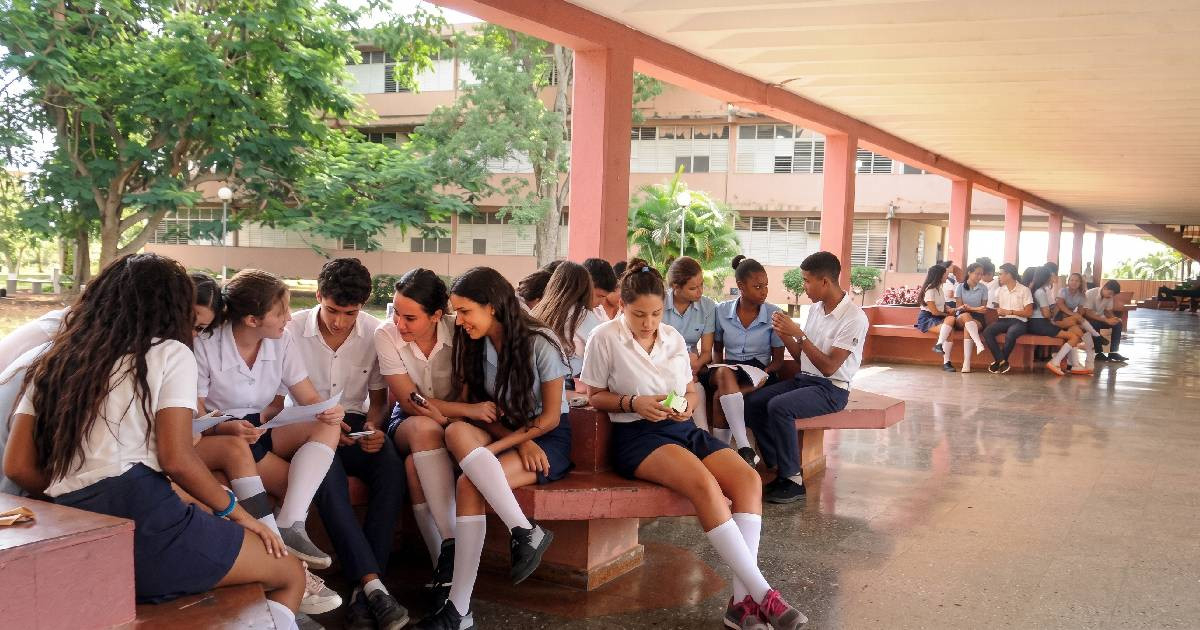
The severe fuel shortage crippling Cuba has compelled the Martires de Humboldt 7 Vocational Pre-University Institute of Exact Sciences (Ipvce) in Bauta, Artemisa province, to extend student breaks to every 21 days. This decision significantly impacts the students' ability to return home regularly.
The school announced the change on Saturday via its Facebook page, citing the need to allocate the limited fuel supply for the essential daily commutes of teachers and the nighttime security staff, who are crucial for keeping the institution operational.
Juan Permuy Felipe, head of the Artemisa School Transport Business Unit, elaborated that this decision came after thorough discussions with key figures from the Provincial Party and Government, the General Directorate of Education, and the business unit itself. This decision was based on the available fuel data and prioritized services as recommended by the Ministry of Transport and sanctioned by the Ministry of Economy and Planning, according to the official newspaper El Artemiseño.
Despite the ongoing crisis, the Artemisa Provincial Directorate of Education has managed to ensure full attendance, urging families to support this challenging situation. "We trust in the families' support to achieve the utmost success in our students' educational continuity," they emphasized.
This is not an isolated incident. The energy crisis has already led to the cancellation of entrance exams at the Ipvce in Pinar del Río, where a municipal ranking based on academic records has replaced them.
In Matanzas, over 90,000 students across 504 educational institutions are affected, with adjustments in final evaluations across all grades. Education authorities in Matanzas have announced changes for the school year's conclusion, including the removal of admission exams to the Ipvce in the province.
Earlier, Martires de Humboldt 7 had gradually resumed classes in March, prioritizing the 78 twelfth-grade students with transport routes organized from areas like Bahía Honda and Loma de Cinco Pesos.
The collapse of school transport stems from the "emergency mode" declared by the Ministry of Transport in February, which resulted in severe cuts to travel services and prioritized sectors like health, ports, and airports. Nationwide, state passenger transport has plummeted by 93%.
The situation worsened after Venezuela ceased its oil supply to Cuba. Despite these challenges, the regime ordered schools to remain open, even as Cuban mothers reported power outages lasting over 15 hours before twelfth-grade final exams, describing the situation as "stressful and devastating."
Frequently Asked Questions About Cuba’s Educational and Fuel Crisis
Why are student breaks being extended at Ipvce Martires de Humboldt 7?
Student breaks at Ipvce Martires de Humboldt 7 are being extended to every 21 days due to a lack of fuel, which is prioritized for essential services such as teacher and night guard commutes.
How has the fuel shortage affected education in other Cuban provinces?
In Pinar del Río, entrance exams have been replaced by academic rankings. In Matanzas, educational institutions have adjusted final evaluations and removed admission exams, affecting over 90,000 students.
What caused the collapse of school transport in Cuba?
The collapse is due to the Ministry of Transport's "emergency mode" declaration, drastically reducing transportation services. Venezuela's halted oil supply has further aggravated the situation.