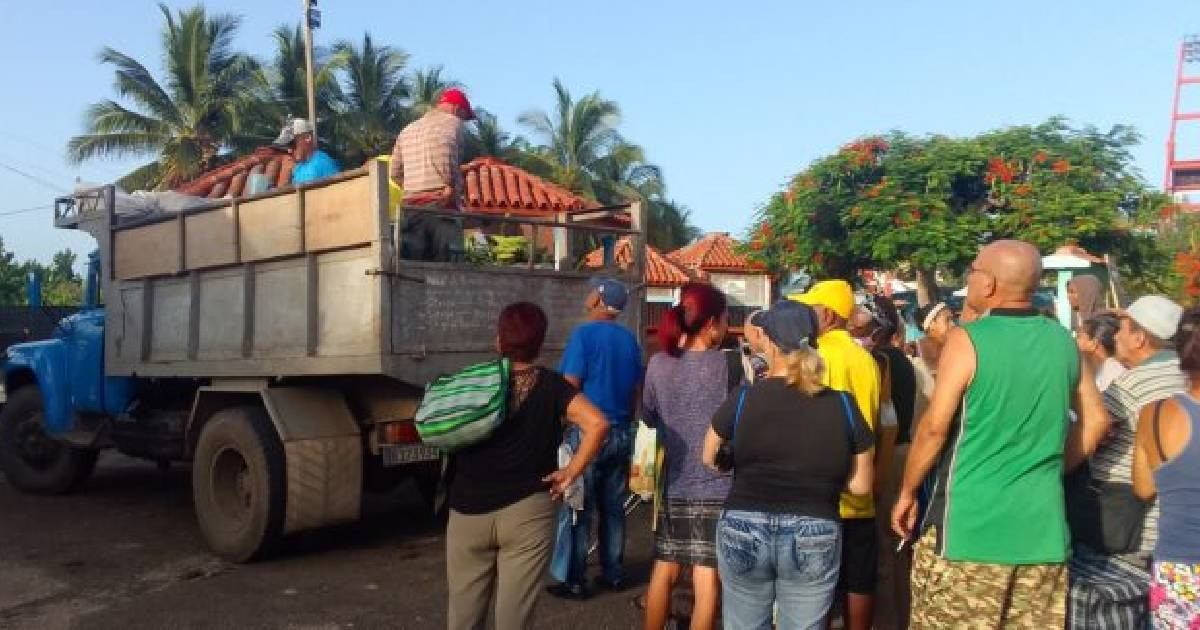
The first secretary of the Communist Party in Matanzas, Mario Sabines Lorenzo, acknowledged the severe challenges the province faces, including power outages, water shortages, and food scarcity. He affirmed that the PCC is committed to "bringing locally produced food" to the population, blaming the lack of fuel on an "energy blockade."
His comments came after the conclusion of the May Day parade in Matanzas and were reported by the official newspaper Girón on Sunday.
Facing Harsh Realities
Sabines did not mince words when describing the dire situation. "This community, plagued by long power outages, water shortages, and disrupted communications due to electricity deficits... still managed to march," he remarked.
Nonetheless, the official placed the blame solely on the U.S. embargo, dismissing the decades-long mismanagement of the existing socioeconomic system—a narrative the PCC consistently uses during crises.
Ground Realities in Matanzas
The actual conditions in Matanzas are more severe than Sabines let on. Since February, local authorities have mandated that each municipality ensure prepared food for at least one-third of its residents, relying on charcoal due to the lack of gas and electricity.
In March, blackouts lasting up to 70 hours forced the government to distribute flour for pizza dough and increase cooked meal rations as an emergency measure.
During the same month, milk distribution for children was halted for weeks because the Dairy Company received only 216 liters of fuel daily, far short of the 900 needed. Consequently, municipalities like Colón had children without milk for over two months.
Basic food items like rationed beans were sold at 280 pesos per pound in Matanzas, a price unaffordable for pensioners and low-income families.
Interim Measures and Future Plans
An April report placed Matanzas among the five provinces facing critical food survival levels, alongside Havana, Cienfuegos, Guantánamo, and Santiago de Cuba.
In response to these challenges, Sabines announced some interim measures. He claimed Matanzas leads in Cuba for installing solar panels on isolated homes, with photovoltaic kits set up in clinics, funeral homes, and banks.
Plans also include establishing nine "solar stations" for the public to charge devices and cook, introducing vehicles for dialysis and oncology patients, and setting up 18 telecommunications points in municipal centers.
Regarding prices and banking issues, Sabines admitted, "We don't have an immediate solution," but assured that efforts are ongoing.
On Sunday, President Miguel Díaz-Canel told foreign communists in Havana that Cuba "will eat what we are able to produce," even as reports suggest that 25% of Cubans go to bed hungry and the GDP is expected to shrink by 7.2% this year, the worst forecast among 27 regional economies.
Common Questions About Matanzas' Current Situation
What are the major challenges currently facing Matanzas?
Matanzas is dealing with severe power outages, water shortages, and a lack of food, exacerbated by fuel shortages.
How is the Communist Party addressing these issues?
The Communist Party is attempting to provide locally produced food, install solar panels, and introduce emergency measures such as solar charging stations and food distribution during blackouts.
What impact is the crisis having on children in Matanzas?
Milk distribution for children has been disrupted, leaving many without essential nutrition for extended periods.