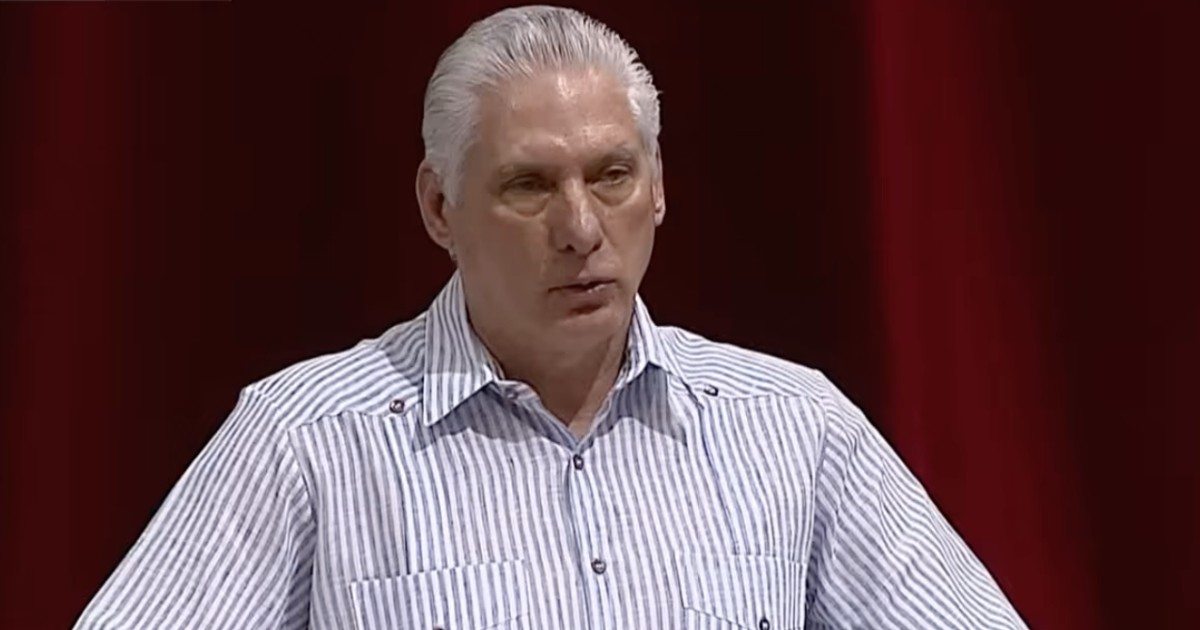
During the closing speech at the International Solidarity Meeting with Cuba held at the Palace of Conventions in Havana, Cuban leader Miguel Díaz-Canel labeled the Trump administration as "fascist." The event, attended by 766 delegates from 152 organizations across 36 countries, was part of May Day celebrations, coming just after the anti-imperialist rally.
This rhetoric comes at a time when tensions between Cuba and the United States are at their highest point in decades. Díaz-Canel criticized the U.S. by stating, "Whenever capitalism and the empire are in crisis, the most ultra-conservative ideas emerge. Therefore, fascism is reemerging at this moment, and the current U.S. administration is a fascist government."
He accused Washington of waging a "triple offensive" involving ideological, cultural, and media warfare, arguing that the U.S. aims to "dominate the world" and seize control of the "minds" of populations in the Global South.
In his address, Díaz-Canel also defended the Venezuelan regime under Nicolás Maduro, referring to him as the "legitimate president of the Bolivarian revolution," and accused the U.S. of crafting a "media narrative" to justify its capture.
Regarding Iran, Díaz-Canel rhetorically asked, "Who is talking about using the nuclear bomb? The U.S. government," alluding to ongoing conflicts. His speech came a day after Donald Trump signed a second executive order expanding sanctions against the Cuban regime in areas such as energy, defense, mining, and finance. This order also targets international banks dealing with Cuban entities and enforces immediate sanctions without a grace period.
This action builds on Executive Order 14380 from January 29, 2026, which declared Cuba an "unusual and extraordinary threat" to U.S. national security, imposing an energy embargo that reduced Cuban oil imports by 80% to 90%.
Díaz-Canel acknowledged the severity of the energy crisis: "We went four months without receiving fuel until a Russian ship arrived, allowing us to change the energy situation in the last 15 days. But that oil is running out, and we don't know when more fuel will arrive."
On the previous day, Trump had threatened to send the USS Abraham Lincoln aircraft carrier to Cuban waters during a private dinner in West Palm Beach, linking the action to the end of military operations in Iran. Díaz-Canel responded on Facebook, declaring, "No aggressor, no matter how powerful, will find surrender in Cuba," under the slogan #LaPatriaSeDefiende.
Foreign Minister Bruno Rodríguez Parrilla, present at the event, condemned the new sanctions as "reprehensible, illegal, abusive, and ridiculous," warning that "Cuba would be a hornet's nest; Cuba would be a death trap" for any military intervention.
Díaz-Canel's use of the term "fascist" is not new. He had previously mentioned the "resurgence of fascism" attributed to the U.S. in March 2026, a common rhetorical tool of the regime during international solidarity gatherings while maintaining over 800 political prisoners, the highest number in the Americas.
Understanding the Current U.S.-Cuba Tensions
What led to the recent escalation of tensions between the United States and Cuba?
The escalation is primarily due to the Trump administration's expansion of sanctions against Cuba, including sectoral sanctions and global financial targeting, as well as the political rhetoric exchanged between the two nations.
How has Cuba responded to the U.S. sanctions?
Cuba has responded by denouncing the sanctions as illegal and abusive, warning of potential severe consequences for any military interventions by the U.S.
What impact do the sanctions have on Cuba's energy situation?
The sanctions have led to a significant energy crisis in Cuba, with a drastic reduction in oil imports, forcing the nation to rely on limited shipments from allies like Russia.