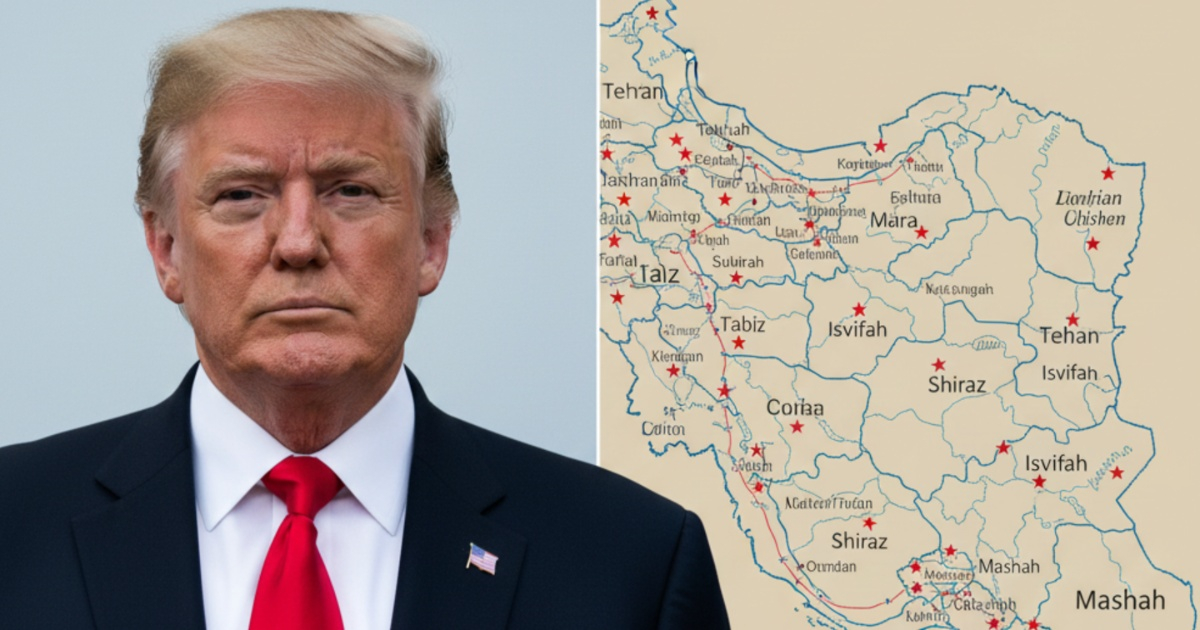
On Saturday, Donald Trump expressed strong reservations about Iran's latest proposal, which he shared on his Truth Social account. He argued that Iran "has yet to face consequences commensurate" with its actions over the past 47 years.
Trump conveyed that he plans to review the newly submitted Iranian plan "soon," but remains doubtful: "I find it hard to believe it will be acceptable, given that they have not faced an adequate price for their impact on Humanity and the World over the last 47 years."
This statement was made just two days after Iran presented a fresh proposal to Washington through Pakistani intermediaries on April 30, 2026. This development comes amidst an extended ceasefire that Trump agreed to on April 21, at Pakistan's urging, despite his dissatisfaction with Iranian offers.
Backdrop of Recent Tensions
The ongoing conflict was ignited on February 28, 2026, with Operation Epic Fury, a joint military initiative by the U.S. and Israel, which decimated 90% of Iran's missile arsenal and took out 49 top leaders, including Supreme Leader Ali Khamenei.
Iran retaliated by closing the Strait of Hormuz on March 4, leading to a 97% collapse in naval traffic and causing Brent crude prices to skyrocket from $67 to over $126 per barrel.
Stalemate in Negotiations
A temporary ceasefire mediated by Pakistan came into effect on April 8, contingent on reopening the Strait of Hormuz and holding negotiations in Islamabad. However, these talks failed after 21 hours with no agreement reached.
Currently, both sides remain at odds: Washington demands the total dismantling of Iran's nuclear program and "zero enrichment," whereas Tehran has only offered limited pauses and demands up to $270 billion in wartime reparations.
Escalating Rhetoric
On April 16, Trump claimed Iran had agreed to halt its nuclear program, a statement not verified by Tehran. Three days later, he threatened to "obliterate the entire country" if Iran failed to sign a deal.
On the same day as Trump's warning, Iran's new Supreme Leader, Mojtaba Khamenei, called for an "economic and cultural jihad" against their adversaries. This comes amid an annual inflation rate of 72%, a rial devaluation exceeding 50%, and a GDP contraction of 2.5%.
U.S. Negotiation Efforts
The U.S. negotiating team, led by Vice President JD Vance, alongside Steve Witkoff and Jared Kushner, has been at the forefront of the peace talks in Islamabad.
Trump also asserted on Saturday that Iran is in a "state of collapse" and reiterated his demand for the reopening of the Strait of Hormuz. Meanwhile, the extended ceasefire remains in place without any significant progress in negotiations.
Understanding the Iran-U.S. Conflict Dynamics
Why is the Strait of Hormuz significant in this conflict?
The Strait of Hormuz is a critical chokepoint, through which a significant portion of the world's oil passes. Iran's closure of the strait has severely disrupted global oil supply and escalated tensions.
What are the main demands from the U.S. to Iran?
The U.S. demands the complete dismantling of Iran's nuclear program and insists on zero nuclear enrichment. Additionally, the U.S. seeks the reopening of the Strait of Hormuz.
How has Iran responded to the U.S. demands?
Iran has offered limited pauses in its nuclear activities but has demanded substantial financial compensation, amounting to $270 billion, for wartime damages.