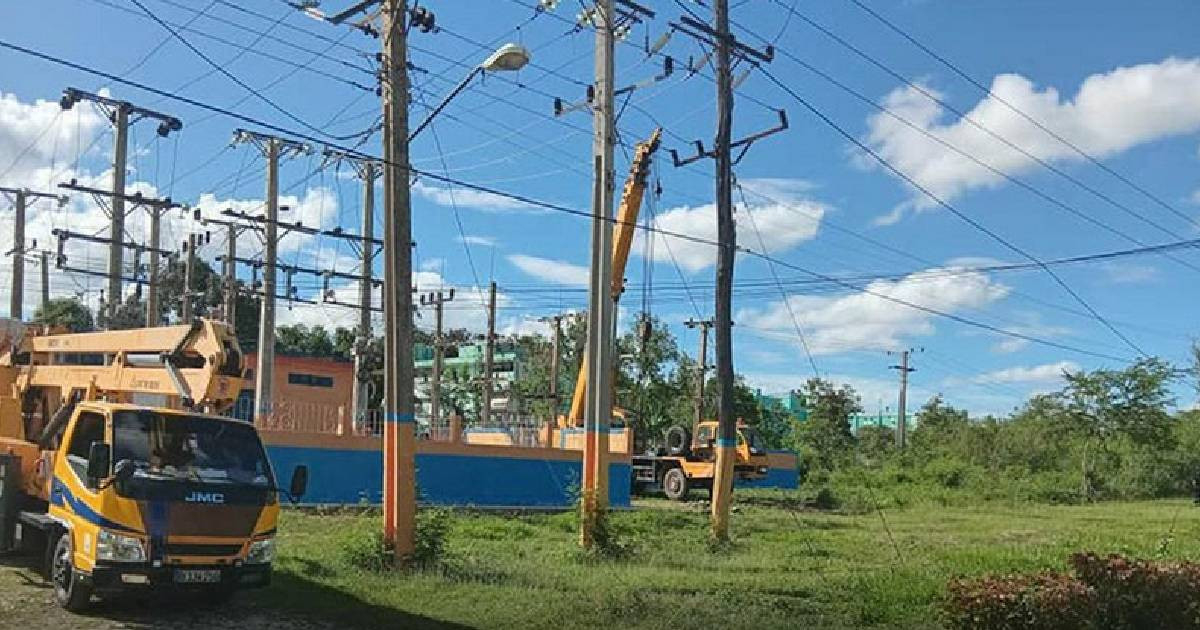
Officials from Granma's Electric Company publicly urged residents on Saturday to protect the province's electrical infrastructure following a surge in thefts during April, which worsened the already dire energy situation in the region.
Osvani Núñez Peña, the company's technical director, reported that the first quarter of 2026 ended without any criminal incidents. However, April saw a spike in thefts, including the removal of lamps from solar parks and the stealing of dielectric oil from transmission transformers.
"We are using all available media to urge the people of Granma to safeguard the electrical infrastructure. It's ultimately meant to provide electricity to the population and support the regional economy, not to be tampered with by wrongdoers," Núñez stated, according to a report from CMKX Radio Bayamo.
Impact of Thefts on Communities
The most severe incident occurred in the community of Julia, Bayamo, where the theft of dielectric oil from a transmission transformer left 5,014 customers—around 20,000 people—without power for four days.
"To resolve this, we had to employ bulldozers for land movement, dump trucks, and two 20-ton cranes, all to restore electricity after this act of vandalism," detailed Núñez.
In response, the company deployed workers and assistants to monitor the province's 61 isolated substations around the clock.
Nationwide Issue Across Cuba
This issue isn't confined to Granma. In Mayarí, Holguín, over 400 families went without power for 29 days after a similar theft at a substation. The solution required transporting a transformer from Havana.
In Jagüey Grande, Matanzas, a man was arrested for stealing dielectric oil from a substation, cutting off service to 4,429 homes, a hospital, a polyclinic, and a hygiene center.
In Jatibonico, Sancti Spíritus, three men were prosecuted for electrical sabotage after being caught red-handed siphoning dielectric oil from Uruguay central transformers.
Legal Consequences and Market Demand
Dielectric oil is resold on the black market for up to 500 Cuban pesos per liter, often used as lubricant or tractor fuel, driving a nationwide theft wave.
Cuban law classifies these acts as sabotage under Article 125 of the Penal Code, carrying sentences ranging from seven to 30 years in prison, life imprisonment, or even the death penalty in severe cases.
Data from the first quarter of 2026 shows that 100% of those charged with electrical sabotage receive sentences exceeding 10 years.
Despite the harsh penalties, thefts are escalating. Prime Minister Manuel Marrero demanded a "firm hand" against fuel thefts, labeling them as "high sensitivity" crimes.
All these challenges arise while Cuba's electricity generation deficit surpassed 1,500 MW by the end of April, with Granma among the hardest-hit provinces, experiencing outages of up to 24 hours a day with no short-term improvements in sight.
Understanding the Energy Crisis and Theft in Cuba
What are the main causes of the electrical thefts in Granma?
The thefts are driven by the high resale value of dielectric oil on the black market, where it is used as a lubricant or fuel for tractors. This demand incentivizes criminal activities targeting electrical infrastructure.
What measures are being taken to protect the electrical infrastructure?
Granma's Electric Company has deployed workers and assistants to monitor the province's 61 isolated substations 24/7. This is part of an effort to safeguard the infrastructure against further thefts.
How severe are the legal consequences for electrical theft in Cuba?
Electrical thefts are classified as sabotage under Cuban law, with penalties ranging from seven to 30 years in prison, life imprisonment, or even the death penalty in the most serious cases.
How is the electricity shortage affecting Granma?
The electricity shortage has led to power outages lasting up to 24 hours daily, significantly impacting the quality of life and the economy in Granma, with no immediate solutions in sight.