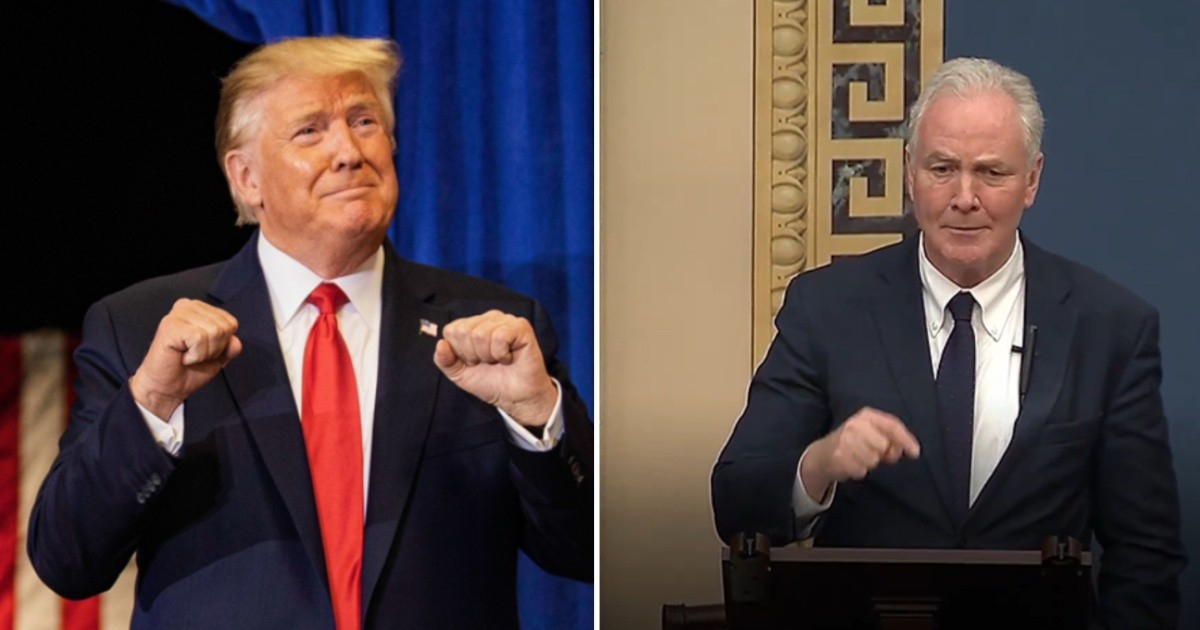
Senator Chris Van Hollen from Maryland released a video on Saturday through his social media account, urging the termination of the oil embargo that the Trump administration imposed on Cuba. He labeled the measure as "reckless" and asserted that it has only succeeded in creating a humanitarian crisis that punishes the Cuban people rather than the regime.
"The only significant impact the United States has had on Cuba is triggering a humanitarian crisis affecting millions, due to the reckless blockade orchestrated by Trump and Rubio, punishing the Cuban populace, not its government," Van Hollen stated.
He highlighted that three months after the embargo's implementation, the Havana government maintains its hold on power, while hospitals are overwhelmed, educational institutions and businesses are shutting down, and families suffer through extended blackouts without access to essential supplies.
Impact of the Oil Embargo on Cuban Society
Van Hollen referenced a New York Times headline from March 26, 2026: "Cuban Patients Dying Due to U.S. Blockade, Say Doctors."
Alioth Fernandez, the chief anesthesiologist at Havana's largest pediatric hospital, remarked to the paper, "I can't specify the number of deaths, but I'm certain it's higher than the same period last year."
Data from the dossier indicates that the embargo has slashed between 80% and 90% of Cuba's oil imports, leading to power outages lasting up to 25 hours daily in more than 55% of the country.
By the end of March, at least 96,000 Cubans, including 11,000 children, were awaiting surgery, while 16,000 cancer patients experienced disruptions in their radiation therapy.
Escalating Tensions and Political Responses
Van Hollen's statement comes amid heightened tensions. On Friday, Trump signed a new executive order freezing all assets linked to the Cuban regime within U.S. territory and imposing secondary sanctions on foreign banks.
On Saturday, Trump further threatened to deploy the aircraft carrier USS Abraham Lincoln to Cuban waters, claiming he would seize control of the island "almost immediately" after concluding the conflict in Iran.
The senator also released another video on Thursday, framing Trump's policy towards Cuba as a continuation of 65 years of bipartisan failure.
"Trump's current approach to Cuba isn't an anomaly. He and Secretary Rubio are doubling down on 65 years of a bankrupt and failed policy," Van Hollen asserted.
He acknowledged that the Obama administration was a rare positive deviation, restoring diplomatic relations and expanding travel, but warned that this progress was short-lived: Trump reversed these gains in his first term, and Biden has not resumed that path. "To avoid a conflict with Cuba, we must rein in this lawless president," he emphasized.
The senator's stance aligns with his consistent record. Other congress members also reacted to Trump's new executive order, as his administration has imposed over 240 sanctions against the Cuban regime since January 2025.
Meanwhile, Secretary of State Marco Rubio denied the existence of a naval blockade, attributing Cuba's energy shortages to decades of reliance on foreign subsidies.
"The blockade must end," Van Hollen concluded in his Saturday message.
Frequently Asked Questions about the Cuban Oil Embargo
What is the impact of the oil embargo on Cuba?
The embargo has drastically reduced Cuba's oil imports by 80% to 90%, resulting in severe power outages and affecting essential services like hospitals and schools.
How has the Trump administration escalated measures against Cuba?
The Trump administration has frozen Cuban regime assets in the U.S., imposed secondary sanctions on foreign banks, and threatened military action by deploying the USS Abraham Lincoln near Cuba.
What was the Obama administration's approach to Cuba?
The Obama administration restored diplomatic relations with Cuba and expanded travel, marking a positive shift in U.S.-Cuba relations, although these measures were later reversed by Trump.