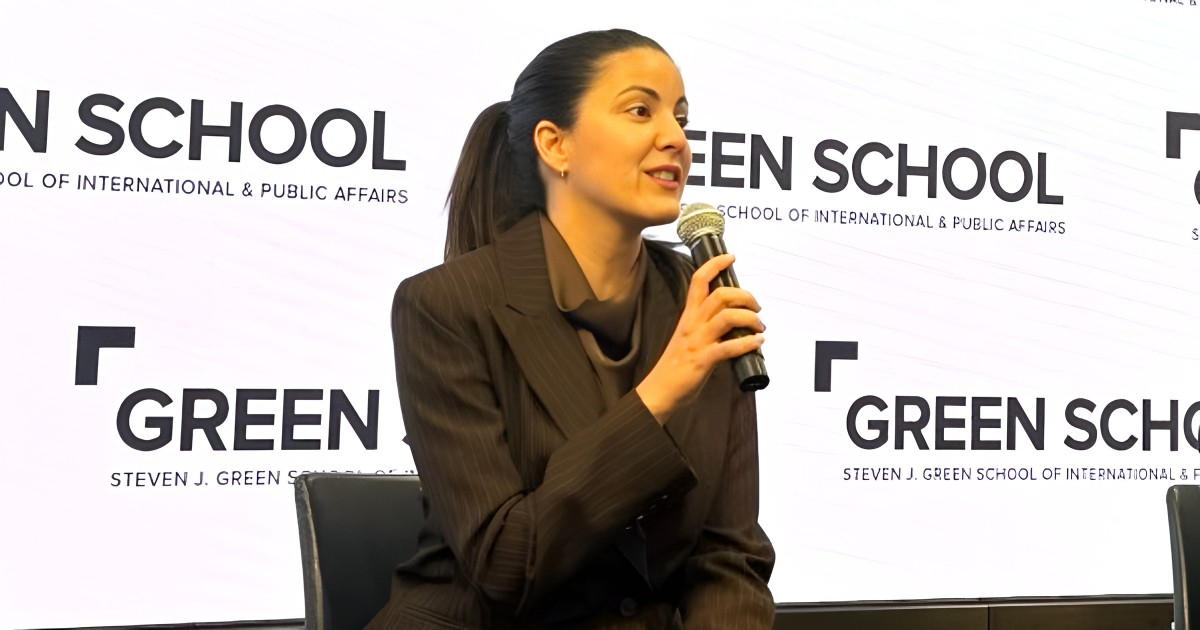
Cuban activist Rosa María Payá expressed her gratitude on Saturday towards President Donald Trump and Secretary of State Marco Rubio for their decisive action in expanding sanctions against the Cuban regime. Trump signed an executive order on Friday targeting those directly responsible for repression on the island.
"Thank you, President Trump and Secretary Rubio, for penalizing those accountable for the oppression in Cuba," Payá shared on social media platform X. She emphasized that "the enforcers, GAESA bosses profiting from our people's misery, and the families hiding their stolen wealth have lost their impunity."
Payá concluded her message with a sentiment resonating among the Cuban opposition: "Cuba's freedom is imminent."
Targeting the Cuban Regime's Financial Backbone
The executive order, enacted on May 1, broadens U.S. sanctions against the Havana regime. It freezes assets within U.S. territory and bars entry to officials, executives, board members, and their families implicated in repression and corruption.
A primary target is GAESA (Grupo de Administración Empresarial S.A.), a military conglomerate controlling between 40% and 70% of Cuba's formal economy, with estimated assets exceeding $18 billion.
The order also includes secondary sanctions on foreign banks and financial institutions that engage in significant transactions with sanctioned Cuban entities, threatening their access to the U.S. financial system.
Immediate and Unyielding Action
Implemented without prior notice, the order aims to prevent rapid fund transfers by those affected. Payá, appointed as a commissioner for the Inter-American Commission on Human Rights for 2026-2029 and founder of Cuba Decide, has been a vocal supporter of Washington's pressure strategy against the dictatorship.
Days earlier, Payá called for collaboration with the United States to achieve democratic transition in Cuba, aligning with Rubio's statements on potential reforms on the island.
U.S. Strategy of Maximum Pressure
Trump's new order is part of a broader strategy of maximum pressure on Cuba, which since January 2026 has introduced over 240 new sanctions and intercepted at least seven tankers with oil destined for the island.
The regime's response was swift: Miguel Díaz-Canel condemned the sanctions on Friday, labeling them as "coercive measures" aimed at intimidating Cuba. Meanwhile, Raúl Castro made a public appearance during the International Workers' Day parade, interpreted as a show of strength.
Cuban-American congressman Carlos Giménez (R-FL) endorsed the executive order, deeming it essential to dismantle the "security apparatus that imprisons political prisoners and oppresses the people."
Senator Rick Scott had urged Trump in April to intensify sanctions against GAESA and Cuban medical missions, pinpointing the military conglomerate's assets as a primary target.
Understanding the Impact of U.S. Sanctions on Cuba
What is the purpose of the executive order signed by Trump?
The executive order aims to expand sanctions against the Cuban regime, focusing on individuals and entities responsible for repression and corruption in Cuba.
Who are the primary targets of the new sanctions?
The sanctions primarily target GAESA and its executives, as well as foreign banks and financial institutions conducting significant transactions with sanctioned Cuban entities.
How has the Cuban regime reacted to these sanctions?
The Cuban regime, led by Miguel Díaz-Canel, has rejected the sanctions, calling them coercive measures designed to intimidate the country.