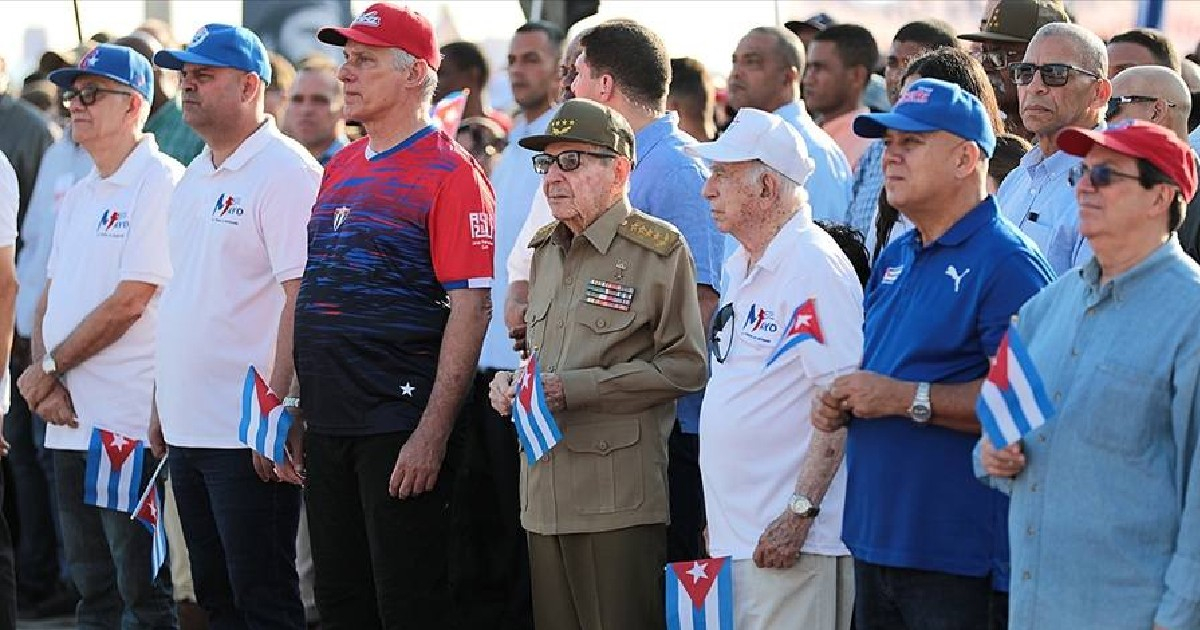
Few events portray Cuba's plight as vividly as the annual charade orchestrated by the regime for May Day, blending absurdity, propaganda, and oppression to present their version of a "workers' celebration."
Workers earning less than enough to feed themselves for a week, students striving to earn degrees in hopes of escaping to a place where their knowledge is valued, and ordinary citizens worn down by hardship, power outages, and a fatigue that transcends the physical to touch the mental and historical—all of these individuals, under pressures ranging from subtle coercion to outright threats, rise early to march. They walk miles to parade in front of stands where their oppressors, the nation's rulers, smile and wave small flags, feigning approval of the life they've imposed.
Why do Cubans march? Why have we marched so many times, even as we silently curse those who summon us to parade amid the din of blaring loudspeakers and empty slogans?
Who wants to see a nearly 95-year-old Raúl Castro and his equally ancient comrade José Ramón Machado Ventura feign smiles to assure us that everything is fine on our aimless journey?
Who can pretend nothing is wrong when Miguel Díaz-Canel, the handpicked president, arrives in Adidas sneakers, awkwardly urging us with a shaky voice to keep resisting, signing, fighting, and winning for "the homeland"—his version of it?
How can they expect us to continue building socialism, or whatever the leadership's latest construction plan entails, when there are no materials, no builders, and no desire to create anything for the benefit of those who exploit us?
"Don't draw attention to yourself," warn suffering mothers. "Don't let them hear you," they plead, knowing the regime spares no effort in deploying police dogs and "sanatoriums" like Villa Marista to "cure" any ideological deviation from their prescribed path.
Yet, more and more are marked by the searing iron of protest. The police vehicle overturned in July 2021, the pots and pans clanging incessantly in towns, streets, and balconies since then, and the party furniture burned in Morón this past March—all these seemingly minor acts are quietly fueling a genuine, inevitable march. One day, workers will finally celebrate their true festival.
Then, perhaps, the enthusiasm of the Canels, Raúls, Brunos, and Lazos—the generals and colonels who manipulate us—will wane, and their flag-waving will falter.
Understanding May Day in Cuba
Why is May Day significant in Cuba?
May Day, or International Workers' Day, is significant in Cuba as it is used by the regime to showcase a façade of unity and support for socialist ideals, despite underlying issues of oppression and economic hardship faced by the population.
What challenges do Cuban workers face during May Day celebrations?
Cuban workers face challenges such as economic struggles, coercion to participate, and the pressure to maintain the appearance of support for the regime. Despite these challenges, there is growing dissent and acts of protest against the oppressive conditions.