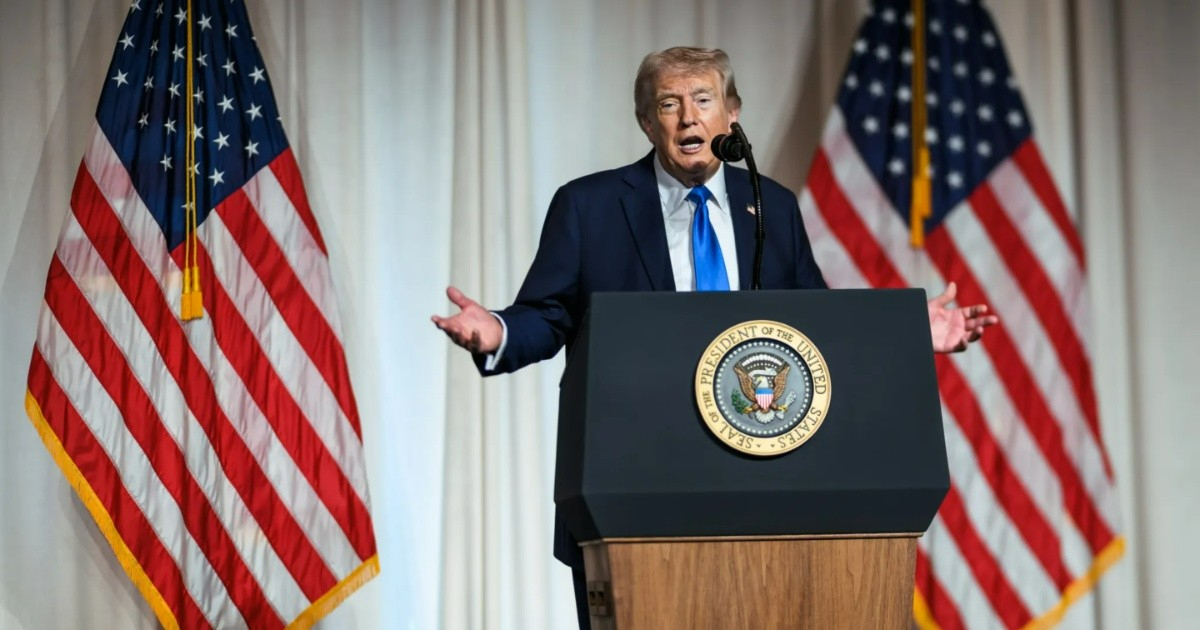
President Donald Trump declared on Friday his intention to increase tariffs to 25% on automobiles and trucks imported from the European Union next week. This move heightens tensions and could further destabilize the already fragile global economy, as reported by The Associated Press through Telemundo.
In a statement on his social media platform, Truth Social, Trump accused the EU of "failing to fully comply with our agreed trade deal," though he did not specify what particular grievances he had.
This decision marks a departure from the so-called Turnberry Agreement. Negotiated in July 2025 between Trump and European Commission President Ursula von der Leyen at Trump's golf course in Scotland, the agreement originally capped tariffs at 15% on most European goods.
The agreement already encountered a setback in February when the U.S. Supreme Court ruled that Trump lacked the legal authority to impose tariffs under emergency economic laws. This ruling effectively lowered the cap to 10% and forced the administration to seek alternative legal frameworks to reimplement the tariffs.
Following the court's decision, the European Parliament suspended ratification votes on the agreement, while the European Commission demanded that the U.S. uphold its commitments: "An agreement is an agreement. As America's largest trading partner, the EU expects the U.S. to honor the commitments outlined in the Joint Declaration."
Impact on Major European Manufacturers
The newly implemented 25% tariff directly impacts major European car manufacturers such as Volkswagen, BMW, Mercedes-Benz, Porsche, and Audi. European stock markets immediately reacted with losses: Daimler fell by 3.64%, Volkswagen by 2.83%, Porsche by 2.76%, BMW by 2.28%, and Mercedes-Benz by 1.66%.
The EU had projected that the Turnberry Agreement would save its automakers between 500 and 600 million euros monthly. In 2024, the bloc exported vehicles worth 50.889 billion euros to the U.S., with Germany accounting for 64% of the total exports.
Total trade between the two economies reached 1.7 trillion euros in 2024, according to Eurostat, averaging 4.6 billion euros daily.
Encouraging Local Production
The new tariffs will not apply to vehicles manufactured in U.S. plants, which could incentivize European automakers to relocate production to the United States.
This isn't the first time Trump has threatened drastic measures against the EU. In May 2025, he proposed 50% tariffs on all European products, which were postponed after discussions with Von der Leyen. Additionally, in January of this year, he threatened 25% tariffs on eight European countries to pressure them regarding the sale of Greenland.
The Trump administration is also under investigation for trade imbalances and national security risks, potentially putting the Turnberry Agreement in further jeopardy.
The European Commission issued a clear warning in February: "EU products must continue to benefit from the most competitive treatment, without tariff increases beyond the previously agreed clear and global cap."
Key Insights on Trump's Tariff Actions
What prompted Trump to increase tariffs on EU automobiles?
Trump increased tariffs citing the EU's failure to fully comply with a trade agreement, although specific grievances were not detailed.
How might the tariff increase affect European car manufacturers?
The 25% tariff will directly impact major European carmakers like Volkswagen and BMW, causing immediate stock market losses for these companies.
Will the new tariffs apply to all vehicles?
No, the tariffs will not apply to vehicles manufactured in the United States, potentially encouraging European automakers to relocate production stateside.