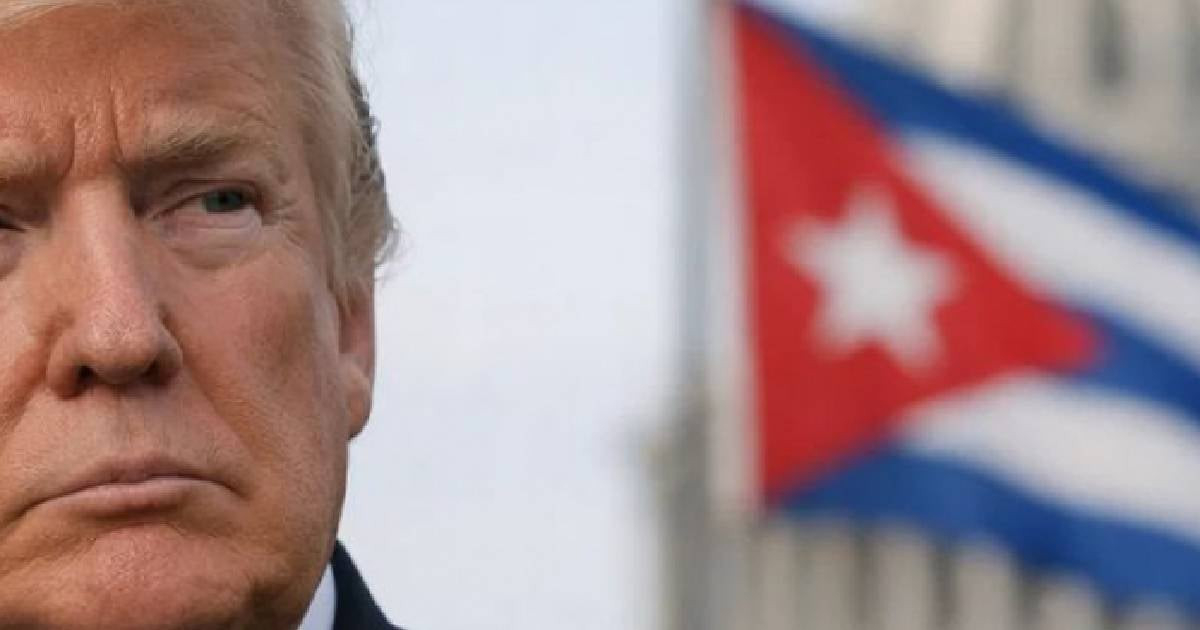
On Friday, President Donald Trump signed an executive order halting all assets and interests in properties located within the United States belonging to foreign individuals linked to the Cuban regime. This action significantly broadens the scope of sanctions against Havana.
Announced from the White House, the measure relies on the International Emergency Economic Powers Act (IEEPA) and extends the legal framework of Executive Order 14380, initially signed on January 29, 2026, which declared a national emergency concerning Cuba.
The order states that the policies of the Cuban regime "continue to pose an unusual and extraordinary threat to the national security and foreign policy of the United States," further noting that they are "not only designed to harm the United States but are also offensive to the moral and political values of free and democratic societies."
The asset freeze targets various sectors including energy, defense and related materials, metals and mining, financial services, and the security of Cuba's economy.
Expanding Sanctions Beyond Borders
The order impacts Cuban government leaders, officials, and executives, those providing material or technological support to the regime, individuals responsible for severe human rights abuses, and those involved in corruption.
One of the most comprehensive provisions extends sanctions to adult family members of already designated individuals, thereby significantly widening the reach of these measures.
Designations will be made without prior notice to those affected. The order itself justifies this by stating that "the ability to transfer funds instantly would render the measures ineffective" if advance warning were given.
Restrictions on Entry and Financial Transactions
The order also suspends entry to the United States, whether as immigrants or non-immigrants, for those meeting sanction criteria, unless deemed in the national interest by the Secretary of State.
Additionally, the Secretary of the Treasury is authorized to sanction foreign financial institutions facilitating significant transactions with blocked individuals, including prohibiting correspondent accounts within the United States.
A White House official cautioned that "Cuba provides a permissive environment for hostile foreign intelligence, military, and terrorist operations less than 100 miles (160 kilometers) from U.S. soil."
The Economic Toll on Cuba
This new order forms part of Trump's maximum pressure strategy against the Cuban dictatorship, which has resulted in over 240 sanctions since January 2025 and the interception of at least seven tankers headed to the island.
Cuba has experienced severe economic repercussions. The country faces power outages lasting up to 25 hours daily across more than 55% of its territory, with the GDP projected to contract by 7.2% in 2026, according to The Economist Intelligence Unit, following a cumulative 23% decline since 2019.
The regime has labeled these actions as "collective punishment." Deputy Minister Carlos Fernández de Cossío challenged Washington to lift the sanctions if it truly believes Cuba's issues are solely the government's fault, arguing that Washington "dares not prove its claims by testing the alternative."
Recently, Secretary of State Marco Rubio warned that economic reforms in Cuba are "impossible with these people in charge," and that Washington will not permit adversaries to operate intelligence bases just 90 miles from its shores.
Trump hinted at these measures on March 30, stating that Cuba "will soon fail" and that the United States "will be there to assist."
FAQs on U.S. Sanctions Against the Cuban Regime
What sectors are affected by the new U.S. sanctions on Cuba?
The sanctions target sectors including energy, defense and related materials, metals and mining, financial services, and the security of Cuba's economy.
Who is impacted by the asset freeze under the new order?
The freeze affects leaders, officials, and executives of the Cuban government, those providing support to the regime, individuals responsible for human rights abuses, and those involved in corruption, along with their adult family members.
Why are designations made without prior notice?
The order states that advance notice would allow for instant fund transfers, which would undermine the effectiveness of the sanctions.