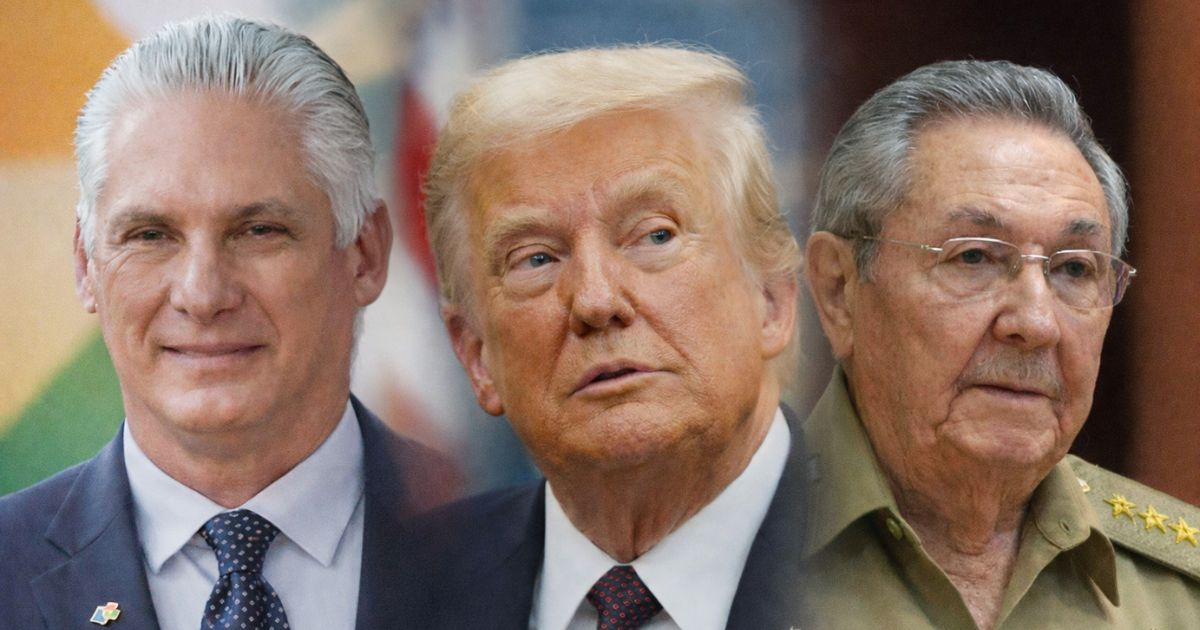
On Friday, President Donald Trump signed a new executive order that significantly broadens the scope of sanctions against Cuba. This new directive targets the assets of Cuban officials, businesspeople, and their families connected to the regime, freezing any holdings they may have in the United States or under the control of U.S. persons.
The order, named "Imposing Sanctions on Those Responsible for Repression in Cuba and for Threats to United States National Security and Foreign Policy," is backed by the International Emergency Economic Powers Act (IEEPA).
This move further extends the national emergency declared in Executive Order 14380 on January 29, 2026, which had already labeled the Cuban government as an "unusual and extraordinary threat" to U.S. national security.
Scope of the Sanctions
The order mandates that "all property and interests in property that are in the United States, that hereafter come within the United States, or that are or hereafter come within the possession or control of any United States person" of the designated individuals are blocked. These assets cannot be transferred, paid, exported, or traded in any way.
Who is affected by these freezes? A wide range of activities can lead to asset blocking. Those involved in Cuba's energy, defense, related materials, metals and mining, financial services, or economic security sectors are at risk.
Additionally, individuals who are owned, controlled by, or acting on behalf of the Cuban government, or those who have provided financial, material, or technological support to the regime or already designated individuals, are also included.
Targeting Regime Affiliates
The order specifically targets leaders, officials, senior executives, or board members of the Cuban government or blocked entities, along with political subdivisions, agencies, and instrumentalities of the Cuban state.
It also applies to those responsible for serious human rights abuses in Cuba or acts of corruption, including embezzling public assets, expropriating private property for personal or political gain, and bribery.
A notable aspect is the extension of sanctions to "any adult family member of a person designated under this order," broadening the reach beyond direct officials.
No Prior Notification and Entry Ban
The order clearly states that affected individuals will not receive advance notice before being designated. The reasoning provided is that "the ability to transfer funds or assets instantaneously would render the measures ineffective if there was prior notice."
In addition to asset freezes, the order bans any transactions by U.S. persons with the designees, including donations, and suspends entry into the United States—whether as immigrants or non-immigrants—for those meeting the sanction criteria.
Implementation will be managed by the Secretary of State, in coordination with the Secretary of the Treasury.
Reinforced Legal Grounding
This new order represents a shift from the approach taken in January, when Trump removed secondary oil tariffs following a court ruling that deemed them illegal under the same IEEPA. Asset freezing is a more traditional and legally solid use of the law, making it harder to challenge.
The primary institutional targets are expected to be GAESA—the military enterprise conglomerate controlling approximately 70% of Cuba's formal economy—alongside the MINFAR and MININT, which were already on previous lists by the Office of Foreign Assets Control (OFAC).
In July 2025, the U.S. had already sanctioned the ministers of the FAR and MININT for their role in the July 11th crackdown.
This measure also responds to demands from Cuban-American legislators such as Carlos Giménez, María Elvira Salazar, and Mario Díaz-Balart, who in February 2026 explicitly called for the freezing of regime assets abroad as part of a maximum pressure strategy from the White House, which has imposed over 240 new sanctions against the regime since January 2026.
Frequently Asked Questions About U.S. Sanctions on Cuba
Who will be affected by the new asset freezes?
Individuals and entities involved in sectors like energy, defense, and financial services in Cuba, as well as those connected to the Cuban government or providing support to the regime, will be affected.
What is the legal basis for these sanctions?
The sanctions are based on the International Emergency Economic Powers Act (IEEPA), which allows for asset freezes and other measures in response to threats to U.S. national security.
Why is there no prior notification for those designated?
The lack of prior notification is to prevent the rapid transfer of funds or assets, which could undermine the effectiveness of the sanctions.