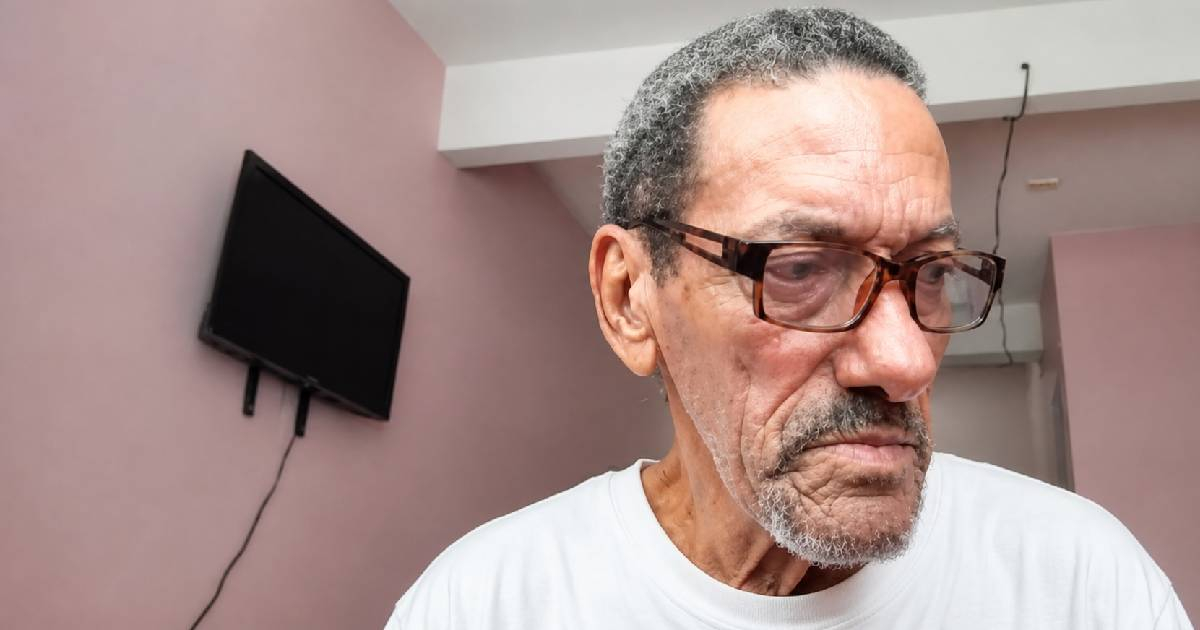
Lázaro Romero León, a 59-year-old Cuban who had lived in the United States for over three decades, found himself unexpectedly deported to Mexico by the U.S. Immigration and Customs Enforcement (ICE) in February, despite a clear judicial order barring his removal.
Two months have passed, and the U.S. government has yet to rectify their mistake, leaving Romero León homeless in Mexico, as he shared in an interview with Univision.
A Legal Oversight with Dire Consequences
Federal Judge Hernán D. Vera had explicitly instructed that Romero León was not to be deported while his immigration status was under review. However, ICE proceeded regardless, citing a "communication error" due to the agency's heavy caseload of judicial orders.
Since the deportation, all efforts to bring him back have hit a wall. An initial attempt to fly him out of Chiapas failed when Mexican authorities rejected his identification documents for boarding.
Subsequently, ICE financed a $350 bus ticket—covered by his federal public defender—for him to travel to the border, but Mexican officials removed him from the bus due to lack of valid documentation and detained him.
Currently, the U.S. government is considering seeking assistance from the Coast Guard for a maritime transfer.
U.S. Judge Criticizes Government Inaction
During an April 23 hearing in Los Angeles, Judge Vera sharply criticized the government, threatening contempt sanctions. "This needs to be escalated and resolved by higher channels. It is unacceptable to refuse to return someone who was wrongfully deported," the judge stated.
Special Prosecutor Whitney Wakefield acknowledged in court that the informal agreement between the U.S. and Mexico for deporting Cubans "exists solely to remove a person from the United States to Mexico," lacking provisions for return in cases of erroneous deportation, creating a diplomatic deadlock with no resolution in sight.
Survival in Dire Conditions
While legal debates continue in California, Romero León struggles to survive under dire conditions in Tapachula, Chiapas. After being released from a Mexican detention center and abandoned near the Guatemalan border, he had to walk back to the city, he recounts.
He now sleeps in the yard of a stranger's home, wearing the same clothes he was deported in months ago, with no financial resources. Mexican authorities have given him only five days to leave the country.
Reflecting on his ordeal, Romero León said, "I wouldn't wish this on anyone."
Broader Implications of U.S.-Mexico Deportation Practices
Romero León's case is not isolated. Activists estimate around 800 Cubans are stranded in Tapachula, and another 3,000 in Villahermosa, Tabasco, caught in a legal limbo with no way to return to either Cuba or the U.S.
Approximately 6,000 Cubans have been sent to Mexico under an unofficial agreement between the two governments, as the Cuban regime often refuses deportation flights, especially for individuals with criminal records.
A federal judge in Boston raised concerns about the legality of this arrangement on March 26, demanding documentation from the Department of Homeland Security on whether a "secret or tacit agreement" exists between the countries.
This isn't the first instance where deportations have defied court orders. In December 2025, Las Vegas police handed over a Cuban to ICE in defiance of a judicial order, prompting a lawsuit by the ACLU of Nevada against the Metropolitan Police Department.
According to the Cato Institute, ICE's monthly arrests of Cubans surged from fewer than 200 in late 2024 to over 1,000 by the end of 2025. Other Cubans deported after decades in the U.S. have reported similar experiences of abject helplessness in southern Mexico.
Judge Vera noted that in two other cases from his court, the return was swiftly achieved following his orders. "Of course, there are agreements to get this done. But for some reason, there's a failure here, and I don't know what it is. He needs to be brought back," the judge concluded.
FAQs on Cuban Deportation Issues
Why was Lázaro Romero León deported to Mexico?
Lázaro Romero León was mistakenly deported to Mexico due to a communication error by ICE, despite a judicial order preventing his deportation.
What is the U.S. government doing to rectify Romero León's situation?
The U.S. government has faced challenges in bringing Romero León back, exploring options such as a maritime transfer with Coast Guard assistance, but has not yet succeeded.
How many Cubans are affected by similar deportation practices?
Activists estimate that around 800 Cubans are stranded in Tapachula, with another 3,000 in Villahermosa, Tabasco, all caught in a legal limbo unable to return to Cuba or the U.S.