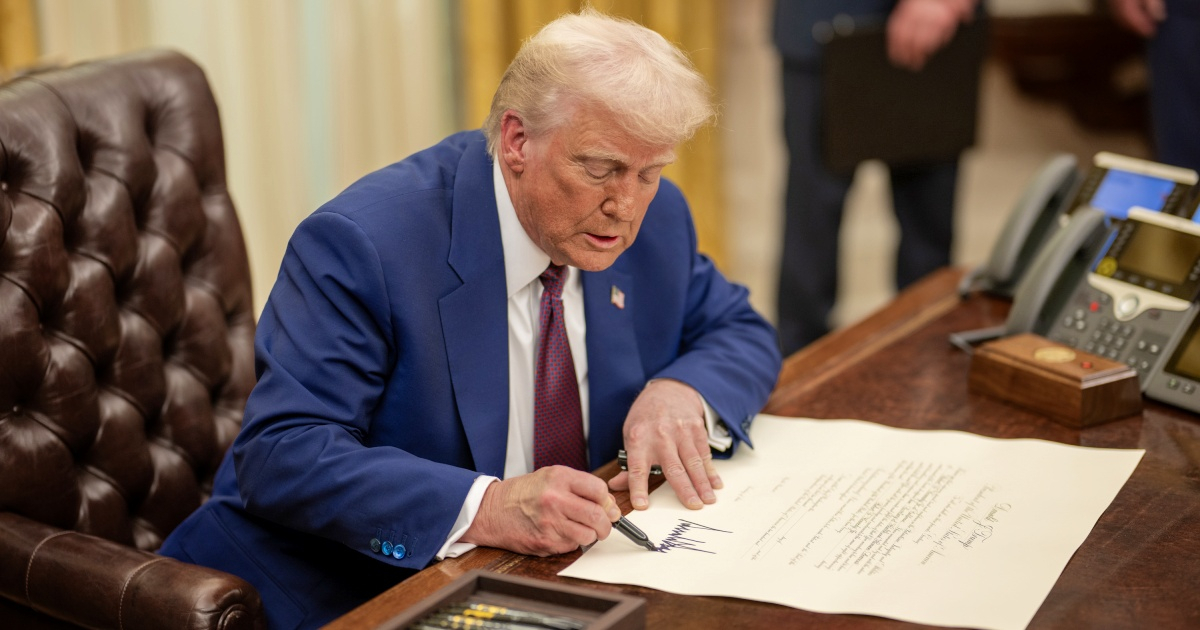
President Donald Trump has put an end to the longest partial shutdown in the history of the U.S. Department of Homeland Security by signing a bill on Thursday, restoring regular funding to the agency after 75 days.
Earlier in the day, the House of Representatives passed the bill through a voice vote, following the Senate’s unanimous approval in late March. This legislative action resolved a political standoff that had left the DHS partially immobilized since February 14.
The newly signed legislation provides funding for essential operations such as the Federal Emergency Management Agency (FEMA), the Coast Guard, the Transportation Security Administration (TSA), and the Secret Service until September 30, marking the end of the fiscal year.
However, the bill does not allocate new resources for the Immigration and Customs Enforcement (ICE) or the Border Patrol. Republicans plan to secure these funds separately through the budget reconciliation process.
Strategic Moves Pave the Way for Resolution
The legislative breakthrough came just in time, as Markwayne Mullin, the Secretary of DHS, cautioned that emergency funds would run out, leaving thousands of workers unpaid if Congress didn't act by Thursday.
The breakthrough was facilitated by a strategic maneuver from House Speaker Mike Johnson. On Wednesday, the House passed a budget resolution with a narrow 215-211 vote, paving the way for allocating up to $70 billion to ICE and the Border Patrol over the next three years.
With this assurance, Johnson, who had previously criticized the Senate’s bill as a "joke" in March, allowed the bill to proceed to a vote.
"I believe yesterday's approval of our budget resolution was a crucial step, and it's imperative that we fully fund these two critical agencies — immigration control and border security — and Republicans must achieve this independently," Johnson told reporters.
Impact of the Shutdown
The shutdown commenced on February 14 when Democrats blocked DHS funding, demanding reforms in ICE’s tactics, such as mandatory body cameras for agents and restrictions on raids in sensitive locations like schools and hospitals.
Throughout the 75-day shutdown, the TSA saw over 1,100 agents resign, leading to airport lines with wait times up to four hours, compromising security across the nation’s terminals.
The economic impact was significant, with losses estimated at $2.5 billion by April 1, according to legislative tracking data.
Additional Legislative Actions
In addition to the DHS funding, Congress approved a 45-day extension of the foreign surveillance program known as Section 702 of the Foreign Intelligence Surveillance Act (FISA), which was set to expire that day, ahead of a week-long legislative recess.
President Trump has urged that the legislation to fund ICE and the Border Patrol be on his desk by June 1, marking the next critical deadline for his administration's immigration policy.
Key Highlights of the DHS Funding Resolution
What was the duration of the partial shutdown of the DHS?
The partial shutdown of the DHS lasted for 75 days, making it the longest in the department's history.
Which agencies received funding under the new law?
The law provides funding for agencies such as FEMA, the Coast Guard, TSA, and the Secret Service until the end of the fiscal year on September 30.
What was the main reason for the shutdown?
The shutdown was primarily due to a political standoff initiated by Democrats who blocked DHS funding, demanding reforms in ICE's operational tactics.