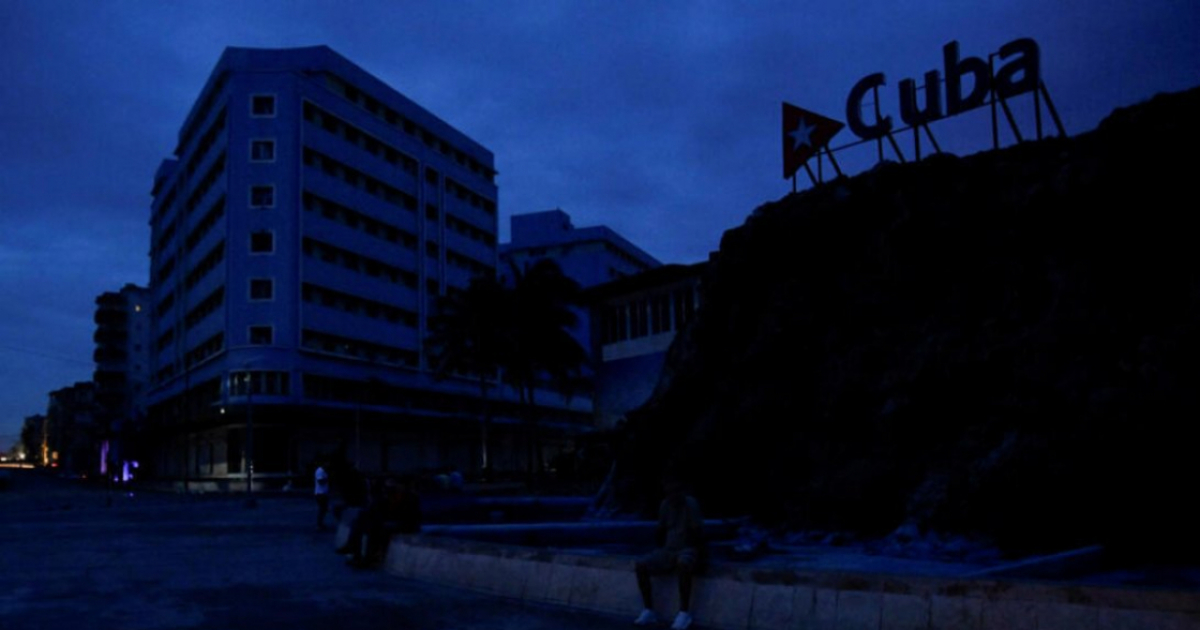
This Thursday, Cuba's National Electric System faced an alarming energy crisis. Official reports from the Unión Eléctrica revealed that Wednesday's peak power outage reached a staggering 1,502 MW at 7:50 PM, surpassing planned limits following the unexpected shutdown of Unit 2 at the Santa Cruz Power Station.
On Wednesday, power was disrupted around the clock, leaving Cubans without any respite, even in the early hours. By 6:00 AM on Thursday, the system's available capacity was a mere 1,480 MW, while demand soared to 2,460 MW, resulting in 990 MW being unavailable at that time.
Worsening Evening Outlook
The situation is expected to deteriorate further as night falls. Projections for peak hours indicate a capacity of only 1,652 MW against a maximum demand of 3,100 MW, leading to a shortfall of 1,448 MW and an estimated 1,478 MW of outages during that period.
Several power units are out of commission due to technical failures, including Unit 6 at Máximo Gómez, Unit 2 at Ernesto Guevara De La Serna, Unit 4 at Carlos Manuel de Céspedes, Unit 2 at Lidio Ramón Pérez, and Unit 5 at Antonio Maceo. Additionally, 393 MW are offline due to thermal generation limitations, with three more units under maintenance.
Insufficient Solar Power Contribution
The slight relief comes from 54 solar photovoltaic parks, which produced 4,395 MWh with a daytime peak power of 641 MW, a figure far too small to offset the nighttime structural deficit.
April has proven disastrous for Cuba's electric grid. The month's largest shortage occurred on April 1st, with a deficit of 1,945 MW. On April 16th, 62% of the nation experienced simultaneous blackouts, depriving over 200,000 Cubans of potable water.
Impact on Provinces
Provinces such as Holguín, Granma, Santiago de Cuba, and Moa endured up to 24-hour daily power cuts throughout the month. In Matanzas, some circuits reported continuous outages extending up to 48 hours.
The core issue is a severe fuel shortage. Cuba's daily requirement ranges from 90,000 to 110,000 barrels of oil, yet production only reaches about 40,000.
Fuel Crisis Deepens
President Díaz-Canel admitted that the country went four consecutive months without receiving any foreign fuel shipments: "We went four months without a single drop of fuel. Four months, four months without receiving anything, relying solely on our reserves."
The only recent delivery was from the Russian tanker Anatoly Kolodkin, which brought 730,000 barrels of Urals crude as a donation from Russia, docking in Matanzas on March 31.
Energy Minister Vicente de la O Levy warned on April 23 that Cuba's fuel reserves would last only until the end of the month: "With just this shipment, we have enough until the end of this month. That means we have only a few days left."
A second Russian tanker, the Universal, carrying 251,000 barrels of diesel, was expected to arrive by Wednesday. However, it altered course and slowed down in the Atlantic, casting doubt over its arrival.
Meanwhile, in Mayarí, Holguín, over 400 families have been without power for 29 days due to the theft of dielectric oil from a substation, a stark reflection of Cuba's crumbling electrical infrastructure after 67 years of dictatorship.
Understanding Cuba's Energy Crisis
What caused the recent energy crisis in Cuba?
The crisis was triggered by a combination of unexpected shutdowns of power units and a critical shortage of fuel, with the country producing far less oil than needed to meet demand.
How has the energy shortage affected daily life in Cuba?
The shortage has resulted in widespread and prolonged power outages, disrupting essential services and leaving many without access to electricity and potable water.
What are the prospects for resolving the energy crisis in Cuba?
The resolution prospects remain uncertain, as the country struggles with limited fuel supplies and outdated infrastructure, despite some aid from international allies such as Russia.