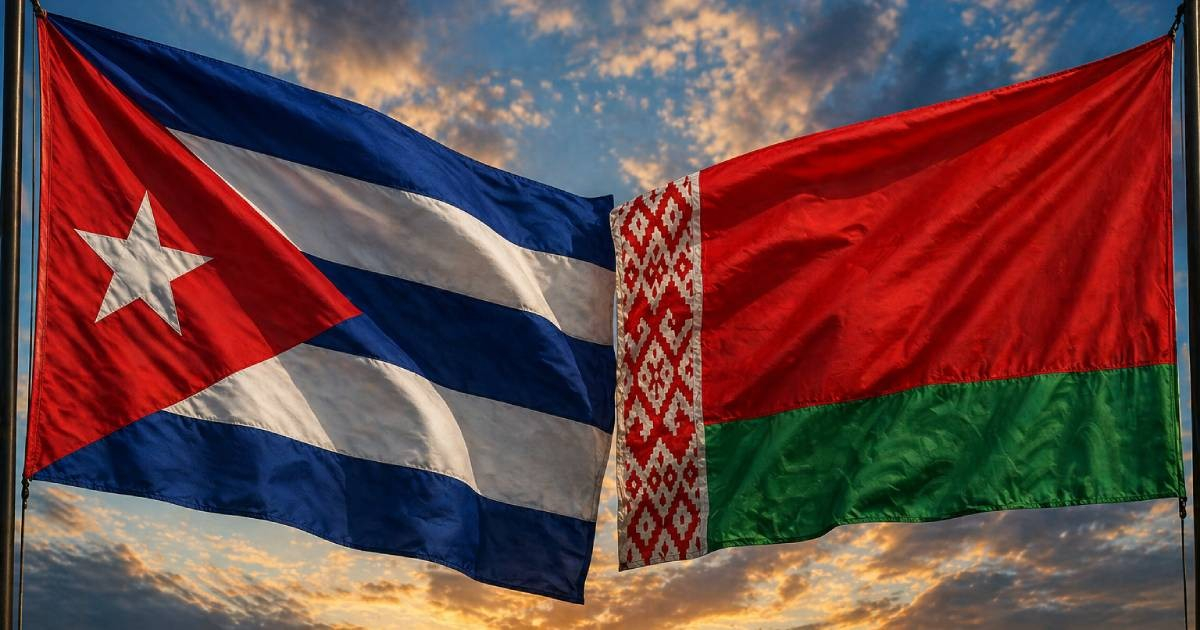
The Belarusian President, Aleksandr Lukashenko, recently signed Decree No. 141, titled "On the Implementation of an International Treaty," to extend the mutual supply agreement with Cuba that was originally established in the interstate accord on June 24, 2014.
This decree upholds the conditions under which Cuba supplies pharmaceutical products to Belarus in exchange for Belarusian-made motor vehicles, agricultural machinery, medical devices, and other goods. This information was reported by the state agency BelTA.
Lukashenko's press service clarified that "the decree maintains the terms for purchasing Cuban pharmaceuticals in exchange for automotive and agricultural machinery, medical devices, and other goods produced nationally and supplied by Belarus."
The 2014 agreement operates as a bilateral barter system where Cuba exports medications and biotechnological products, while Belarus sends MTZ tractors, MAZ trucks, and spare parts.
This exchange mechanism arose as a solution to the challenges both nations face in international financial markets—Cuba due to the U.S. embargo and Belarus because of Western sanctions following the crackdowns in 2020 and 2021.
A Desperate Measure Amidst Crisis
The extension of this agreement comes at a dire time for Cuba. As of April 2026, only 190 of the 651 essential medications are available in Cuba, representing merely 30% as per provincial reports.
Cuba's Health Minister, José Ángel Portal Miranda, admitted in July 2025 to a medication coverage of just 30-32%, with access to antibiotics heavily reliant on foreign currency.
Infant mortality rates have surged to 9.9 per thousand live births by the end of 2025, nearly threefold the 3.9 recorded in 2018.
Energy Crisis Exacerbates the Situation
At the same time, the island is grappling with an energy collapse since January 2026 due to the cessation of Venezuelan oil supplies, which accounted for 76% of Cuba's electricity generation. The country requires between 90,000 and 110,000 barrels of oil daily but produces only around 40,000.
In this context, the deal with Belarus stands as one of the few active cooperation mechanisms for Miguel Díaz-Canel's regime.
Strained Economic Relations
The bilateral relationship has not been free of commercial tensions. In 2024, facing a shortfall in medications to balance the trade, the Cuban government proposed compensating for Belarusian tractors with rum, cocoa, and coffee.
During Díaz-Canel's visit to Minsk in June 2025, Belarus pledged to supply at least 50 MTZ tractors to Cuba that year, with 12 units of the Belarús 321 model already assembled on the island and an additional 42 units planned.
The cooperation between these two authoritarian regimes also includes a growing military dimension. In April 2026, the twelfth meeting of the Cuba-Belarus Joint Commission on Technical-Military Cooperation took place in Minsk, led by Cuban General Óscar Enrique Biosca Gallego.
Cuban Ambassador Juan Valdés explained that the exchange is conducted "in accordance with the volumes and value of the products, ensuring import amortization based on respective prices," a formula the regime portrays as South-South cooperation but which in practice highlights Havana's economic isolation.
Frequently Asked Questions About Cuba-Belarus Trade Agreement
What is the Cuba-Belarus trade agreement about?
The Cuba-Belarus trade agreement is a bilateral barter system where Cuba provides pharmaceuticals and biotechnological products to Belarus in exchange for Belarusian vehicles, agricultural machinery, and other goods.
Why was the Cuba-Belarus agreement extended?
The agreement was extended to continue providing essential supplies amidst Cuba's severe shortages of medications and economic challenges, exacerbated by the U.S. embargo and lack of foreign currency.
How does the energy crisis affect Cuba?
Cuba is experiencing an energy crisis due to the halt in Venezuelan oil supplies, which previously constituted 76% of its electricity generation. This has intensified the country's overall crisis.