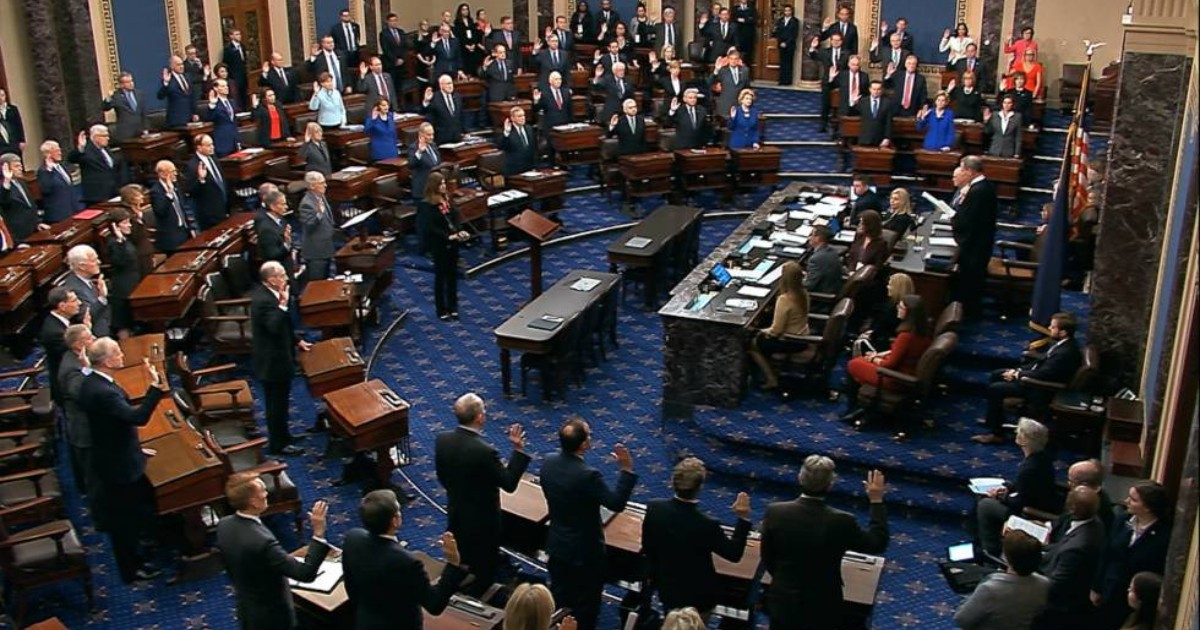
During a heated debate in the U.S. Senate over a war powers resolution that was ultimately rejected by Republicans, Senator Rick Scott displayed a powerful image of Cuban political prisoner Alexander Díaz Rodríguez. Recently released in a state of severe malnutrition, Díaz Rodríguez's condition was highlighted by Scott to underscore the human rights abuses under Cuba's communist regime. The resolution was dismissed by a 51 to 47 vote on Tuesday.
The haunting photograph, previously featured on the front page of the Spanish newspaper ABC with the headline "The Skeletal Cuban Political Prisoner Alexander Díaz," had already captured international attention. Scott posed a rhetorical question to his Senate colleagues, asking whether the photo seemed more reminiscent of a World War II concentration camp or a Soviet prison, before revealing its recent origin just 100 miles off the U.S. coast.
"He was tortured, starved, isolated, and denied medical care despite having cancer—all for opposing the socialist regime," Scott stated emphatically in the Senate chamber.
The Plight of Alexander Díaz Rodríguez
Díaz Rodríguez, from Cárdenas, Matanzas, was arrested during the July 11, 2021 protests and sentenced to five years for "sedition" and "contempt." He entered Kilo 5½ prison in Pinar del Río weighing 179 pounds but was released in April 2026 at a mere 81 pounds. During his imprisonment, he developed advanced thyroid cancer, hepatitis B, and severe malnutrition without receiving any cancer treatment.
His mother, Morayma Rodríguez Batista, described his dire condition upon release, stating, "He is in bad shape. He cannot speak, he is incoherent."
Political Tensions and Humanitarian Concerns
The resolution, introduced by Democratic Senators Tim Kaine (Virginia), Ruben Gallego (Arizona), and Adam Schiff (California), invoked the 1973 War Powers Act. They argued that the energy embargo imposed by Washington already constitutes "hostilities," and Congress must act before tensions escalate.
Kaine presented alarming statistics: nearly 100,000 surgeries in Cuban hospitals were canceled between January and March 2026 due to energy shortages, with over 11,000 intended for children, and more than a third of the population lacks access to clean water.
However, Republicans blocked the resolution procedurally, claiming that the U.S. is not engaging in open hostilities with Cuba. Scott accused Democrats of ignoring the regime's human rights violations while opposing former President Trump. "Democrats in this chamber choose to oppose President Trump but not the communist dictator of Cuba, Miguel Díaz-Canel," he charged.
Scott pointed out that no Democrat who recently visited Cuba went to the prisons or attempted to free a single political prisoner, highlighting that even a six-year-old child is imprisoned for protesting over a lack of electricity.
The debate exposed divisions within both parties: Republican Senators Susan Collins (Maine) and Rand Paul (Kentucky) broke ranks to support the resolution, while Democrat John Fetterman (Pennsylvania) sided with Republicans to defeat it.
In response to the release of Díaz Rodríguez's photos, Mike Hammer, head of the U.S. Embassy in Cuba, contacted him by phone on April 24. The embassy is considering granting him a humanitarian visa for medical treatment in the United States.
This marked the sixth consecutive defeat for Democrats on war powers resolutions, following five failed initiatives concerning Iran, as part of an ongoing struggle between the two parties over control of Trump's military actions.
Scott concluded his remarks with a poignant question to his Democratic colleagues: "Have you seen enough? Have you seen enough to say this must end?"
Key Questions on U.S.-Cuba Relations and Human Rights
What was the significance of the photograph shown by Senator Rick Scott?
The photograph of Alexander Díaz Rodríguez highlighted the severe human rights abuses under the Cuban regime, emphasizing the dire condition of political prisoners and sparking a significant political debate in the U.S. Senate.
Why did the Republicans reject the war powers resolution?
Republicans rejected the resolution on procedural grounds, arguing that the United States is not in open hostilities with Cuba, and therefore, the resolution was unnecessary.
How did the debate reveal divisions within the U.S. political parties?
The debate showed fractures within both parties, as some Republicans supported the resolution while a Democrat sided with Republicans to defeat it, highlighting differing views on foreign policy and human rights issues.