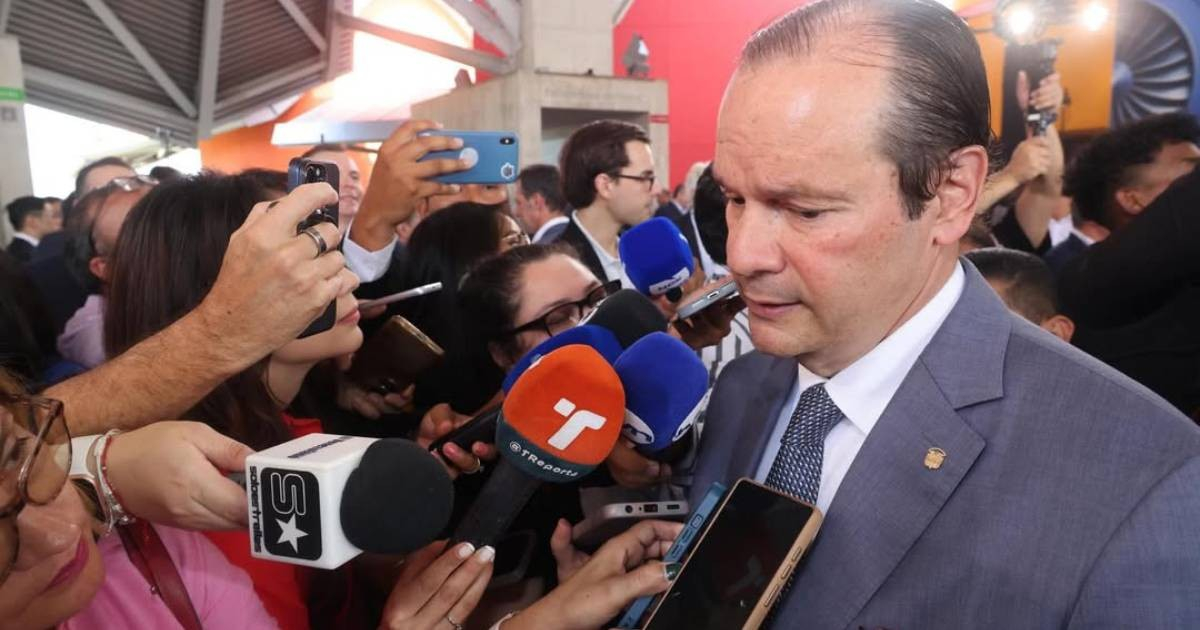
Panama's Foreign Minister, Javier Martínez-Acha, announced on Tuesday that seven Panamanian citizens are currently held in Cuba pending investigation and potential trial. The Panamanian government is actively pursuing discreet diplomatic efforts to secure their release.
"These seven individuals remain under investigation and trial, awaiting a verdict," stated Martínez-Acha. He emphasized that Panama is providing ongoing consular and legal support to those detained.
The situation dates back to February 28, when ten Panamanian nationals were arrested in Havana. They were accused by Cuba's Ministry of the Interior (MININT) of spreading propaganda against the constitutional order, a crime in Cuba that could result in up to eight years of imprisonment.
Originally, the group consisted of 20 Panamanians; however, ten managed to leave the island before Cuban authorities made the arrests.
On April 25, three Panamanian women—Evelyn Castro, Cinthia Camarena, and Abigail Gudiño—were released and returned to Panama. The foreign minister described this as "a gesture of goodwill" from the Cuban government.
Cuban authorities employed the legal concepts of "effective collaboration" and "opportunity criterion" to justify releasing the three women.
The seven Panamanians still in detention are: Víctor Manuel Pinzón Cedeño, Anthony Williams Jules Pérez, Omar Gilberto Urriola Vergara, Maykol Jesús Pérez Almendra, Adalberto Antonio Navarro Asprilla, Patrochiny Jerodany Joseph Arisarena, and José Luis Aguirre Baruco.
According to the Cuban regime's official account, these individuals entered Cuba with the intention of crafting politically charged messages and were to be paid between $1,000 and $1,500 per person upon their return to Panama.
Cuban opposition figure José Daniel Ferrer from the Patriotic Union of Cuba (UNPACU) defended the detained Panamanians. He claimed that they also delivered humanitarian aid—food and medicine—to political prisoners and their families in Matanzas, challenging the official narrative.
The seven remain detained at Villa Marista, a historic Cuban State Security facility in Havana known for housing political prisoners.
In March, Minister Martínez-Acha traveled to Cuba, where he met with leader Miguel Díaz-Canel and Foreign Minister Bruno Rodríguez Parrilla, and visited the detainees at Villa Marista.
The minister stressed that Panama's strategy focuses on achieving tangible results rather than seeking media attention. He mentioned that he is working under the direct instructions of President José Raúl Mulino.
"This must be handled quietly and precisely. It's important to respect Cuban processes and laws," stated the Panamanian foreign minister.
Martínez-Acha further clarified that Panama is committed to providing legal defense and consular assistance to the seven detained individuals: "We continue to offer unwavering support, as directed by President Mulino, through consular assistance and legal defenses the State is undertaking for the seven."
"We never stop thinking about them or working to bring them home," concluded the minister, affirming that diplomatic efforts will persist cautiously but with a clear objective.
Panama's Diplomatic Efforts in Cuba: Key Questions
Why are Panamanian citizens detained in Cuba?
The Panamanians were arrested for allegedly engaging in propaganda activities against the constitutional order of Cuba, which is a criminal offense in the country.
What actions is Panama taking to secure their release?
Panama is conducting discreet diplomatic negotiations and providing ongoing consular and legal support to the detained individuals.
Have any Panamanians been released from detention in Cuba?
Yes, three Panamanian women were released and returned to Panama in April, which was described as a goodwill gesture by the Cuban government.