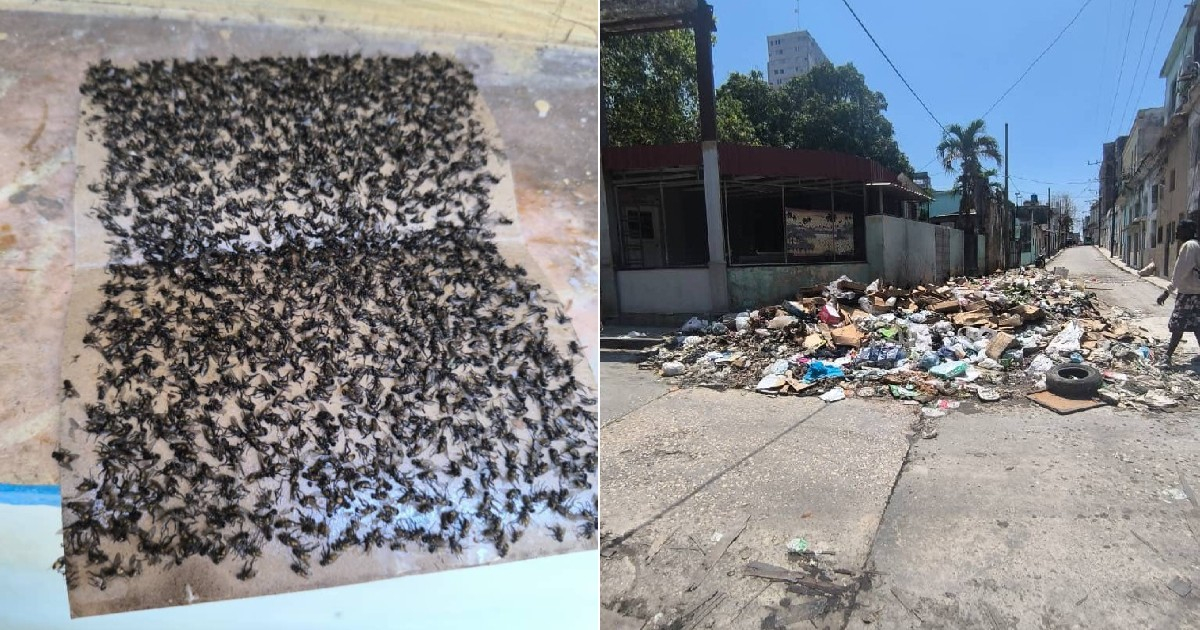
A mother living in the Cerro district of Havana has reported a fly infestation that has made life unbearable in her home, where she resides with her infant child.
"This is happening in Cerro, at the intersection of Zequeira and San Joaquín. Within an hour, the traps are swarming with flies, yet my house remains full of them. I have a baby, and this is intolerable," the woman stated in her complaint to the independent news outlet CubaNet Noticias.
Accompanying her testimony, shared on Facebook, is a photograph of an adhesive trap overwhelmed with hundreds of flies, nearly covering the entire surface. According to her report, the trap filled up in just an hour, without reducing the number of insects inside her home, located at Zequeira and San Joaquín.
Health Risks from Fly Infestation
The rampant spread of flies poses a significant public health threat, as they act as carriers of pathogens that can contaminate food and water, and spread infectious diseases such as salmonellosis, gastroenteritis, cholera, typhoid fever, and dysentery.
Photos shared by CubaNet highlight the source of the issue: a large pile of trash and debris at the mentioned corner, including cardboard, plastics, bags, tires, and construction materials dumped on the street, forming an open-air makeshift landfill.
This situation in Cerro isn't new. Back in July 2025, residents of the Armada neighborhood resorted to burning trash containers in desperation due to the surge in infestations—at least eight outbreaks between June and July—of rats, flies, and cockroaches.
Waste Management Collapse in Havana
In December, people in another part of the municipality reported a chronic sewage leak on Zaldo Street, with sidewalk leaks and odors persisting for years, while San Joaquín Street had already been noted for illegal sewage discharges that fueled fly infestations.
The underlying issue is the collapse of the waste collection system in the capital in recent years. A shortage of fuel has left Havana buried under piles of garbage, with only 44 of 106 garbage trucks operational as of January, while the city produces between 24,000 and 30,000 cubic meters of solid waste daily.
This waste crisis in Havana drew international attention in February when Reuters published a report on the city's garbage mountains.
The government announced an investment project with Portuguese capital to modernize waste management around that time, but none of these measures have reversed the situation.
Widespread Sanitary Deterioration
The sanitary decline permeates the entire capital. Recently, opposition figure Silverio Portal documented extreme unsanitary conditions on Dragones Street in Central Havana, with feces and trash forming an active infection hotspot, just meters from businesses, homeless individuals, and passersby.
However, the situation is equally dire in other cities. A mass of plastic and organic waste floats beneath the iconic Yayabo Bridge in Sancti Spíritus.
In Holguín, garbage fires burn nightly, producing toxic smoke with dioxins, furans, and at least 30 hazardous compounds, as warned by the Cuban Neuroscience Center, with documented effects on respiratory, cardiovascular, and neurological health, especially in children and the elderly.
The health consequences are severe: official data shows Cuba ended 2025 with 55 deaths from arboviral diseases—dengue and chikungunya—spread by mosquitoes breeding in the same trash and stagnant water sites that sustain fly infestations. However, independent records from the Cuban Citizen Audit Observatory report at least 87 deaths between October and November of that year alone.
Understanding the Fly Infestation in Cerro
What is causing the fly infestation in Cerro?
The fly infestation in Cerro is primarily caused by large piles of garbage and debris, including plastics and construction materials, dumped in the streets, creating an open-air landfill.
What health risks do the fly infestations pose?
Flies are vectors for pathogens that can contaminate food and water, spreading diseases such as salmonellosis, gastroenteritis, cholera, typhoid fever, and dysentery.
How is the waste management crisis affecting Havana?
Havana's waste management crisis, exacerbated by a fuel shortage, has left many garbage trucks non-operational, resulting in the city producing up to 30,000 cubic meters of solid waste daily with inadequate collection.