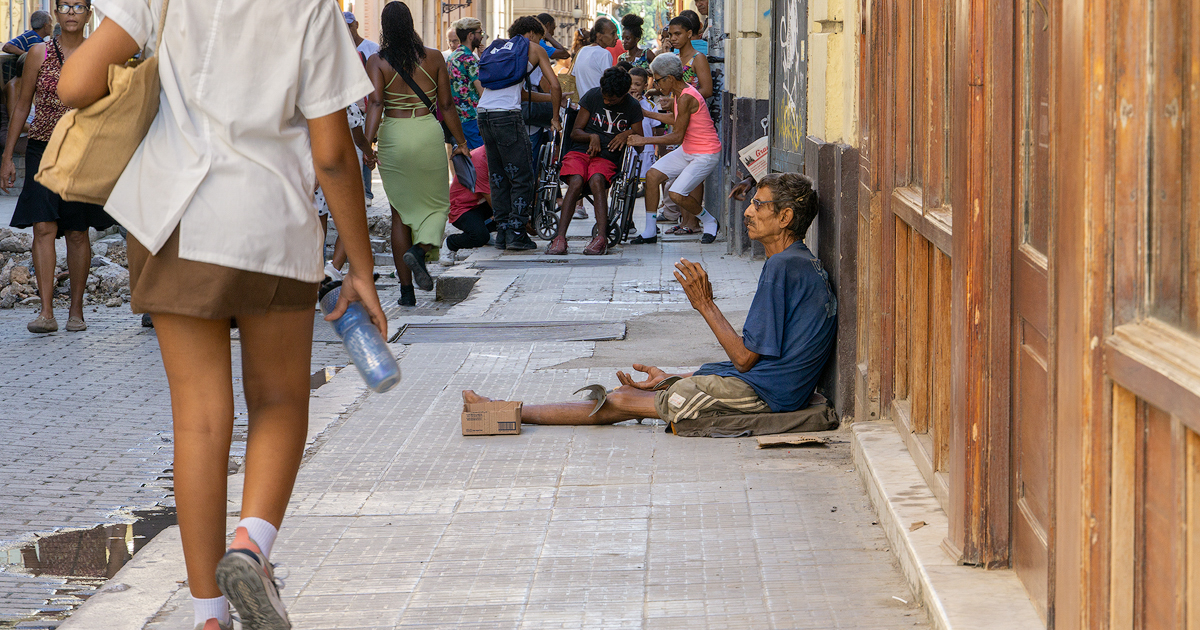
According to the Economic Commission for Latin America and the Caribbean (ECLAC), the region's growth is anticipated to be 2.2% in 2026, a slight downgrade from the 2.3% estimated in December 2025. The primary culprits behind this downward revision are Cuba and Haiti, as detailed in a projection report released on Monday.
The United Nations body warns that 24 out of the 33 countries in the region are expected to slow down economically this year, marking the fourth consecutive year with growth rates hovering around 2.3%. ECLAC describes this as a low-growth trap, signaling a concerning trend.
Economic Woes in Cuba and Haiti
Cuba is facing the most significant downturn, with a projected contraction of -6.5% in 2026, worsening from a -3.8% decline recorded in 2025. Haiti, meanwhile, is anticipated to shrink by -1.4% in 2026, although this represents a slight improvement from the previous year's -2.7%.
The impact of these two struggling economies is substantial on Central America's average growth. While the region is expected to grow by 2.2% in 2026, excluding Cuba and Haiti, this average jumps to 3.9%, highlighting their distorting effect on the overall figures.
Structural Crisis in Cuba
The Cuban crisis is rooted in long-standing structural issues, which have dramatically worsened in the early months of 2026. After Nicolás Maduro was captured on January 3rd, Cuba lost a significant portion of its Venezuelan oil imports, amounting to 80%-90% or between 25,000 and 35,000 barrels daily.
Further compounding the issue, Mexico halted its oil supplies on January 9th under pressure from Washington, and President Trump signed Executive Order 14380 on January 29th, imposing secondary tariffs on any country exporting oil to Cuba. As a result, the island is enduring an energy crisis with power outages lasting up to 25 hours and a generation deficit of around 1,800 megawatts.
The Economist Intelligence Unit projected in February that Cuba's economy would contract by an even steeper 7.2% in 2026, exceeding ECLAC's estimate. Since 2019, Cuba has suffered a cumulative economic decline of over 23%, and its GDP per capita stands at a mere $1,082.8, the lowest in Latin America and the Caribbean, starkly below the regional average of $10,212.
Economist Elías Amor bluntly summarized the situation: "By 2025, the Cuban economy is already in a state of extreme poverty."
Haitian Struggles and Regional Contrasts
In Haiti, the economic decline is attributed to the violence perpetrated by armed groups controlling much of Port-au-Prince and three other departments, leaving 5.7 million people facing acute food insecurity.
The disparity within the region is pronounced: Guyana leads the growth forecast with a projected 16.3% increase for 2026, driven by its burgeoning oil sector, followed by Venezuela at 6.5%, Nicaragua at 4.5%, and Paraguay at 4.5%.
Global Pressures and Local Realities
External factors are also unfavorable: the price of WTI crude oil in the first three weeks of April was 74% higher than the December 2025 average, creating global inflationary pressures that particularly impact weakened economies like Cuba.
Despite the Cuban regime's persistent blame on the U.S. embargo for its economic woes, ECLAC data unequivocally shows that Cuba is, by far, the worst-performing economy in Latin America and the Caribbean. This is in stark contrast to most of its neighbors, who, despite global challenges, manage to maintain positive growth rates.
The Cuban government officially forecasts a 1% growth for 2026, a figure that independent economists regard as completely disconnected from the island's grim reality.
Frequently Asked Questions about Cuba and Haiti's Economic Impact
Why is Cuba's economy projected to contract significantly in 2026?
Cuba's economic contraction is largely due to the loss of Venezuelan oil imports, additional trade restrictions from the U.S., and a severe energy crisis leading to extensive power outages.
What are the main factors contributing to Haiti's economic decline?
Haiti's economic struggles are primarily due to violence from armed groups controlling key areas, resulting in widespread food insecurity affecting millions.