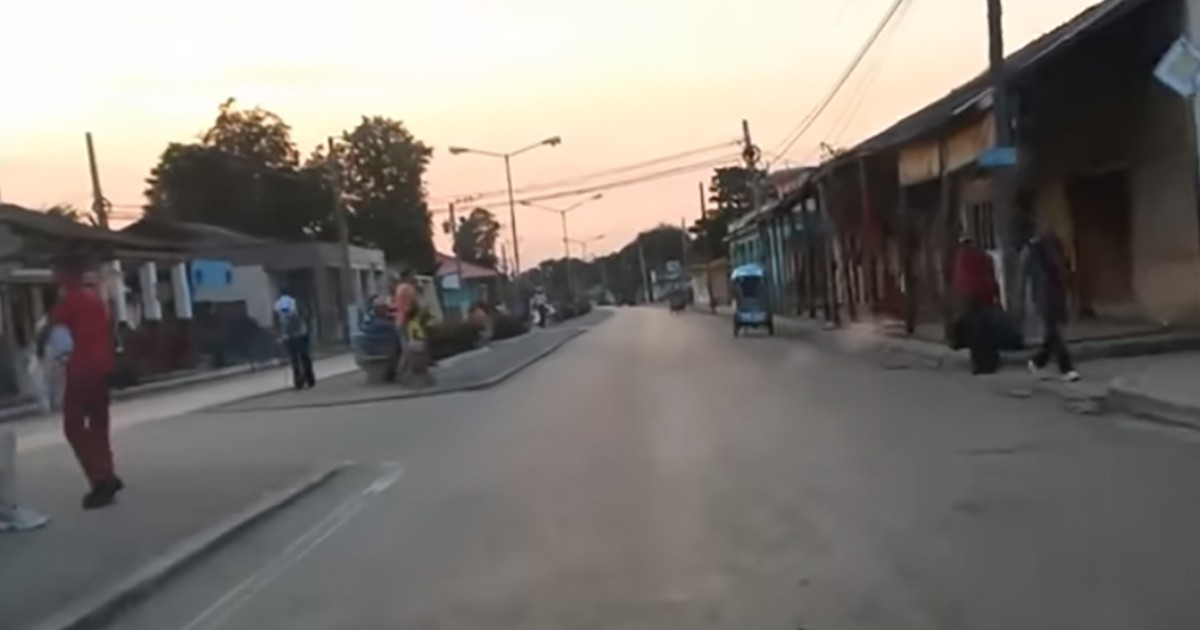
In the town of Veguitas, located in the municipality of Yara in Granma, a man has been apprehended for uprooting five steel bars from the public road infrastructure. This act caused significant damage and posed a threat to the safety of both drivers and pedestrians, as reported by an official source.
The authorities have condemned this incident as an act of theft and vandalism that has sparked outrage among the local community. According to a post on the Facebook page "Entérate con Aytana Alama," operated by the Ministry of the Interior (Minint), the man acted "without scruples or a sense of civic duty" when he removed the metal reinforcements directly from the roadway.
The official report states that the Revolutionary National Police responded swiftly to the situation, placing the individual under investigation. Details regarding the identity of the suspect or the intended destination for the stolen materials were not provided.
The tone of the official statement is notably instructive, labeling the suspect as a "low-life" who "violates the road for personal gain" and warning that "the law will come down hard on those who attempt to destroy what has been built with such effort."
Increasing Incidents of Infrastructure Theft
This incident is part of a growing trend of thefts involving construction materials and infrastructure components throughout the country. In July 2025, another person was arrested in Bayamo, also in Granma province, for sabotaging the railway tracks just before a convoy was scheduled to pass, an act that could have resulted in disaster.
Similarly, in May of the same year, police apprehended a man caught stealing railroad ties in the municipality of Mella, Santiago de Cuba, endangering transport safety. A month prior, another man was discovered stealing rebar from the railway structure in Arroyo Naranjo, Havana.
Economic Crisis Fuels Metal Theft
The theft of metals from public infrastructure is largely driven by the country's economic crisis and the burgeoning black market for construction materials. In response to the rising number of such incidents nationwide, the People's Supreme Court issued Decree 475 in May 2025, which heightened penalties for offenses against strategic infrastructure sectors, including railways, public transport, the electrical system, and telecommunications. These acts are classified as sabotage under Article 125 of the Penal Code.
The decree mandates swift judicial processing, exemplary trials, and extensive media coverage of these proceedings.
Strict Measures Amid Energy Crisis
Faced with a severe energy crisis, the regime is implementing harsh measures in response to the surge in criminal activities impacting the national electrical system, such as acts of vandalism and the theft of fuel, dielectric oil, components, parts, and other resources from the electrical grid, solar farms, solar panels, and generators.
The sanctions outlined in Decree 475 include prison sentences, confiscation of assets, and travel bans, with potential for increased penalties if human lives are endangered, minors are involved, or the act occurs at night.
Understanding Cuba's Infrastructure Challenges
What led to the man's arrest in Yara, Granma?
The man was arrested for uprooting steel bars from road infrastructure, which significantly damaged the road and endangered public safety.
How are authorities responding to infrastructure theft in Cuba?
Authorities are responding with swift police action, harsh legal penalties, and public awareness campaigns to combat the rising trend of infrastructure theft.
What are the consequences of the economic crisis on infrastructure theft?
The economic crisis has fueled the black market for construction materials, leading to increased theft of metals and components from public infrastructure.