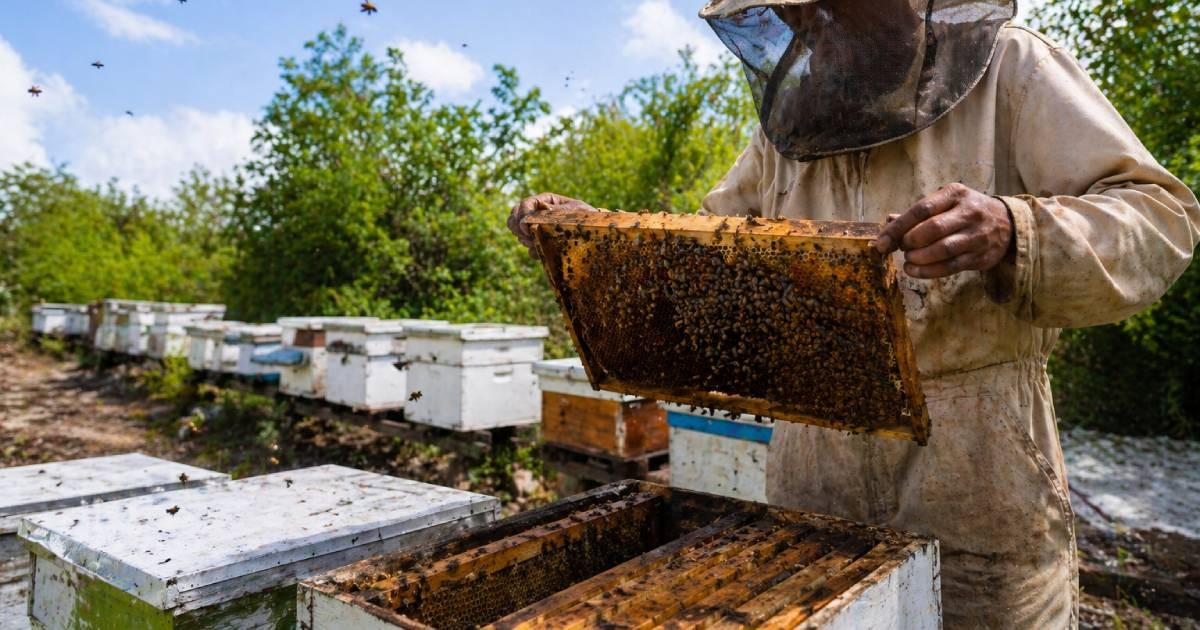
Yoandy Verea González, a beekeeper contracted by the state-run Cuban Beekeeping Company (Apicuba) in Perico, Matanzas province, has taken to Facebook to publicly accuse the company of amassing a significant dollar debt with him and other producers for honey delivered from mid-2024 through July 2025.
Working alongside his father, Verea manages the production of 55 honey barrels annually, along with wax and propolis. He chose to air his grievances on his personal profile because, as he states, the official Cuban beekeepers' page does not tolerate complaints or what he calls "justice."
State Negligence and Broken Contracts
The beekeeper paints a picture of complete neglect by the state entity: unpaid dues in foreign currency, halted supply of essentials—particularly hive boxes—and a total lack of fuel since February this year.
"The company has entirely breached the contract, refusing to sell us any supplies, especially hive boxes, which are crucial for development and increased production. To make matters worse, since February, we haven't received a single drop of fuel to properly maintain operations," Verea expressed.
An Unanswered Call for Action
Verea recounts exhausting all available institutional channels. He spoke with the provincial director of Apicuba, the national director, municipal agriculture officials in Perico, the local ANAP, and provincial agriculture authorities. Their response was consistently, "Don't worry, you will be paid."
Frustrated by the lack of resolution, Verea posed a question that encapsulates the sector's outrage: "If the State collected that honey and exported it, where did the beekeepers' money go?"
The Broader Crisis of Payment Delays
This complaint is not an isolated incident. The Cuban government exports 90% of the island's honey to European markets—chiefly Germany, France, and Spain—where it fetches between $3,000 and $5,500 per ton, while beekeepers receive a mere $650 per ton, with payments delayed by months or even years.
As of July 2025, data shows the Cuban State owes approximately $20 million to beekeepers for the 2024 harvest, and many have yet to be compensated for 2025's yield.
This pattern is mirrored across the agricultural sector. The government owes nearly 200 million pesos to farmers in several provinces, affecting cattle ranchers and milk producers. In Las Tunas, cattle farmers face unpaid debts halting production, and in Sancti Spíritus, honey production plummeted in 2024 and 2025 due to similar issues.
Understanding the Beekeeping Crisis in Cuba
What has caused the payment delays to Cuban beekeepers?
The Cuban government has failed to pay beekeepers for honey exports, despite selling the product in European markets. This has led to significant debts owed to producers.
How much does Cuba export in honey, and where does it go?
Cuba exports 90% of its honey production to European countries, primarily Germany, France, and Spain, where it is valued between $3,000 and $5,500 per ton.
What impact have these delays had on the agricultural sector in Cuba?
Payment delays have disrupted agricultural production across Cuba, with significant debts stalling operations in beekeeping, cattle farming, and milk production.