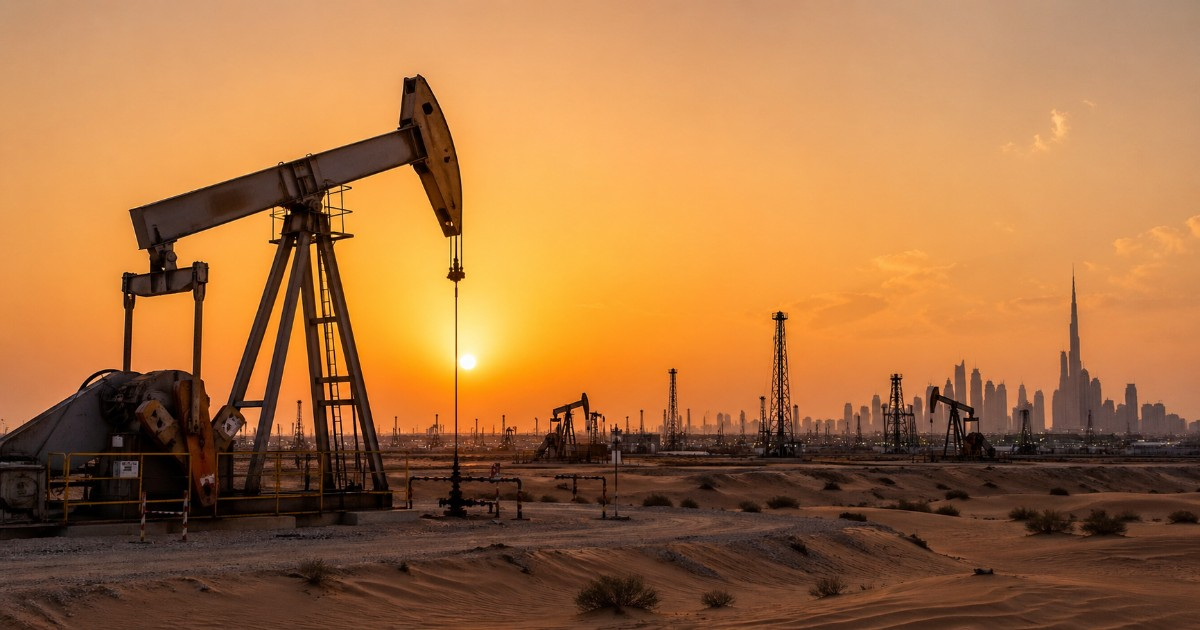
The United Arab Emirates (UAE) has declared its departure from OPEC and OPEC+, effective May 1, in a unilateral move that disrupts the group of oil-producing nations during one of the most severe energy crises in recent history, as reported by Reuters.
UAE's Energy Minister, Suhail Mohamed al-Mazrouei, confirmed that the decision was made independently and without consulting any other country, including Saudi Arabia, the de facto leader of the organization. "This is a policy decision made after a thorough analysis of current and future policies related to production levels," stated al-Mazrouei.
Impact of Regional Conflict on Oil Prices
This announcement follows the escalation of conflict with Iran, which has driven oil prices from $67 per barrel in February to over $108 in April, marking a nearly 50% increase in just two months.
On March 4, Iran closed the Strait of Hormuz, halting the transit of 20% of the world's oil and liquefied natural gas, approximately 20 million barrels daily, becoming a new global fault line in the energy market.
UAE's Strategic Response
The UAE has been the hardest hit by Iranian attacks during the conflict, enduring 2,256 drone strikes and 563 missile attacks, more than double the number faced by Kuwait and nearly ten times the attacks on Qatar. Over 90% of these targets were aimed at civilian infrastructure.
Emirati frustrations with regional allies were laid bare a day before the announcement when Anwar Gargash, a diplomatic advisor to the UAE's president, openly criticized the Gulf Cooperation Council at the Gulf Influencers Forum.
"The countries of the Gulf Cooperation Council have supported each other logistically, but politically and militarily, I believe their stance has been historically weak," Gargash stated. "I expected this weak position from the Arab League and am not surprised, but I did not expect it from the Cooperation Council, and it surprises me," he added.
Future Implications for Global Markets
Al-Mazrouei acknowledged that the exit might not have an immediate significant impact on the market due to the strait's blockade. However, he emphasized that operating outside the group allows the UAE to fully leverage its status as a provider of low-cost, low-carbon barrels.
Structurally, the decision stems from the fact that OPEC limited the UAE's production to around three million barrels per day, despite its real capacity exceeding four million, with plans to reach five million by 2027.
The departure is also seen as a triumph for former President Donald Trump, who in 2018 accused OPEC at the UN General Assembly of "exploiting" the countries that the United States defends militarily by imposing high prices.
On Tuesday, Senator Marco Rubio denounced Iran's boast of controlling 25% of global energy through the Strait of Hormuz, on a day when the energy crisis and the producer bloc's fracture dominated the international agenda.
Iran announced a temporary reopening of the strait on April 8 but closed it again days later following an Israeli attack on a petrochemical plant in Asaluyeh, leaving the global energy market with historically low reserve capacity.
Having joined OPEC in 1967 through the emirate of Abu Dhabi and formalized its federal membership in 1974, the UAE considers its withdrawal "a net positive outcome for consumers and the global economy," according to al-Mazrouei.
Understanding the UAE's Exit from OPEC
Why did the UAE decide to leave OPEC?
The UAE chose to depart from OPEC to capitalize on its capacity to produce low-cost, low-carbon oil and to operate independently from the restrictions imposed by the organization.
What impact will the UAE's exit have on global oil markets?
Although the immediate impact may be minimal due to the Strait of Hormuz blockade, in the long run, the UAE's ability to increase production could alter global oil supply dynamics.
How has the conflict with Iran affected the UAE?
The UAE has been significantly impacted by Iranian attacks, enduring numerous drone and missile strikes, particularly targeting civilian infrastructure.