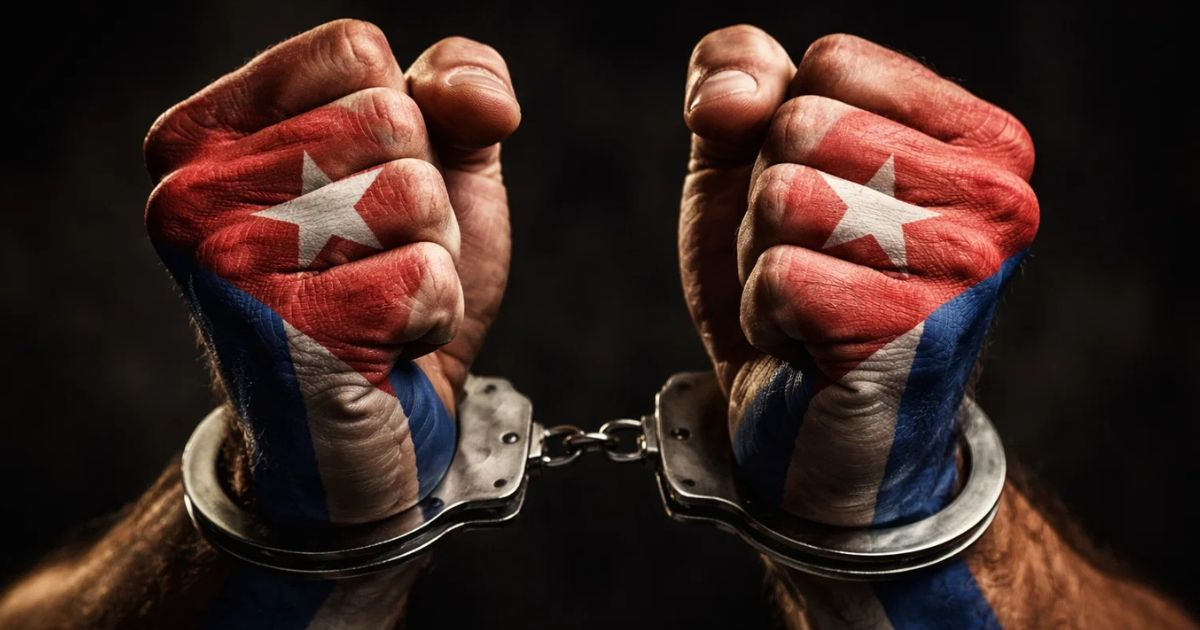
Amnesty International's latest annual report on the global human rights landscape highlights an alarming escalation of repressive measures by the Cuban government against activists, dissidents, journalists, and human rights defenders throughout 2025. The report assesses events from 144 countries and dedicates a specific chapter to the situation in Cuba.
The Cuban Observatory for Human Rights documented at least 3,179 repressive actions and 529 arbitrary arrests over the course of 2025, while Prisoners Defenders reported that there were 1,197 political prisoners by the end of the year.
One of the most notable cases involved opposition leader José Daniel Ferrer García. After securing conditional release in January 2025 through Vatican mediation, Ferrer faced revocation of his freedom in April as retaliation for continuing his activism. In a handwritten letter from September 2025, Ferrer declared, "I am ready to die, but not to live without honor, without dignity." Ultimately, he was exiled to the United States in October after enduring months of torture and threats to his family.
The revocation of conditional release extended to other prisoners of conscience, including Félix Navarro and Donaida Pérez Paseiro, who were freed in January only to face new restrictions in April. Berta Soler, leader of the Damas de Blanco, was subjected to multiple arbitrary detentions throughout the year.
In March, activist Leonardo Romero Negrín was arrested for peacefully protesting with a blank sign, facing beatings and house arrest. Similarly, writer Jorge Fernández was detained and assaulted repeatedly for his peaceful demonstrations, with house arrest imposed in August.
Crackdown on Independent Media
In November, the regime launched an aggressive campaign against the independent news outlet elTOQUE and 18 of its contributors, threatening imprisonment under "financial terrorism" charges and publicly exposing journalists' personal information.
Within the prison system, the organization Cubalex recorded 39 deaths among inmates during 2025. Prisoners of conscience such as Luis Manuel Otero Alcántara, Maykel Castillo, Loreto Hernández, Roberto Pérez Fonseca, and Sayli Navarro reported torture, beatings, denial of family visits, and lack of medical care.
The report also highlights the unique forms of repression faced by female activists, including threats against their children, school surveillance, and stigmatization. The Alas Tensas Gender Observatory documented 48 femicides in 2025, a crime the Cuban state has yet to define independently.
Economic Crisis Worsening Conditions
The economic crisis exacerbates these challenges. In May 2025, the Food Monitor Program reported that 96.91% of Cubans had lost access to food due to inflation, with over 60% spending between five and 15 hours a week just to find food. By July, even the authorities admitted to having only 30% of essential medicines available, and the Cuban Observatory for Human Rights estimated in September that 89% of the population lived in extreme poverty.
In a stark example of criminalizing peaceful protest, 15 individuals were sentenced to up to nine years in prison in September for participating in the March 2024 Bayamo protests, facing charges like "public disorder," "contempt," and "assault."
Amnesty International's report warns that the situation in Cuba is not merely on the brink of collapse but is actively deteriorating. The organization calls on the international community to reject appeasement of regimes that systematically violate human rights, echoing longstanding demands from human rights organizations confronting Cuba's dictatorship.
Frequently Asked Questions About Cuba's Human Rights Crisis
What are the main findings of Amnesty International regarding Cuba in 2025?
Amnesty International's report outlines intensified repression by the Cuban government against activists, opposition figures, and journalists, alongside a worsening economic situation leading to food and medicine shortages.
How many political prisoners were reported in Cuba by the end of 2025?
Prisoners Defenders reported 1,197 political prisoners in Cuba by the end of 2025.
What economic challenges are affecting the Cuban population?
The economic crisis in Cuba has led to severe food shortages, with nearly 97% of the population losing access to food due to inflation, and a significant lack of essential medicines.