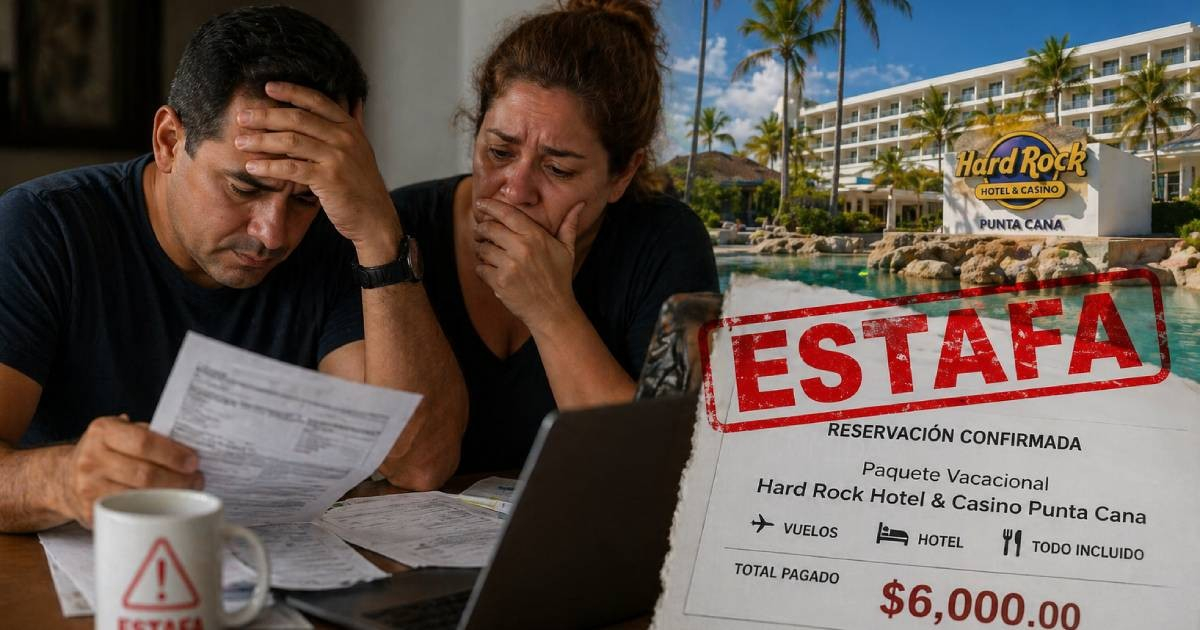
A Cuban family residing in South Florida fell victim to a scam, losing nearly $6,000 after paying for what they believed was a vacation package at the Hard Rock Hotel & Casino Punta Cana. The victim reported the fraud to Telemundo 51.
"We spent around 6,000 dollars on three rooms because we planned to bring relatives from Cuba to Punta Cana so they could spend a week with us and the grandchildren," Santiago Machado explained to the American media outlet.
The offer appeared genuine as it came through a friend who held a membership in a vacation program linked to the hotel, and it was presented over the phone by alleged representatives of the hotel chain.
Discovery of the Scam
The deception was uncovered when other acquaintances, who had also paid, attempted to travel first and discovered the truth.
"There's no reservation, no plane tickets, nothing exists," Machado recounted.
When trying to reach the sellers, calls were either dropped or deliberately disconnected. Machado mentioned that during one of his attempts, he could hear laughter in the background: "They hung up the phone for the third time, and I heard laughter behind."
Emotional and Financial Impact
More than a dozen family friends fell for the same scheme, according to Machado.
The emotional toll was particularly severe when breaking the news to family members in Cuba. "Imagine, our mothers cried when we told them they couldn't come, that it was all a scam, and that we had lost the money," Machado shared.
Beyond the financial loss, victims are worried about identity theft since they provided sensitive personal information to the scammers. "These people have all our data, passports, everything. I think it's very delicate, besides the lost money," he warned.
Machado managed to reclaim part of the money because he used a credit card, and his bank initiated a charge dispute while investigating the fraud. He chose to speak out publicly "precisely so it doesn't happen to anyone else."
Travel Scams on the Rise
Online travel scams are a well-documented and growing phenomenon in Florida, particularly during vacation seasons.
Cinthya Lavin, spokesperson for the Better Business Bureau (BBB), affirmed, "We've seen many scams, especially in vacation areas like Florida or Las Vegas, which always have specials."
Lavin explained the criminals' tactics: "There are scammers and operations that steal the identity of legitimate companies because they know that with a legitimate company, they have that hook."
Among the most common scams affecting Cubans in the United States, fraudulent vacation packages have become a particularly damaging trend for families seeking to reunite with loved ones in Caribbean destinations.
The BBB advises verifying directly with the hotel chain if a promotion exists before making any payment and always paying by credit card, "because it offers more protection against scams," according to Lavin.
The clearest warning sign, according to the bureau, remains the simplest: if an offer seems too good to be true, it probably is.
Protecting Yourself from Vacation Scams
How can I verify a vacation offer is legitimate?
It's essential to contact the hotel or company directly to confirm the offer's validity. Avoid relying solely on third-party communications, especially if they come from unknown sources.
What should I do if I suspect I've been scammed?
Immediately contact your bank or credit card company to dispute the charges. Report the scam to the local authorities and consumer protection agencies to help prevent others from falling victim.
Why are vacation scams increasing in Florida?
Florida's popularity as a vacation destination makes it a prime target for scammers who exploit the high demand for deals and packages, particularly during peak travel seasons.