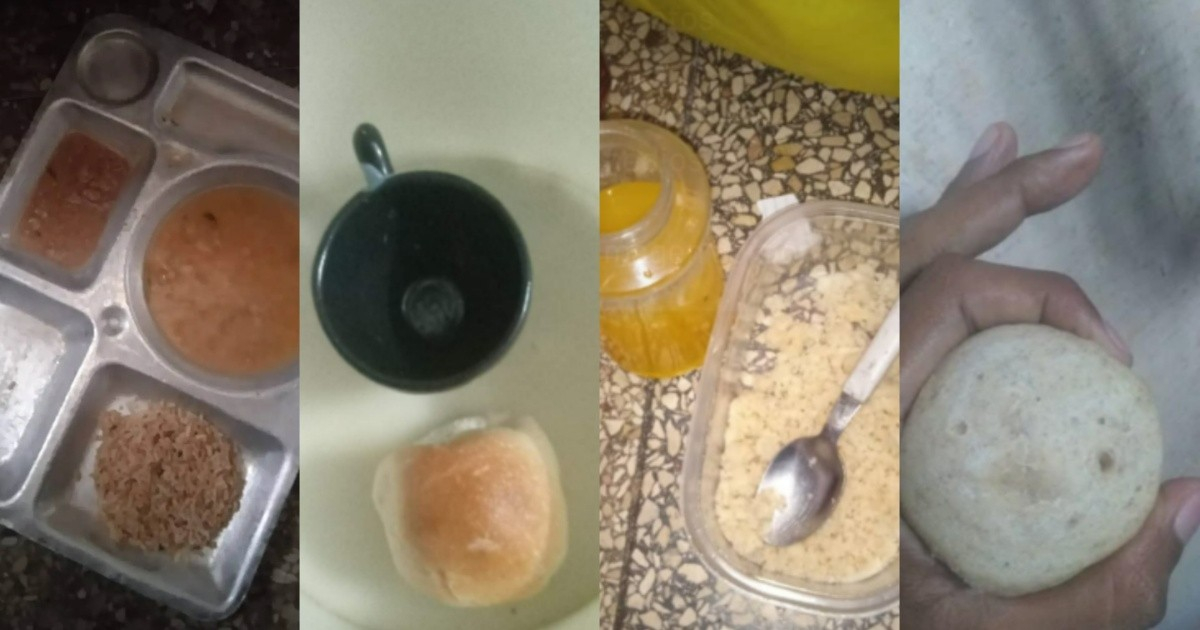
A technical report released by Prisoners Defenders on Monday brings to light the dire situation faced by approximately 90,000 inmates in Cuba, which accounts for nearly 1% of the population. These prisoners endure severe and systematic malnutrition under conditions that the organization describes as "incompatible with life."
This report, which compiles evidence from photographs, firsthand accounts from inmates and their families, and international nutritional standards, reveals that the daily food intake in these prisons offers only between 250 and 353 kilocalories. This is merely 10% to 14% of the minimum daily requirement for an adult, which is around 2,553 kilocalories.
Breakfast typically consists of a single piece of bread weighing between 45 and 60 grams and a bowl of watery, unsweetened tea, contributing almost no nutritional value. Lunch and the afternoon meal, served at 11:00 AM and 3:00 PM respectively, include less than 30 grams of cooked rice, approximately 50 grams of soup described by inmates as "acidic," and about 20 grams of a mushy concoction known as "boiled croquette."
Javier Larrondo, president of Prisoners Defenders, did not mince words: "We are talking about severe undernutrition, sustained over time. This is not a poor diet; it's a condition capable of causing extreme deterioration and irreversible damage."
The report highlights that such inadequate intake can lead to severe weight loss, anemia, immune suppression, muscle deterioration, neurocognitive damage, and increased vulnerability to infections within just a few months.
Deplorable Living Conditions Compound the Crisis
Beyond malnutrition, inmates face widespread unsanitary conditions: bug-infested cells and mattresses, overcrowding, and a lack of medical care. "These conditions are not just uncomfortable; they are progressively destructive," Larrondo warned.
The case that triggered the report's creation is that of Alexander Díaz Rodríguez, a July 11 protester sentenced to five years in Kilo 5 and a half prison in Pinar del Río. Released on April 12, he emerged with advanced throat cancer, hepatitis B, anemia, and severe malnutrition, his weight plummeting from between 80 and 90 kilograms to a mere 37 to 55 kilograms.
U.S. official Mike Hammer spoke with Díaz Rodríguez last Thursday, confirming the pattern of systematic medical neglect highlighted by the organization.
Human Rights Violations Demand International Attention
The report identifies at least 447 political prisoners suffering from severe health issues caused or worsened by their detention conditions, 47 with untreated severe mental disorders, and 34 in critical danger. Documented cases include minors in maximum-security prisons and individuals with histories of suicide attempts.
This bleak scenario is part of a worsening prison crisis. In February, a riot at Canaletas prison in Ciego de Ávila was sparked by extreme hunger and the death of a young inmate beaten after requesting food, resulting in at least seven reported deaths. That same month, Cubalex documented seven deaths in custody, declaring it a "particularly critical" period.
In January, José Daniel Ferrer, founder of UNPACU, had already warned that "thousands of inmates are malnourished in Cuban prisons," likening the conditions to concentration camps.
Larrondo was unequivocal about the regime's accountability: "When the State has custody of an individual, it has an absolute duty to preserve their life. Receiving minimal sustenance, living among infestations, and being denied medical care constitutes cruel, inhuman, and degrading treatment or even crimes against humanity."
Prisoners Defenders has urged the UN and the European Union to take immediate action: independent access to prisons, effective diplomatic pressure, and the immediate release of prisoners at greatest risk. The report was published in six languages—Spanish, English, French, Italian, Portuguese, and German—with the explicit aim of reaching the international community.
"Inaction is no longer neutrality. Each day of silence could mean one less day of life for those trapped, sick, and abandoned," Larrondo concluded.
Understanding Cuba's Prison Crisis
What are the main findings of the Prisoners Defenders report?
The report reveals that approximately 90,000 inmates in Cuba suffer from severe malnutrition, receiving only a fraction of the necessary daily caloric intake. It also highlights unsanitary conditions and a lack of medical care.
How does the report describe the food provided to prisoners?
Prisoners receive minimal food, with breakfast consisting of a small piece of bread and watery tea. Lunch and an afternoon meal include a negligible amount of rice, soup, and a mushy "boiled croquette."
What actions are being advocated by Prisoners Defenders?
Prisoners Defenders is calling for the UN and the European Union to ensure independent access to prisons, apply diplomatic pressure, and secure the release of inmates in critical condition.