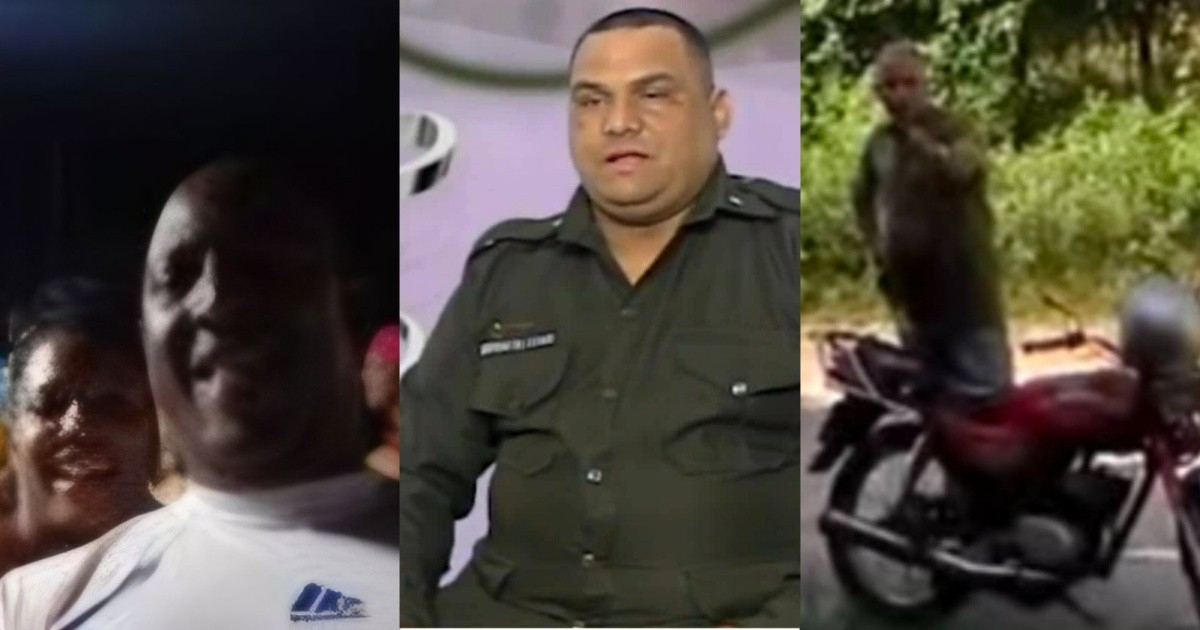
Salomé García Bacallao, an outspoken activist and coordinator of the Justicia 11J group, brought to light a disturbing incident on Sunday involving the sexual assault of a July 11 protester detained at Guanajay Prison. She pointed fingers at three prison officials, accusing them of enabling the assault with blatant impunity.
The report indicates that this is the second time inmate Roberto Valdés Alonso, known as "the stutterer of San José," who is serving a sentence of over 30 years, has sexually assaulted a political prisoner at this facility. The prison authorities allegedly turned a blind eye to these actions.
The officials implicated are Major Javier Reboso Pérez, affiliated with State Security; Lieutenant Colonel Emilio Guilarte Ramírez, infamously known as "The Illustrious" and the prison's deputy chief; and Lieutenant Colonel Guillermo Cordero Monduy, nicknamed "Guillermo Tell," who was reportedly on vacation during the incident.
A message attributed to Major Reboso, mocking the situation, acknowledges his role: "tell the stutterer he's really handling the July 11 boys."
The victim, a young protester, remains unnamed to protect his family. García Bacallao revealed that he was chemically sedated before the attack and is currently in a state of shock, receiving medical attention within the prison for severe physical and psychological trauma.
Previously, political prisoner Julián Mazola was intentionally placed in the same cell as Valdés Alonso by Major Reboso as a form of retribution for his refusal to cooperate with State Security.
García Bacallao didn't mince words about Guilarte Ramírez: "Emilio is an abuser, who takes pleasure in beating and demeaning prisoners, even resorting to verbal sexual violence."
She also implicated him in the torture of political prisoner Orlando Zapata Tamayo, who died on February 23, 2010, following an 80-day hunger strike while detained in Guanajay and other prisons.
Meanwhile, Cordero Monduy has a well-documented history of repression dating back to 2005 in the same prison. Human rights advocates have accused him of being complicit in the deaths of several inmates and collaborating with the Provincial Court of Artemisa to fabricate charges against dissidents.
García Bacallao emphasized that "the practice of allowing sexual abuses in prisons is both historical and systematic in Cuba," as documented by Human Rights Watch in their 1999 report.
The backdrop is one of ongoing repression: according to Justicia 11J, at least 760 political prisoners linked to the July 11 protests remain incarcerated in Cuba, with the total number of political prisoners reaching 1,250, as per Prisoners Defenders.
The conditions at Guanajay have been frequently criticized: a June 2025 report recorded 160 torture complaints in Cuban prisons during the first half of the year, including 104 instances of medical care being denied.
"There are over a dozen political prisoners at risk in Guanajay Prison. ENOUGH WITH THE IMPUNITY!" García Bacallao concluded in her denunciation.
Key Questions on the Guanajay Prison Scandal
Who are the officials accused in the Guanajay Prison scandal?
The officials implicated are Major Javier Reboso Pérez, Lieutenant Colonel Emilio Guilarte Ramírez, and Lieutenant Colonel Guillermo Cordero Monduy.
What are the accusations against the officials at Guanajay Prison?
They are accused of allowing sexual assaults on political prisoners, with Major Javier Reboso allegedly mocking the situation, and Lieutenant Colonel Emilio Guilarte Ramírez and Lieutenant Colonel Guillermo Cordero Monduy having histories of abuse and repression.