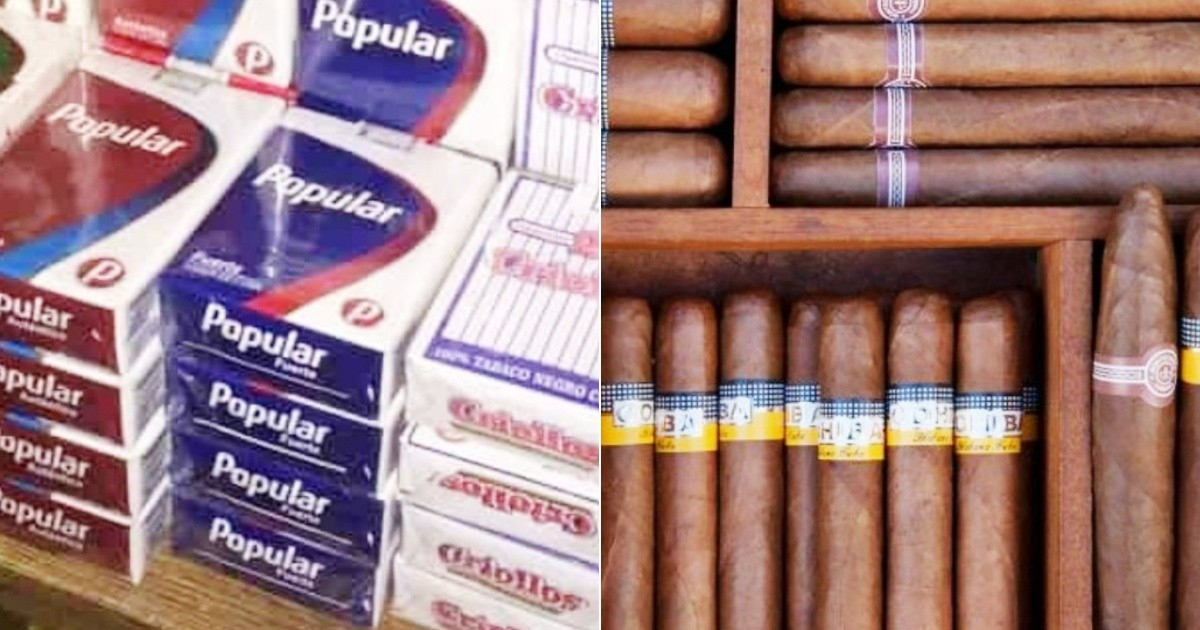
An employee at the Wholesale Food Products Marketing Company (EMPA) in Jiguaní, located in Granma province, has been detained after allegedly stealing thousands of packs of cigarettes and cigars from the company's warehouse.
The economic impact of this theft is estimated to exceed 10 million Cuban pesos (CUP).
The arrested individual exploited his access to state resources to remove the products from the warehouse of the company, which serves as a middleman between state-run Tabacuba factories and retail outlets nationwide, as reported by the pro-government Facebook page "Entérate con Aytana Alama."
"These products, which were intended to reach the commercial network for the public's consumption at set prices, end up in informal markets with speculative pricing," the post noted.
The pro-government profile that reported the case in Granma attempted to portray the arrest as a triumph of the state in protecting the population.
"This act is not merely a number on a balance sheet; it is a direct hit to the populace," they wrote.
However, this incident once again highlights the flaws in Cuba's state distribution system, where employees with warehouse access divert essential goods to the black market, while the general public faces empty shelves.
The perpetrator of the theft is "already undergoing police proceedings," according to the post, although the official source did not specify the formal charges or the trial date.
This situation unfolds amid a severe shortage of cigarettes in Cuba that has persisted since at least early 2025, with black market prices in the capital ranging from 200 to 1,500 pesos per pack, compared to the official price of 30 pesos set by the Ministry of Finance and Prices' Resolution 63.
The shortage is attributed to various structural issues: power outages disrupting production, outdated machinery, and inadequate nationwide distribution of cigarettes.
The embezzlement from within the distribution warehouses directly exacerbates this shortage.
Jiguaní, a municipality with a long-standing tobacco tradition in eastern Cuba, produces around 1,200 tons of tobacco annually, making the internal diversion of products intended for public consumption even more striking.
The Cuban regime launched an anti-corruption campaign in July 2025, featuring "exemplary" trials in state enterprises, with sentences of up to 20 years imprisonment.
This Monday, three officials from the Santiago de Cuba Vegetable Preserves Company were sentenced to terms ranging from 10 to 15 years for diverting over five million pesos.
In February, five employees from the Las Tunas Wholesale Food Company received sentences of 11 to 13 years for embezzlement affecting 50,000 families.
Understanding the Cigarette Shortage and Corruption in Cuba
What led to the cigarette shortage in Cuba?
The shortage is primarily due to structural challenges such as production interruptions caused by power outages, outdated machinery, and ineffective distribution across the country.
How does corruption affect the distribution of cigarettes in Cuba?
Corruption leads to the diversion of goods meant for public sale to the black market, where they are sold at inflated prices, further contributing to the shortage and unavailability in official retail outlets.
What measures has the Cuban government taken against corruption?
The government launched an anti-corruption campaign, conducting trials deemed "exemplary" and imposing sentences of up to 20 years on those found guilty of embezzlement and corruption within state enterprises.