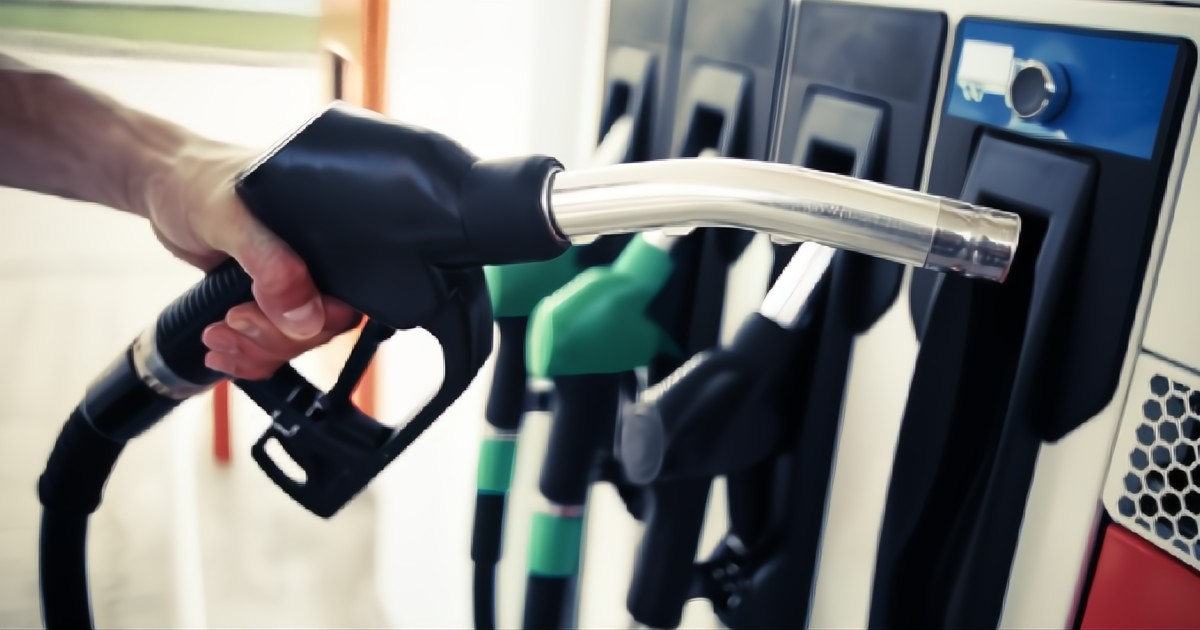
On Monday, the average cost of gasoline in Florida dropped to $3.94 per gallon, a slight relief attributed to a tenuous ceasefire with Iran. This development has raised the possibility of reopening the Strait of Hormuz, according to data from AAA — The Auto Club Group, as reported by Florida Politics.
Last week, gas prices had increased by three cents but then slid back to $3.95 by Sunday, decreasing another cent on Monday. This places the current price seven cents lower than the previous week's average, although it remains 88 cents higher than in April 2025.
The catalyst for this temporary reprieve was Iran's proposal to relinquish control over the Strait of Hormuz in exchange for the U.S. lifting its naval blockade on Iranian ports and ending the conflict, as reported by the Associated Press.
A delicate ceasefire is in place following weeks of intense instability. The conflict began on February 28 with Operation Epic Fury, a joint U.S.-Israel offensive that wiped out 90% of Iran's missile arsenal.
In retaliation, Iran closed the strait on March 4, causing Brent crude prices to skyrocket from $67 to over $126 per barrel and significantly driving up gas prices in Florida.
By April 7, gas prices in Florida peaked at $4.198 per gallon, with extreme cases like Miami Beach, where a Shell station charged $5.39 per gallon.
An initial ceasefire mediated by Pakistan was agreed upon on April 8, but negotiations in Islamabad fell through shortly thereafter.
The U.S. enforced a naval blockade on April 13, Iran shut the strait again on April 18, and Trump extended the ceasefire indefinitely on April 21.
Despite this week's dip, analysts caution that the respite could be short-lived. Last week, crude oil prices increased by 13% to $10.55 per barrel, and gasoline futures rose by 46 cents per gallon, indicating potential upward pressure.
"Gas prices in Florida have fluctuated from week to week after hitting their peak earlier this month," noted Mark Jenkins, a spokesperson for AAA. "They could climb again soon, following the increases in crude oil and wholesale gasoline prices."
Within the state, Panama City ($3.68), Pensacola ($3.69), and the Crestview-Fort Walton Beach area ($3.74) report the lowest prices. The most expensive areas are West Palm Beach-Boca Raton ($4.13), Gainesville ($4.02), and Fort Lauderdale ($4.01).
The national average stands at $4.11 per gallon. California leads with $5.95, followed by Hawaii ($5.66) and Washington ($5.48), while Oklahoma ($3.50), Kansas ($3.53), and Arkansas ($3.60) have the nation's lowest prices.
The Trump administration had warned that prices might continue to rise if the conflict remains unresolved. Meanwhile, Treasury Secretary Scott Bessent projected gas prices could approach $3 per gallon by the summer of 2026, contingent on the permanent reopening of the strait—a prospect that currently appears both possible and precarious.
Understanding the Impact of Iran's Truce on Gas Prices
What caused the recent decrease in gas prices in Florida?
The recent decrease in gas prices in Florida is attributed to a temporary ceasefire with Iran, which has opened possibilities to reopen the Strait of Hormuz.
How has the conflict with Iran affected gas prices in Florida?
The conflict with Iran led to a significant increase in gas prices in Florida, especially after Iran closed the Strait of Hormuz, causing crude oil prices to surge.
Are the current gas prices in Florida expected to remain stable?
Analysts warn that the current relief in gas prices may be temporary, as recent increases in crude oil and gasoline futures suggest potential upward pressure.