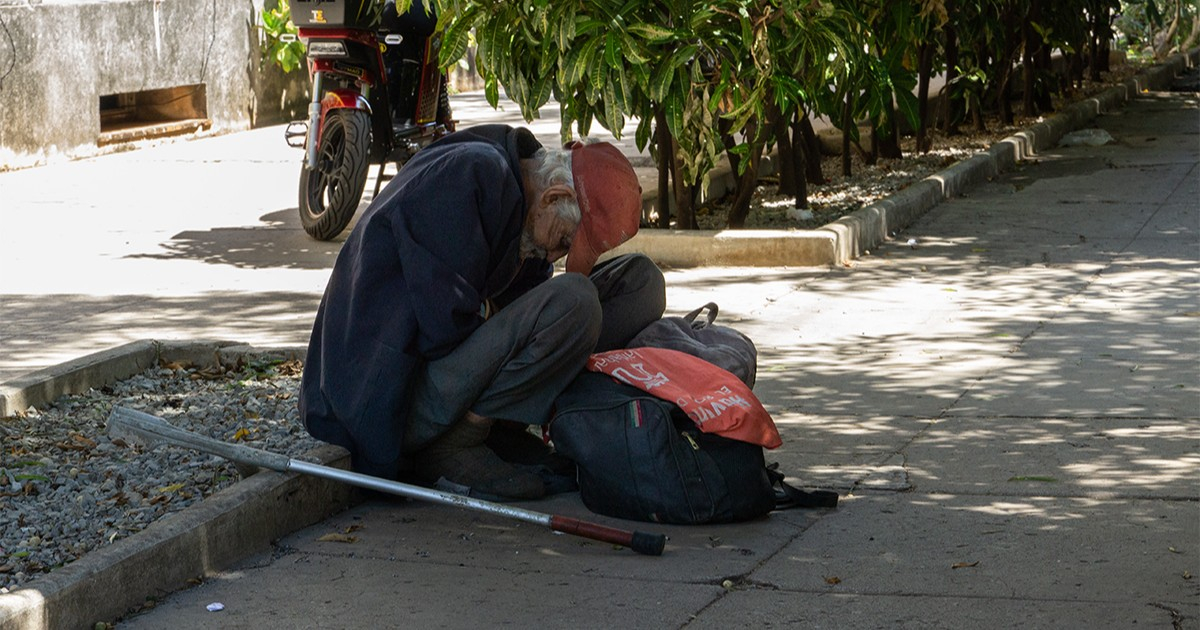
On Monday, the Associated Press released an investigative report highlighting the plight of elderly Cubans, portraying them as one of the most at-risk demographics amid the island's severe economic downturn.
This AP report joins a growing number of international stories that reveal a harsh truth the Cuban regime has tried to downplay: countless elderly individuals left abandoned, lacking adequate food, medicine, and familial support.
Cuba ranks among the most aged nations in Latin America, with 25% of its citizens over 60 years old, starkly contrasting with the crumbling state-run social assistance system.
The statistics are dire: as per the Cuban Observatory for Human Rights, a staggering 79% of those over 70 cannot manage three daily meals.
A survey by ASIC, involving 506 retirees across five provinces, found that 98.8% feel institutionally neglected, and 99% say their pensions fall short of covering basic needs.
Even after a pension increase in August 2025, monthly payments barely exceed 4,000 pesos, equivalent to less than $10 on the informal exchange market, making the act of collecting a pension a grueling ordeal for many Cubans.
The disparity between military and civilian pensions is glaring: military retirees receive up to 90% of their last salary, while civilian retirees subsist in abject poverty.
In March 2026, the Ministry of Labor and Social Security admitted the lack of resources to support vulnerable individuals, a candid acknowledgment of the institutional abandonment affecting the 1,774,310 registered retirees on the island.
Inadequate Elder Care Infrastructure
The senior care home system is likewise underwhelming: only 156 facilities with 12,697 beds serve the entire nation, leaving 51 municipalities devoid of any elder care services.
The collapse of Cuba's social assistance system is exacerbated by widespread emigration: over 1.4 million Cubans have left since 2020, leaving 17.4% of the elderly without close family members.
An elderly woman from San Germán, Holguín, whose son emigrated, bluntly stated, "I go up to three days without eating," relying on neighbors for sustenance and water.
Numerous documented cases exist where neighbors have sought help for vulnerable elderly women found in dire conditions, while even state-run media have depicted seniors scavenging for survival on the streets, a reality the regime can no longer conceal.
The Impact of Cuba's Energy Crisis
The 2026 energy crisis has further compounded these challenges: amid the collapse of external fuel supplies, Cuba faces frequent nationwide blackouts with a peak-hour deficit of 2,025 megawatts, disproportionately affecting those dependent on electricity for refrigeration of medicine or medical equipment use.
In the absence of state support, neighborly solidarity and remittances from abroad have become the true lifelines for the most vulnerable elderly, making old age in Cuba synonymous with poverty, loneliness, and neglect.
A Cuban retiree quoted in the Spanish newspaper El País expressed his frustration: "You can't tell people we're going to live off what we produce. What do we produce?"
Understanding the Plight of Cuba's Elderly
What percentage of Cuba's population is over 60 years old?
Cuba has 25% of its population over the age of 60, making it one of the most aged countries in Latin America.
How many elderly Cubans struggle to eat three meals a day?
According to the Cuban Observatory for Human Rights, 79% of Cubans over 70 years old cannot afford three meals a day.
How does the pension system in Cuba fail its elderly?
Despite a recent increase, most pensions do not exceed 4,000 pesos monthly, equivalent to less than $10, forcing retirees to live in poverty.