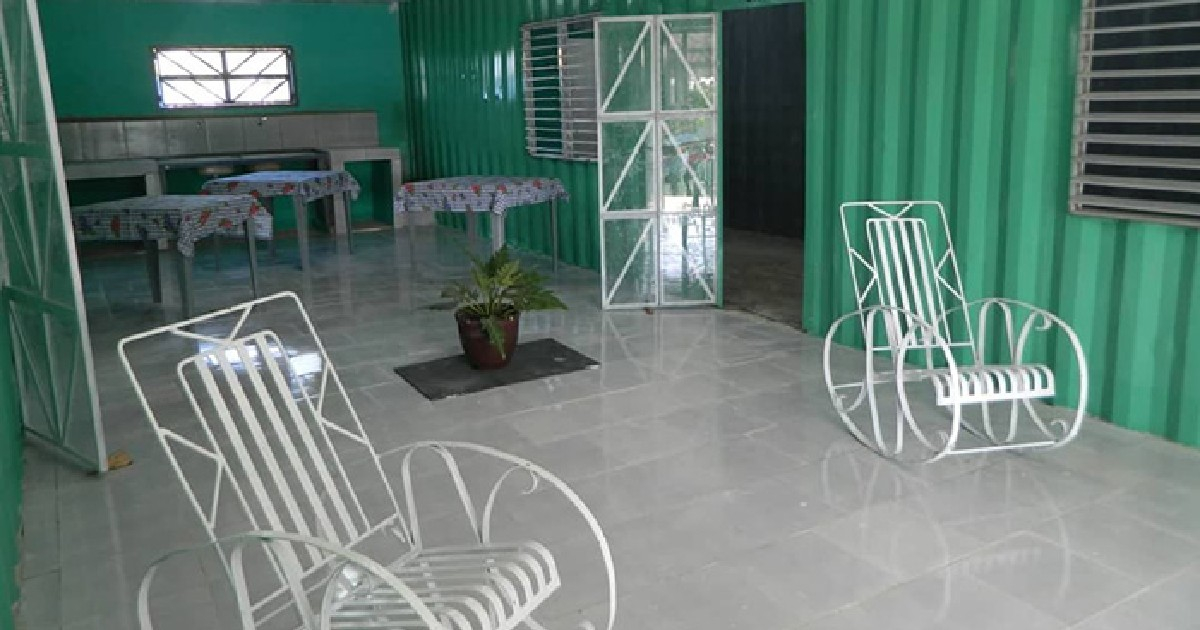
The Electromechanical Company in Villa Clara has launched a new elder care facility, notable for being the first of its kind to be established within a state-run enterprise. While official state media has hailed the opening as a "landmark" and an "act of justice," it comes against a bleak backdrop where 1.77 million Cuban retirees struggle to get by on pensions that fall short of covering basic needs.
This initiative emerged from a commitment made by the labor union following President Miguel Díaz-Canel's visit to the facility in 2024. Remarkably, the project is not backed by state funds—which are nonexistent—but rather by resources generated by the workers themselves, including a self-sustaining agricultural module, according to reports from the ACN.
Director Justo Rodríguez Gattorno described the facility as "an act of justice for those who dedicated their lives to production." He also mentioned that retirees would have the opportunity to share their knowledge with younger generations and contribute to the company's organoponic farm. In essence, the elderly will also be expected to work.
Reality Behind the Grand Announcements
Susely Morfa González, the first secretary of the Communist Party in Villa Clara, proclaimed that "social commitment can flourish even in a workshop," inadvertently highlighting the failure of Cuba's welfare system: it simply does not flourish. Just one enterprise is stepping in to fill a void the state has failed to address for decades.
The stark reality behind this grandiose announcement is devastating. The collapse of Cuba's social support system has left the overwhelming majority of older adults in neglect: a staggering 99% of retirees report that their pensions are insufficient to meet basic needs for food, housing, and medication, according to the Cuban Observatory of Citizen Audit.
The Economic Struggle for Cuba's Seniors
As of September 2025, the minimum pension stands at 4,000 Cuban pesos, equivalent to less than $10 on the informal exchange market, while monthly living expenses are eight times that amount. After forty years of laboring for the state, countless Cubans face the grim reality of receiving just about seven dollars in return, a sum that fails to cover three daily meals for 79% of those over seventy.
Cuba has the highest aging population in Latin America, with 25.7% of its citizens over sixty as of late 2024. Additionally, the mass exodus from the country has left many elderly individuals without family support: over 1.1 million people emigrated from the island between 2021 and 2024, leaving 17.4% of seniors without close family. One elderly woman, whose son emigrated, bluntly stated, "I go up to three days without eating."
Government's Inadequate Response
The Family Care System reaches only 67,000 of the nation's retirees, with a 2026 national budget of just $14,600. In March, Vice President Salvador Valdés Mesa candidly admitted, "You can't live on pensions."
Faced with this collapse, the government authorized private enterprises and cooperatives to open elder care residences in February, effectively conceding that the state cannot fulfill its constitutional obligations. As of 2021, there were merely 300 elder care centers and 157 nursing homes for almost two million retirees. Given the country's continuous decline, these numbers likely have decreased.
In this context, Domingo Ocaña Piedra, a 76-year-old engineer and a founder of the Villa Clara Electromechanical Company who returned to work post-retirement, enthusiastically welcomed the opening of the new facility. "This elder care center is an act of love and a testament to the power of will," he said. What he didn’t mention is who should have demonstrated that will decades ago: the regime that has spent 67 years pledging to care for its people.
Understanding the Challenges Facing Cuba's Elderly
What is the significance of the new elder care facility in Villa Clara?
The new facility is significant because it is the first elder care center within a state enterprise in Cuba, representing an effort to address the severe inadequacies in the country's social support system for seniors.
Why are Cuban pensions insufficient for basic needs?
Cuban pensions are insufficient because they are set at a level far below the actual cost of living, which has soared due to economic instability and inflation, leaving most retirees unable to afford basic necessities.
How does the government plan to address the issue of elderly care?
The government has allowed private businesses and cooperatives to open elder care facilities, implicitly acknowledging that the state cannot meet its obligations. However, this measure may not be sufficient to meet the widespread need.