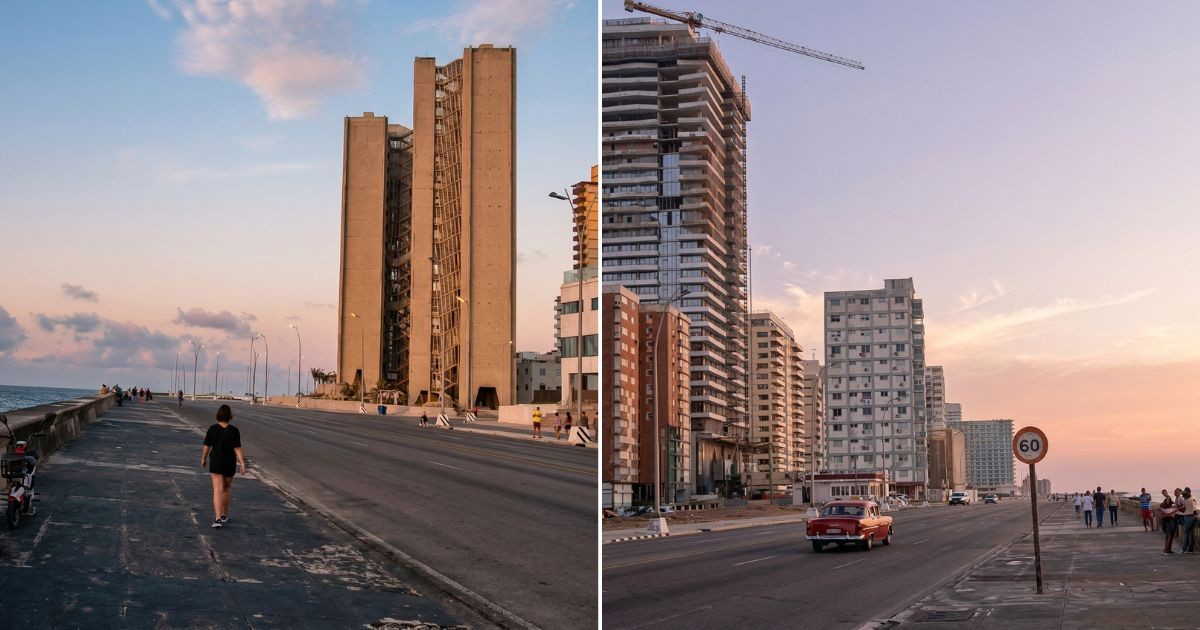
Spanish journalist Pascual Serrano, long known for his staunch support of the Cuban regime, recently penned a piece for Globalter concerning Cuba's energy crisis. In his article, he claims that "navigating Havana isn't difficult" and paints a picture of a city where people continue to go to work and entertainment venues are bustling on weekends, drawing a stark contrast to the notorious "Special Period" of the 1990s.
Serrano, the founder of the Spanish newspaper Público, former director of the Spanish edition of Le Monde Diplomatique, and a frequent contributor to Granma—the official publication of the Cuban Communist Party—visited Havana and presented a narrative that is at odds with the reality reported by numerous journalistic sources and international organizations.
In his narrative, Serrano attributes the crisis solely to what he terms an "energy blockade" by the Trump administration, which allegedly halted oil imports for four months, praising the Cuban government's management as a beacon of efficiency and resilience.
Reality of Havana's Transportation Collapse
Nevertheless, on February 6, 2026, Transportación Habana officially declared that the urban transport system in the capital had completely collapsed. No bus or minibus routes were operational due to fuel shortages, leaving hundreds of thousands of Havana residents stranded, unable to reach workplaces, schools, or hospitals.
Images of the empty Havana Tunnel became symbolic of this breakdown. CUPET gas stations restricted sales to 20 liters per vehicle, payable in dollars, resulting in lines lasting up to 26 hours.
Desperate Measures in a Failing System
In Ciego de Ávila, only two out of 135 transport routes were functional by March 2026. National trains were reduced to one departure every eight days. What Serrano refers to as Chinese electric motorcycles and tricycles capable of carrying "up to six people" is, in truth, a desperate move by the populace in the face of a collapsed transport system lacking formal alternatives.
The electrical deficit reached over 2,000 MW during peak hours, leading to blackouts lasting up to 18 hours daily. A total collapse of the national grid occurred on March 23, with NASA satellite images revealing that cities in eastern Cuba lost up to 50% of their nighttime lighting.
Structural Roots of the Crisis
The crisis has deep-seated structural causes that Serrano's article neglects. Cuba produces merely 40,000 barrels of crude oil daily, far short of the over 110,000 barrels it consumes, having historically relied on subsidized imports from Venezuela, Russia, and Mexico.
The capture of Nicolás Maduro on January 3, 2026, cut off the Venezuelan oil supply. A fire at the Nico López refinery on February 13 further exacerbated the situation. Even Cuban leader Miguel Díaz-Canel acknowledged that the 730,000 barrels delivered by the Russian vessel Anatoly Kolodkin on March 31 constituted only "a third of what we need in a month."
Serrano, who authored "Traitors to the Cause" (2008), accuses leftist journalists of betraying their ideals by criticizing Cuba. He has also been criticized for downplaying the repression following the July 11, 2021, protests, where more than 1,363 people were detained, according to Justice 11J.
His editorial pattern persists: this is what Havana looks like without electricity or fuel, a reality the journalist chooses not to depict. Meanwhile, the newspaper El País described the situation as "apocalyptic" in February 2026, with U.S. Ambassador Mike Hammer asserting on February 7, "There is already a collapse in Cuba."
Understanding Cuba's Current Crisis
What is the main cause of Cuba's energy crisis?
Cuba's energy crisis is primarily due to its dependence on subsidized oil imports, which have been disrupted by geopolitical events, including the capture of Nicolás Maduro and issues with local refinery operations.
How has the crisis affected daily life in Havana?
The crisis has led to a complete collapse of Havana's public transport system, severe fuel shortages, and extensive electricity blackouts, severely impacting residents' ability to commute and access essential services.
What measures have been taken to address the fuel shortage?
Gas stations have restricted fuel sales to 20 liters per vehicle, and the Cuban government has sought oil imports from Russia, although these efforts have been insufficient to meet the demand.