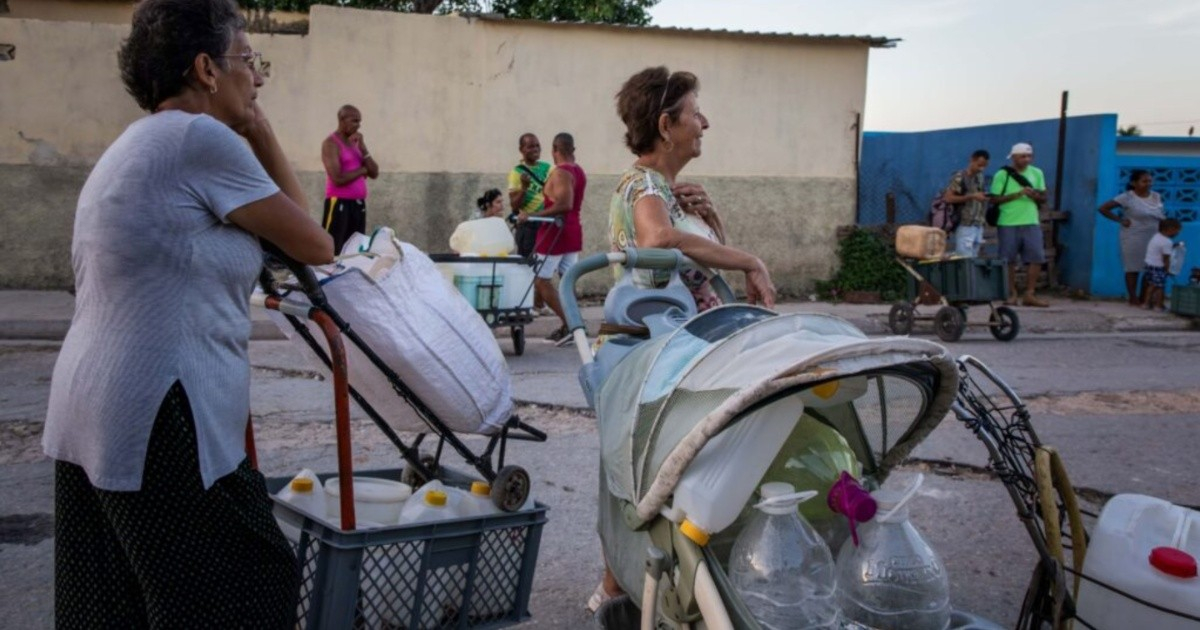
The Food Monitor Program, a non-governmental organization, has exposed the severe water crisis gripping Havana with a stark summary: "Those who don't steal have no water."
The report highlights how the collapse of Cuba's national power grid has incapacitated the water-pumping infrastructure in the capital.
Since the massive blackout in October 2024, even neighborhoods traditionally well-supplied, like Centro Habana and Old Havana, have endured weeks without running water.
Black Market Solutions to Havana's Water Woes
In the face of government neglect, a black market has sprung up centered around two illicit solutions: suction pumps, colloquially known as "water thieves," and private water tanker services.
These "water thieves" retail for up to 36,000 CUP on the informal market. They extract water directly from communal pipes, creating a vicious cycle: more users mean lower pressure for everyone else, forcing more to buy a device to secure their own supply.
A local resident told FMP, "As more people use them, pressure keeps dropping... those who don't steal, don't have water."
The Cost of Private Water Tankers
Private water tankers represent another alternative, with prices ranging from 18,000 to 26,000 CUP for a load of 8,000 to 10,000 liters, as documented by the NGO.
The black market for water in Cuba also involves workers from the Water and Sewerage Department who sell illegal connections for bribes and divert state water trucks.
Josefa, a resident of Centro Habana, described her building's plight to FMP: "We've gone up to 15 days without water... many elderly people live here... we use indoor tanks to last a week, but if water doesn't arrive, we have to buy from tankers."
She added, "This raises costs and makes washing, cleaning, living difficult."
Systemic Issues Underpinning the Crisis
Receiving water every three or four days has become "normal" for many of Havana's residents.
The root cause is structural: 87% of the water supply system relies on the electrical grid, leaving it susceptible to the chronic blackouts plaguing Cuba since 2022.
This crisis is neither new nor exclusive to Havana. In Matanzas, the cost of water soared to one peso per liter on the black market, a burden that severely affected local residents.
In Santiago de Cuba, people have resorted to using contaminated water due to the government's inaction.
FMP's report leaves no room for ambiguity: "The system operates on leaks and a logic of paid favors to secure supply."
The day after the report's release, Cuban authorities announced plans to construct a new well to mitigate Havana's water issues, a measure locals view as inadequate in the face of decades of accumulated neglect.
Understanding Havana's Water Crisis
What has caused the water crisis in Havana?
The water crisis in Havana is primarily due to the collapse of the national power grid, which has incapacitated the water-pumping infrastructure, alongside systemic neglect and corruption.
How are residents coping with the lack of water?
Residents are turning to black market solutions like "water thieves" and private water tankers, despite the high costs and the negative impact on communal water pressure.
What measures are being taken by the authorities?
The authorities have announced the construction of a new well, though many residents believe this response is insufficient to address the long-term issues.