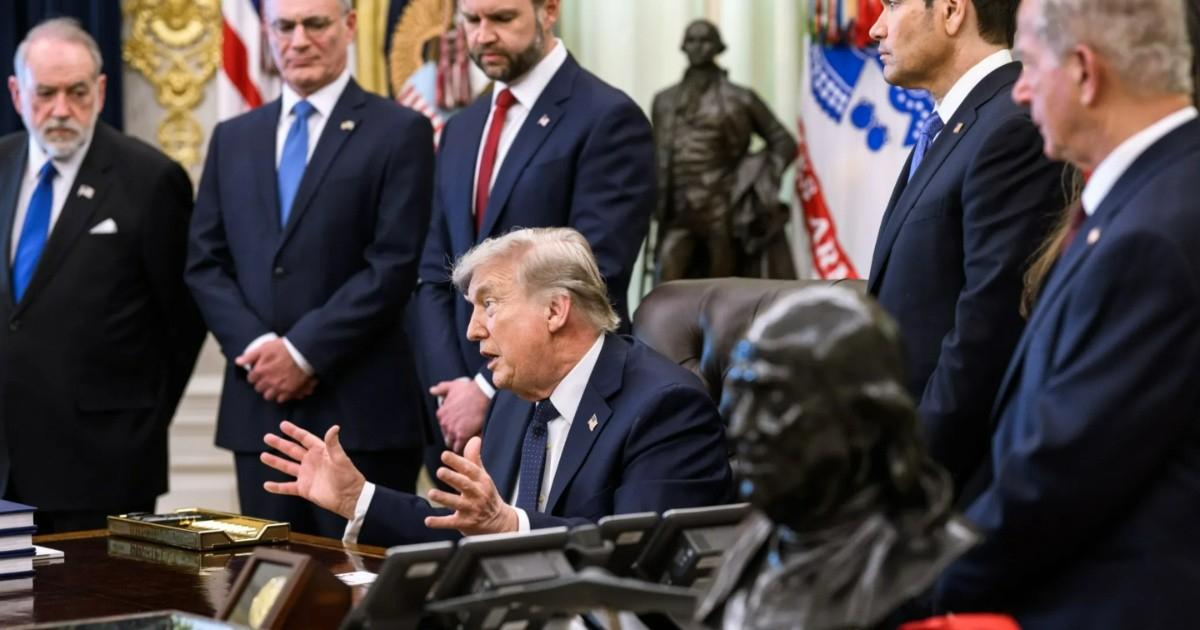
On Sunday, President Donald Trump declared that he is in no rush to establish a new deal with Iran. He emphasized that his administration's strategy of maximum pressure is crippling Tehran's economy and has significantly weakened its operational capabilities, as he remarked on Fox News.
Trump highlighted that "time is on Washington's side," asserting that while communication channels remain open through Pakistan as a mediator, he feels no immediate pressure to initiate negotiations.
The president was adamant about the main objective of his policy towards Tehran: "Under no circumstances can Iran be allowed to possess nuclear weapons. They would use those weapons to threaten Israel, Europe, and the United States itself. We are performing a global service by preventing this."
These statements came shortly after Trump canceled a visit by his envoys to Islamabad, insisting that Tehran make direct contact. This move quickly proved effective: just ten minutes after the cancellation, Iran submitted a new proposal, which Trump described as "much better" than previous ones.
Military Tensions and Economic Strain
The backdrop of these declarations is an ongoing military conflict. The joint operation "Epic Fury," launched by the U.S. and Israel on February 28, 2026, devastated over 5,000 Iranian targets in less than 40 days, including nuclear facilities in Natanz, Isfahan, and Fordow. Since April 13, Washington has maintained a naval blockade in the Gulf of Oman with over 12 ships, 100 aircraft, and 10,000 troops, costing Iran an estimated 500 million dollars daily, according to Trump.
Negotiation Stalemate
The negotiations have been fraught with difficulties. The initial round in Islamabad, held from April 10 to 12, lasted 21 hours without reaching an agreement. The second round, set for April 21-22, was rejected by Iran, which demanded the lifting of the naval blockade. Trump extended the ceasefire on April 21 at Pakistan's request, though White House spokesperson Karoline Leavitt clarified that it was Iran that "needed" it to recover.
The positions remain at odds: the U.S. demands the complete dismantling of Iran's nuclear program and a 20-year moratorium on uranium enrichment, while Iran offers only a five-year pause and seeks 270 billion dollars in war reparations.
In the same interview, Trump criticized European allies and NATO for not supporting efforts to contain the Iranian regime, despite the "billions of dollars" the U.S. invests in protecting Europe from Russia. Trump had previously warned that he would only negotiate with Iran if the deal was advantageous for the U.S.
From Tehran, Iranian Foreign Ministry spokesman Nasser Kanaani responded on Sunday, questioning Washington's sincerity: "The U.S.'s words of peace contrast with its overt military threats, undermining any chance for genuine dialogue."
Key Questions About U.S.-Iran Relations
Why does Trump say time is on Washington's side?
Trump believes that the pressure from U.S. sanctions is severely damaging Iran's economy, which gives the U.S. an advantage in negotiations.
What was the outcome of the joint operation "Epic Fury"?
The operation resulted in the destruction of over 5,000 Iranian targets, significantly impacting Iran's nuclear infrastructure.
What are the main demands of the U.S. in negotiations with Iran?
The U.S. is demanding the complete dismantling of Iran's nuclear program and a 20-year pause on uranium enrichment.