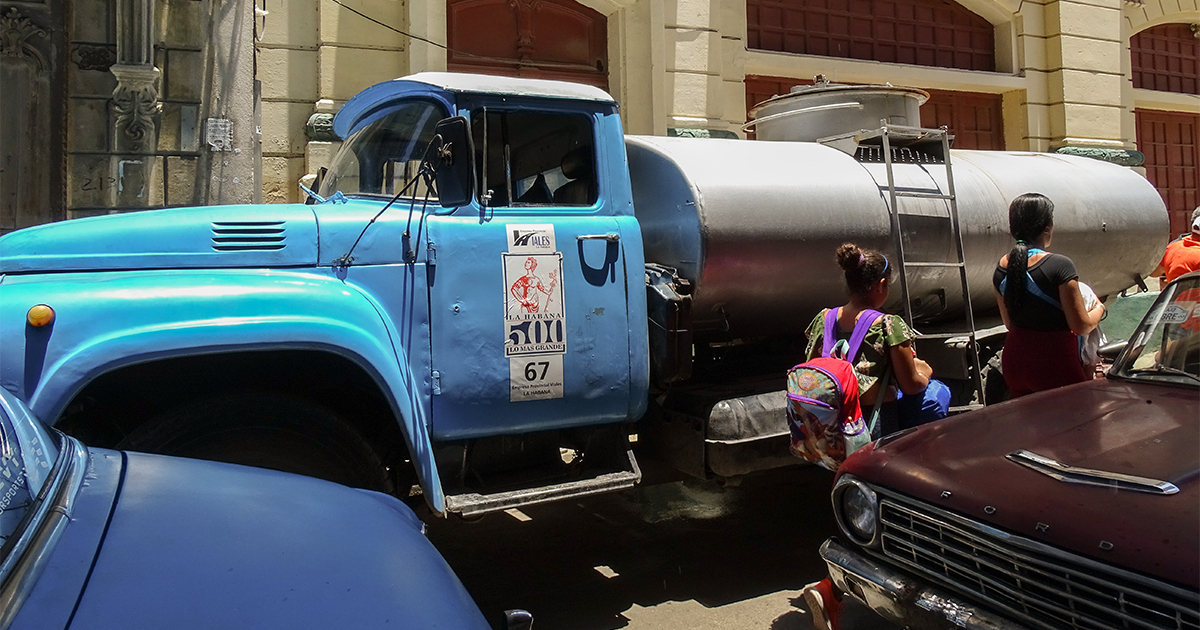
An electrical failure on Saturday night at the Palatino pumping station resulted in water outages for the Víbora neighborhood in the 10 de Octubre municipality. This issue also impacted critical areas within the Plaza de la Revolución municipality, as stated in an official notice from Aguas de La Habana released on Sunday.
The company clarified that the power outage led to an internal electrical malfunction within the pumping system, affecting one of the pumping units, thereby disrupting water supply in these parts of the city.
The Palatino pumping station is a key facility in Havana's water supply network, providing water to areas in Plaza de la Revolución—such as El Príncipe, Puentes Grandes, and parts of Nuevo Vedado—and to sections of 10 de Octubre, including Víbora, Sevillano, and parts of Lawton.
Aguas de La Habana has indicated that the Víbora neighborhood will receive water service on April 27th during its usual schedule, though no recovery timeline has been provided for the critical zones in Plaza de la Revolución.
This incident is not isolated. On the same Saturday, there were at least six Automatic Frequency Disconnections in Havana, highlighting a day of significant instability within the national power grid.
This situation adds to a series of water crises triggered by blackouts. On April 16th, power outages lasting over ten hours left more than 200,000 residents in Diez de Octubre, Cerro, Plaza, Centro Habana, and Habana Vieja without water.
The underlying issue is widely acknowledged: 87% of the water supply system relies on the National Electroenergy System, meaning every power outage directly leads to a water cut.
By 2026, Cuba faces its most severe energy crisis in recent history, with generation deficits exceeding 1,800 MW during peak hours and blackouts lasting up to 29 hours and 29 minutes, as recorded on March 16th.
The Palatino pumping station has suffered similar failures in the past. In June 2025, Granma admitted that "electrical instability complicates water supply in Havana" after several motors at both the New and Old Palatino stations were knocked out of service. In November 2025, an electrical fault in a substation halted pumping from Cuenca Sur, affecting over 233,000 residents across six municipalities in the capital.
The water crisis in Havana is chronic and worsens with each blackout. The director of Aguas de La Habana's Waterworks acknowledged on Saturday that more than 200,000 Havana residents lack regular access to potable water, a figure demonstrating decades of infrastructure neglect under the communist regime.
Understanding Havana's Water and Energy Challenges
What caused the water outage in Havana neighborhoods?
An electrical failure at the Palatino pumping station led to an internal malfunction in the pumping system, disrupting water supply in affected areas.
How does Cuba's energy crisis affect water supply?
Since 87% of the water supply system is dependent on the National Electroenergy System, power outages directly result in water cuts.
What areas of Havana were impacted by the Palatino station's failure?
The failure affected neighborhoods in Plaza de la Revolución such as El Príncipe, Puentes Grandes, and parts of Nuevo Vedado, as well as areas in 10 de Octubre including Víbora, Sevillano, and parts of Lawton.
What historical challenges does Havana face with water supply?
Havana's water crisis is long-standing and exacerbated by frequent blackouts, reflecting decades of infrastructure neglect under Cuba's communist regime.