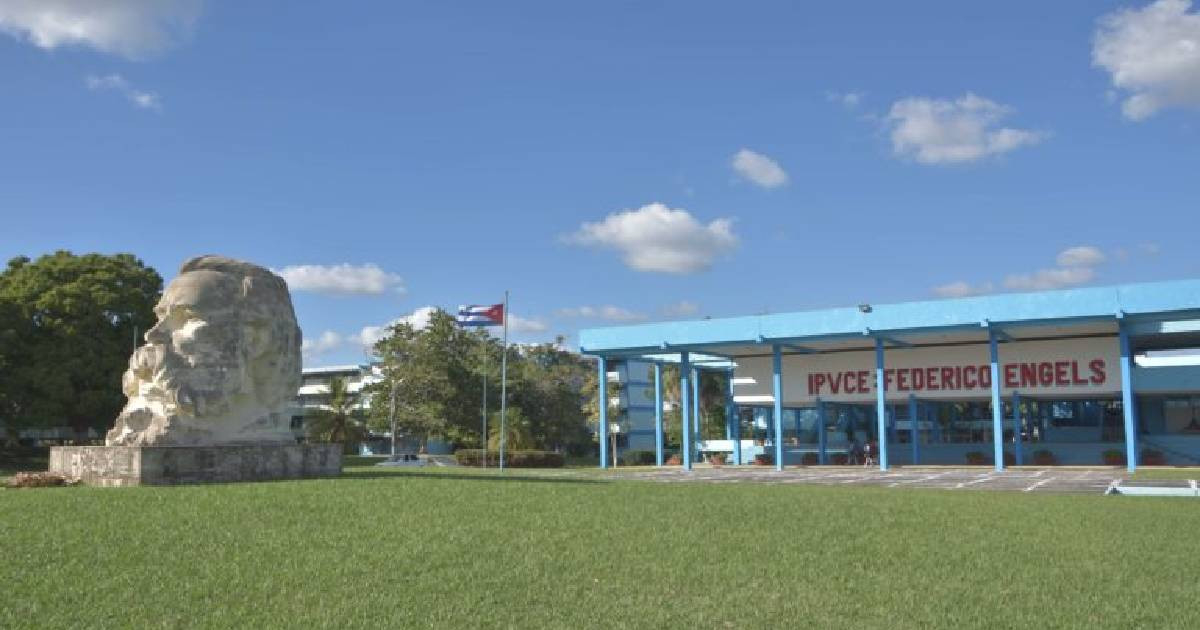
The crippling energy crisis in Cuba has compelled educational authorities in Pinar del Río to cancel traditional entrance exams for the prestigious Federico Engels Vocational Pre-University Institute of Exact Sciences (Ipvce). In place of these exams, a municipal ranking system based on academic records from the three years of Basic Secondary school will now determine admissions.
Evelio Herrera Padrón, the Provincial Director of Education, openly acknowledged that the situation has overwhelmed the system's capacity. "Transportation hits us hard; the situation was already challenging and complicated, and now it's even more complex," Herrera said in a statement to the provincial newspaper Guerrillero.
Adjusting Admission Criteria Amid Crisis
Typically, admission to the Ipvce requires passing exams in Mathematics, History, and a science subject, along with maintaining a minimum academic score of 88 points across seventh, eighth, and ninth grades. With the new system, all eligible students can apply directly through their schools, and available slots will be distributed based on the number allocated to each municipality.
This adjustment is part of a series of emergency measures implemented across the province to sustain the 2025-2026 academic year, according to sources. Measures include redistributing students from boarding schools, creating classrooms in primary schools for secondary and pre-university students, and continuing practical teaching close to students' homes.
Consequences of the National Energy Collapse
Herrera also mentioned modifications to the curriculum and changes in the evaluation system. In some educational levels, second control assignments will not be conducted, though he assured that the school year will conclude in July as scheduled.
The current scenario is a direct result of the collapse of the National Electric System (SEN), which the UN has described as a "systemic and increasingly severe humanitarian impact" affecting health, water, food, education, and telecommunications. This has prompted a $94 million humanitarian appeal to assist around two million people.
Instead of acknowledging the structural failure of the SEN, the regime has ordered the continuation of the school year despite the electrical collapse, with superficial measures like allowing students to attend without uniforms and adjusting schedules.
Impact on Education and Daily Life
Cuban mothers have reported power outages lasting over 15 hours before final exams for twelfth grade, describing the situation as "stressful and devastating." In some areas, blackouts have exceeded 56 to 72 continuous hours, and students have shared stories in class about the hunger and hardships they face daily just to study.
Nationally, the Ministry of Higher Education had already postponed university entrance exams to June, with Mathematics scheduled for the fifth, Spanish on the ninth, and Cuban History on the 12th, offering 96,305 slots for the 2026-2027 academic year.
The removal of entrance exams for the Federico Engels Ipvce in Pinar del Río marks a significant departure from the traditional academic selection model in Cuba, highlighting how the energy crisis is beginning to dismantle even the educational structures the regime touts as "achievements" of the revolution.
Understanding the Pinar del Río Educational Crisis
What changes have been made to the admission process at Ipvce in Pinar del Río?
The entrance exams have been replaced with a municipal ranking system based on students' academic records from three years of Basic Secondary school.
How is the energy crisis affecting students and schools in Cuba?
The energy crisis has led to significant disruptions, including power outages lasting up to 72 hours, which impact students' ability to study and prepare for exams.
What measures are being taken to address the educational challenges in Pinar del Río?
Authorities are implementing emergency measures such as redistributing students, creating new classrooms, and adjusting teaching methods to sustain the academic year.