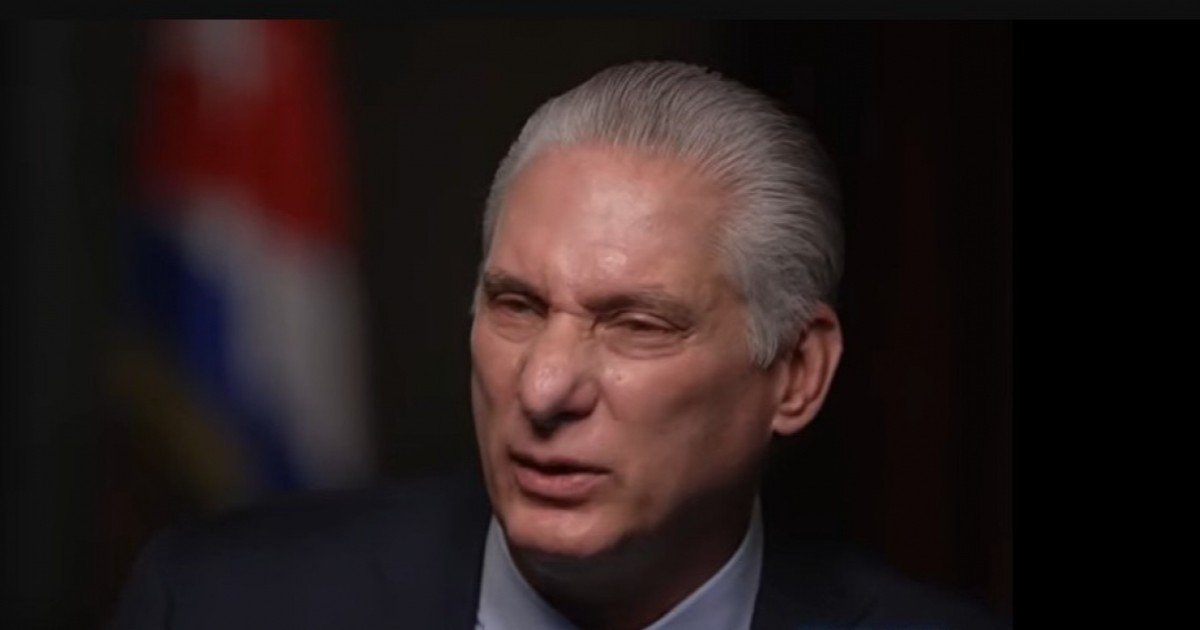
In an unprecedented initiative, more than 20 independent digital media outlets, content creators, and civil society figures from Cuba have come together to launch a public opinion survey. This survey, open to Cubans both on the island and abroad, aims to provide concrete data on the political and social sentiments within the country. Guided by independent journalists and social scientists, the survey seeks to challenge assumptions about Cuban public opinion on pressing national issues.
The initial findings, gathered from 4,324 responses within the first 48 hours, reveal a detailed picture of how Cubans view their government officials. The results are significantly unfavorable for the regime, exposing both a hierarchy of disapproval and a handful of unexpected figures who remain somewhat respected even among harsh critics.
The Public's Distrust in Government: A Startling 94%
When asked about their level of trust in the government, respondents rated it a mere 1.09 out of 5 on average. An overwhelming 94% expressed absolute distrust. Out of over 4,300 respondents, only 33 expressed full confidence. This pattern of distrust spans all demographics, including men and women, young and old, and those inside and outside Cuba. Even state employees, typically aligned with the regime, showed an average trust level of just 1.19.
The Cuban diaspora exhibits even stronger disapproval compared to those on the island, although the difference is slight given the near-total rejection within Cuba itself. Outside the country, 97.7% expressed no confidence, while on the island, the figure was 92.2%.
Díaz-Canel: The Epicenter of Disapproval
When survey participants rated eight government figures on a scale from 1 to 5, President Miguel Díaz-Canel received the lowest score, averaging only 1.11. Nearly 94% of respondents assigned him the minimum rating. Adding those who rated him a 2, disapproval soared to 97.1%. Support for Díaz-Canel—those rating him a 4 or 5—was statistically negligible at just 1.2%.
Additionally, Díaz-Canel had the fewest "no response" answers (just 0.6%), indicating that almost everyone has formed a negative opinion about him, associating him with the country's decline.
Perceptions of the Government's Inner Circle
Following Díaz-Canel, the survey shows a close-knit cluster of historical regime figures who received similarly low scores: Esteban Lazo Hernández (1.13), Manuel Marrero Cruz (1.13), Roberto Morales Ojeda (1.14), and Raúl Castro (1.21). These longstanding officials are seen as the primary faces of disapproval, with over 94% assigning them ratings of 1 or 2.
Bruno Rodríguez: The "Least Disliked"
At the opposite end of the spectrum, Cuban Foreign Minister Bruno Rodríguez emerged with a slightly higher average score of 1.62, still below passing but notably better than his peers. He was the only official to receive double-digit support, with 11.1% of respondents rating him a 4 or 5. This relative approval could be attributed to his international visibility and lesser association with domestic economic issues. Rodríguez also had the highest rate of "no response" (24.2%), suggesting that his diplomatic role is less visible to the general public.
Unexpected Figures Emerge with Positive Feedback
The survey also included an open-ended question asking participants to name government figures with a favorable performance. Of the 1,384 responses, 63.4% indicated "none" or expressed that all officials are corrupt. However, four figures received noteworthy positive mentions: Eduardo Rodríguez Dávila, Lázaro Expósito Canto, Jorge Luis Tapia Fonseca, and Inés María Chapman. These individuals, associated with concrete regional management rather than ideological roles, were cited for specific achievements or perceived competence.
In contrast, several respondents used the open field to criticize specific figures, identifying them as symbols of the regime's failures. This included Raúl Guillermo Rodríguez Castro, Sandro Castro, Ramiro Valdés Menéndez, and others, whom the public associates with the perpetuation of power and repression.
Understanding the Hierarchical Rejection of Government Figures
Overall, the survey illustrates a rare and widespread consensus of disapproval toward the Cuban government. Despite this overarching sentiment, a nuanced hierarchy emerges. A core group of symbolic figures faces complete rejection, while technical figures like Bruno Rodríguez retain minimal leniency. Additionally, a surprising third category of regional managers, not initially listed in the survey, still garners some positive feedback.
While these evaluations may not reflect genuine technical merit, they highlight which types of public servants Cubans might find acceptable in a future scenario. The survey was conducted online, with a sample of politically engaged individuals with internet access, predominantly male and university-educated, mainly from Havana. Therefore, the results reflect a large, connected segment of Cuban society but not the entire population.
Key Insights from the Cuban Public Opinion Survey
What percentage of Cubans expressed distrust in their government?
An overwhelming 94% of survey respondents expressed absolute distrust in the Cuban government.
Who received the lowest approval rating among Cuban government figures?
Miguel Díaz-Canel received the lowest approval rating, with an average score of 1.11 out of 5.
Which government figure was perceived the least negatively?
Bruno Rodríguez, the Cuban Foreign Minister, was perceived the least negatively, with a score of 1.62 and some positive feedback for his international role.
What does the survey suggest about the Cuban government's internal hierarchy?
The survey suggests a clear hierarchy of disapproval, with symbolic figures like Díaz-Canel facing the most rejection, while some regional managers received unexpected positive feedback.