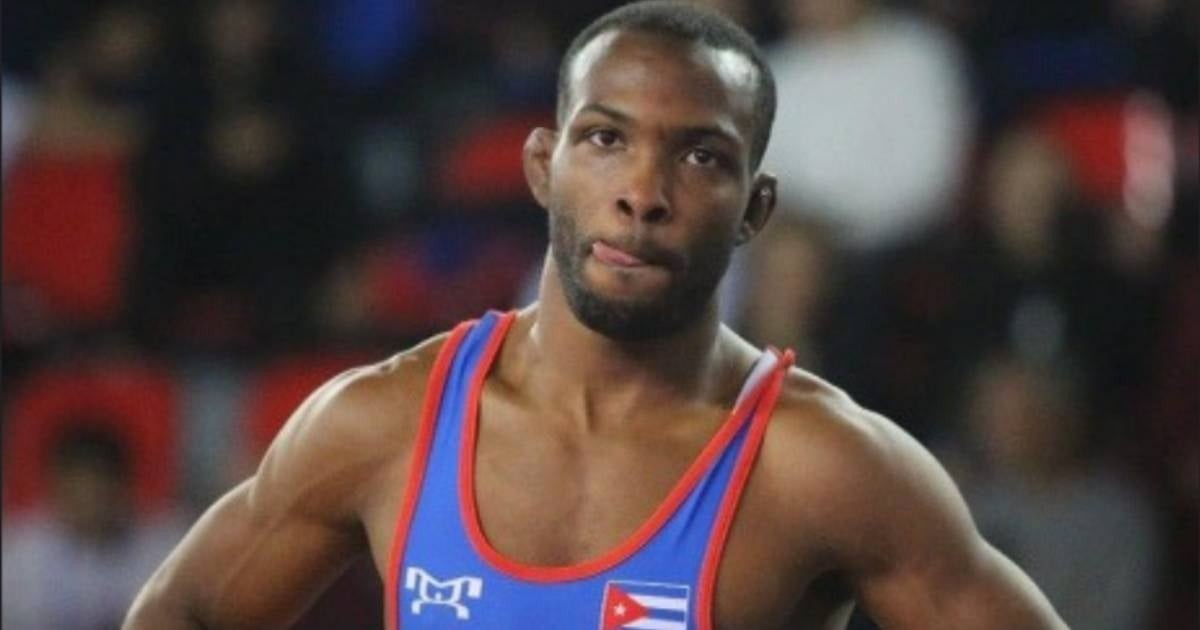
An Iowa federal judge has denied the injunction requested by Cuban wrestler Reineri Andreu Ortega, preventing him from participating in the 2026-27 Division I season at Iowa State University while his antitrust lawsuit against the NCAA proceeds.
According to Bloomberg Law, Judge Rebecca Goodgame Ebinger of the U.S. District Court for the Southern District of Iowa ruled that Ortega failed to demonstrate a sufficient likelihood of success in his claim that the NCAA's five-year eligibility rule violates the Sherman Antitrust Act.
Ortega, a two-time U23 world champion, Pan American double champion, and Central American gold medalist in the 57-kilogram category, arrived in the United States as a refugee in December 2022 after leaving the Cuban national team.
He enrolled at Iowa State University in the spring of 2023 and secured a spot on the team, but has been unable to compete officially due to eligibility issues.
The Root of the Eligibility Dispute
The core of the conflict lies in the NCAA starting Ortega's eligibility clock in 2016, when he first enrolled full-time at Manuel Fajardo University in Cuba, an institution without NCAA-affiliated intercollegiate sports, where his main activity was representing the Cuban national team.
Under Division I's Bylaw 12.6, the five-year clock—which allows for four seasons of competition—begins with the athlete's first full-time collegiate enrollment anywhere globally, regardless of participation in collegiate leagues.
Legal Arguments and Comparisons
The lawsuit, filed in December 2025, argues that this interpretation is arbitrary because it penalizes postsecondary studies outside the NCAA system without intercollegiate sports, unlike American athletes who can spend years in professional leagues and later enter college without similar constraints.
Ortega's case references Chris Weinke, who, after six years as a professional baseball player, won the Heisman Trophy at 28 without facing equivalent restrictions.
Beyond Sports: Financial Implications
For Ortega, the exclusion extends beyond sports, as the rule also bars him from earning income from name, image, and likeness rights, as well as from the direct revenue-sharing approved in the House v. NCAA settlement worth $2.8 billion, in effect since July 1, 2025.
Judge Ebinger had previously denied a temporary restraining order in December 2025 on procedural grounds, without delving into the merits of the case. Ortega withdrew and later refiled a preliminary request, according to court records.
This case is part of a wave of antitrust lawsuits against the NCAA following the Alston (Supreme Court, 2021) and House (2025) rulings, which have reshaped the collegiate athlete labor market and made eligibility a matter with direct economic impact.
The litigation is moving towards a potential trial, but Ortega's attorneys warn that without this opportunity, his career in the United States is virtually over.
Key Questions about NCAA Eligibility and Antitrust Lawsuits
Why was Reineri Andreu Ortega's injunction denied?
Judge Rebecca Goodgame Ebinger ruled that Ortega did not demonstrate a sufficient likelihood of success on his claim that the NCAA's five-year eligibility rule violates the Sherman Antitrust Act.
What is the NCAA's five-year eligibility rule?
The NCAA's five-year eligibility rule starts the clock when an athlete first enrolls full-time in college anywhere in the world, allowing for four seasons of competition, regardless of participation in collegiate leagues.
How does Ortega's case relate to the Alston and House rulings?
Ortega's case is part of a series of antitrust lawsuits following the Alston and House rulings, which have significantly affected the collegiate athlete labor market and eligibility regulations with economic implications.