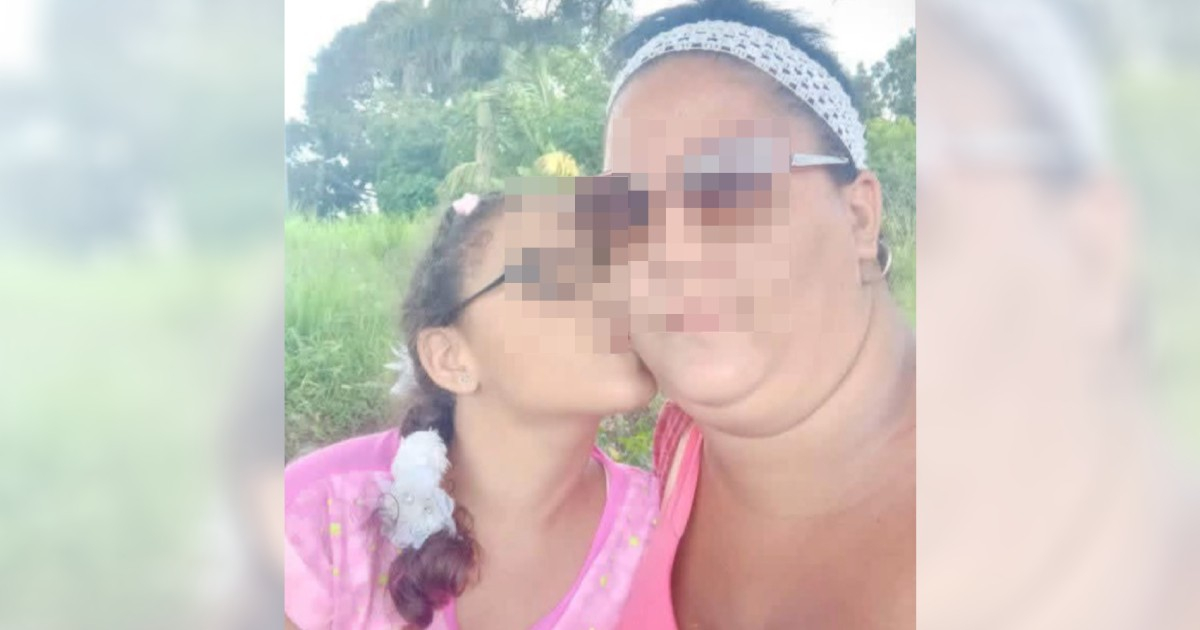
In a horrific act of violence, two more names have been added to the growing list of victims of gender-based violence in Cuba. The tragic double femicide involving a mother and her 12-year-old daughter in Batabanó, Mayabeque, has left the nation in a state of disbelief.
The Gender Observatory Alas Tensas (OGAT) confirmed on Thursday that 31-year-old Rosalí Peña Hernández and her young daughter, Camila Aguilera Peña, were brutally murdered on the night of April 22 at their home in Pedroso.
With these latest victims, the number of femicides in Cuba has reached 19 in 2026, according to OGAT’s records, which also note two additional attempted femicides.
Verified sources from the independent observatory disclosed that Rosalí was killed by her partner, who also took the life of the young girl. The assailant has been identified on social media as Yohandri.
The attacker also inflicted severe injuries on Rosalí’s mother, who attempted to protect her daughter, and on a neighbor who rushed to their aid. These instances represent two more femicide attempts.
Rosalí’s younger son, aged seven, was present during the attack but managed to escape. OGAT confirmed that Camila was not the biological daughter of the perpetrator.
Following this violent incident, the attacker surrendered to the police. As of now, neither the authorities nor state-run media have provided any official statements regarding the events, which only came to light due to reports from citizens, activists, and independent media outlets.
OGAT emphasized the ongoing issue in Cuba, where "violence against women and girls continues unabated, claiming innocent lives daily and tearing apart families and communities."
The organization highlighted that "the cruelty and brutality of the attack" demonstrate the far-reaching impacts of violence against women and girls, affecting not only the direct victims but also causing trauma to children, family members, and entire communities.
The platform further warned that this case highlights the "vulnerability of many women living under threat from violent aggressors and the lack of effective prevention and protection mechanisms" in the country.
According to reports on social media, such as one from Nio, the funerals for Rosalí and Camila took place on Thursday, with family, friends, and neighbors in Pedroso mourning their loss.
OGAT's records as of April 23 include 19 confirmed femicides, 14 attempted femicides, and one murder of a man due to gender motives. Investigations continue into 11 possible femicides, four attempts, and one murder of a man for gender-related reasons reported in 2025, along with six potential femicides reported in 2026.
The situation is dire: 2025 concluded with 48 confirmed femicides, and the first quarter of 2026 has already seen 13 cases—six in January, one in February, and six in March.
The Cuban government's response to the escalating violence against women has been virtually nonexistent. The nation lacks comprehensive gender violence legislation, and the Penal Code approved in 2022 does not classify femicide as a separate crime. There are no shelters or effective protection protocols for at-risk women and girls.
OGAT continues to emphasize that reporting these crimes is not a crime in itself and urges citizens to report incidents of violence so that no victim remains invisible.
Understanding the Femicide Crisis in Cuba
What is the current femicide situation in Cuba?
As of 2026, there have been 19 confirmed femicides in Cuba, with numerous attempts and additional cases under investigation. The violence against women and girls remains a critical issue.
How has the Cuban government responded to gender-based violence?
The response from the Cuban government has been minimal. There is no comprehensive gender violence law, and femicide is not recognized as a distinct crime in the Penal Code. Protection measures for women at risk are lacking.