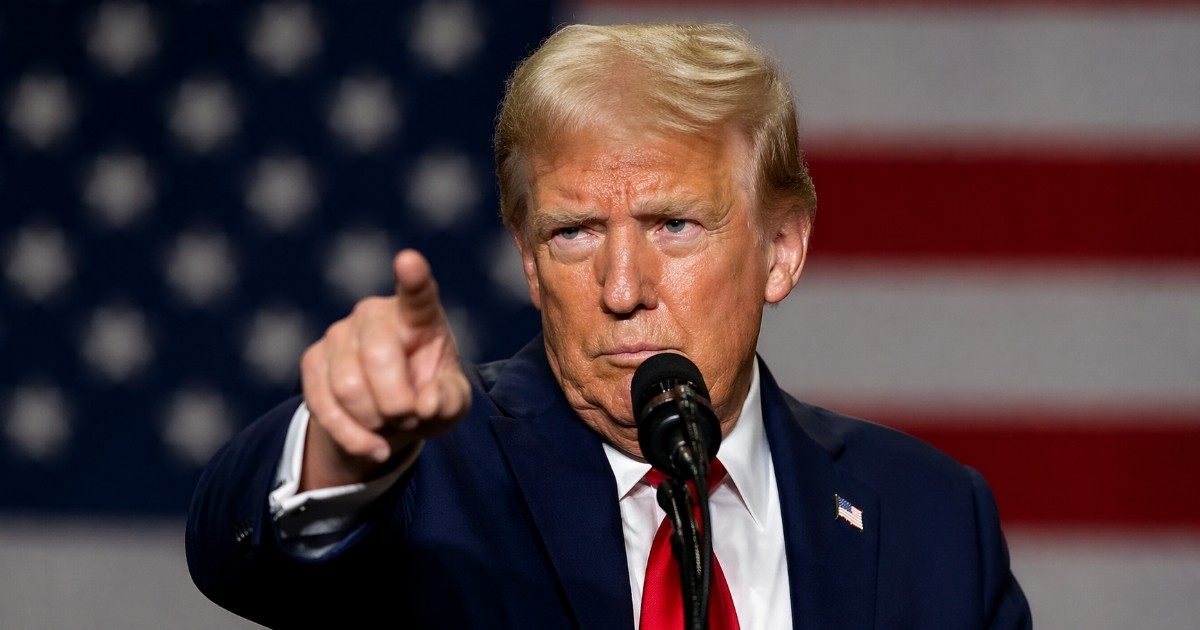
On Thursday, President Donald Trump took to his social media platform, Truth Social, to deliver a strong message refuting reports by outlets like The New York Times and CNN. These reports had characterized him as "eager" to strike a deal with Iran. Trump emphasized that any talks will be conducted solely on terms favorable to the United States.
"I am likely the least pressured individual to ever hold this office," Trump stated, dismissing what he described as an urgent narrative propagated by unreliable media sources.
The President was forthright regarding Iran's military status: "The Iranian navy is at the bottom of the ocean, their air force obliterated, anti-aircraft and radar systems have vanished, and their leaders are no longer with us. The blockade is tight and unyielding, and things will only deteriorate further for them. Time is not in their favor."
Trump also issued a time-sensitive warning: "I have all the time in the world, but Iran does not. The clock is ticking!"
As for the conditions of a potential agreement, Trump was unequivocal: "A deal will only be struck when it is appropriate and beneficial for the United States, its allies, and indeed, the rest of the world."
This announcement comes amidst the ongoing military conflict initiated by the United States and Israel on February 28, 2026, with Operation Epic Fury. This joint offensive obliterated over 13,000 Iranian targets in more than 10,200 sorties.
The operation decimated more than 90% of Iran's naval fleet, completely neutralized its air force, and took out key military leaders of the regime, including Supreme Leader Ali Khamenei.
Since April 13, the U.S. has maintained a naval blockade in the Gulf of Oman with over a dozen warships, a hundred aircraft, and 10,000 personnel, diverting at least 31 oil tankers and causing Iran daily losses between $435 and $500 million.
Efforts to mediate negotiations in Islamabad, led by Pakistan, have collapsed after two rounds. The initial discussions, held from April 10 to 12, involved Vice President JD Vance, Steve Witkoff, and Jared Kushner, but ended without agreement after 21 hours of talks.
The second round, planned for April 21 and 22, never commenced as Iran refused to participate, citing negotiations under duress and demanding the lifting of the naval blockade.
The standoff remains unresolved: Washington demands a complete dismantling of Iran's nuclear program and a 20-year moratorium on uranium enrichment, while Tehran offers only a five-year pause and seeks $270 billion in reparations for damages.
Trump has indefinitely extended the Pakistan-mediated ceasefire, effective since April 7, although the naval blockade continues. Iran views this as a breach of the ceasefire and a precondition for any further dialogue.
Reports indicate that Secretary of State Marco Rubio will join the upcoming diplomatic talks, signaling Washington's commitment to elevating its diplomatic representation without relaxing its core demands.
Key Questions on U.S.-Iran Relations
What is Operation Epic Fury?
Operation Epic Fury is a joint military offensive by the United States and Israel, launched on February 28, 2026, targeting over 13,000 sites in Iran and significantly crippling its military capabilities.
Why did Iran refuse to participate in the second round of negotiations?
Iran declined to engage in the second round of talks, citing negotiations under threat and demanding the removal of the U.S. naval blockade as a condition for participation.
What are the U.S. demands for a nuclear deal with Iran?
The United States insists on the total dismantling of Iran's nuclear program and a 20-year halt on uranium enrichment, while Iran is proposing only a five-year suspension.