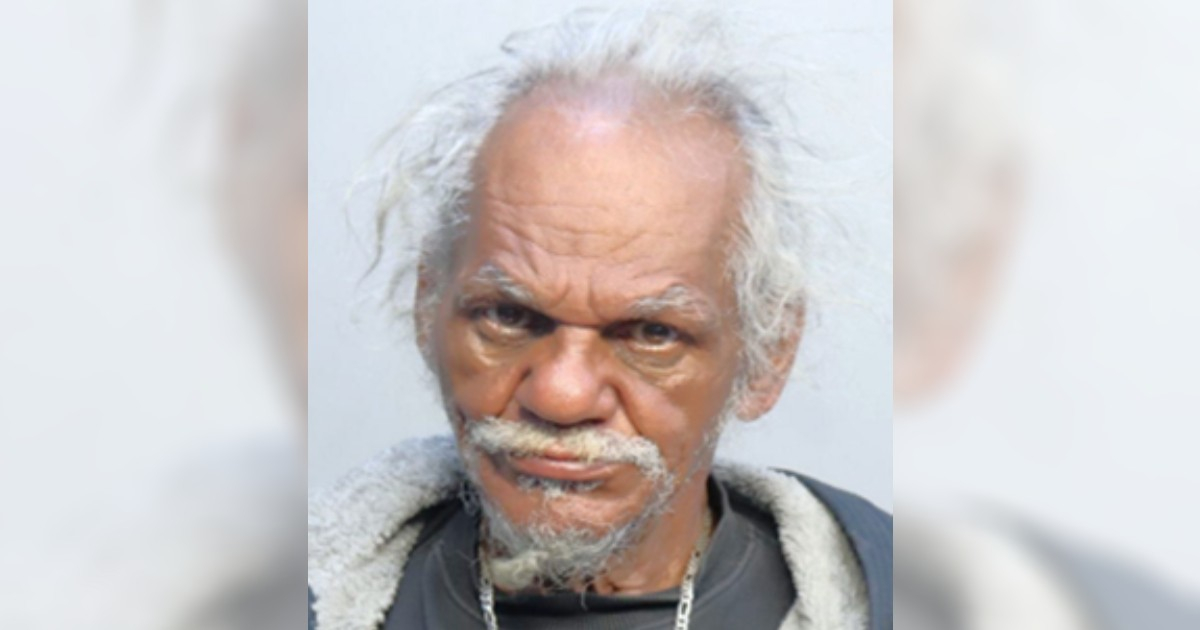
The U.S. Immigration and Customs Enforcement (ICE) in Miami has taken Eledoro Valenzuela Rodríguez, an undocumented Cuban immigrant, into custody from a South Florida jail, effectively ending a criminal career that spanned more than 40 years. This career was prolonged by sanctuary policies in New York and Maryland, according to a federal agency announcement made public on Tuesday.
Valenzuela Rodríguez, a repeat offender with a substantial criminal record across several states, was being held at the Turner Guilford Knight (TGK) Correctional Center in Miami-Dade when ICE officers detained him on March 24. The authorities have pledged to ensure his swift deportation, as stated in their release.
The Cuban national had a final deportation order issued back in 1980 — over 45 years ago — which had never been executed. This allowed him to continue his criminal activities within the United States for decades, continuing to prey on innocent individuals, ICE emphasized.
ICE's Efforts to Deport Valenzuela Rodríguez
At the time of his apprehension by immigration agents, Valenzuela Rodríguez faced multiple charges in Miami, including possession of cocaine with intent to sell, possession of a firearm and ammunition by a convicted felon, and trespassing after a warning.
His documented criminal history stretches over four decades and spans multiple states: in 1984, he was convicted in New York County, New York, for possession of a weapon, serving a mere 30 days; in 1985, in Prince George's County, Maryland, for possession of a controlled substance, his 19-day sentence was suspended; in 1986, again in New York, for possession of a controlled substance, he received three years of probation; and in 1989, in Marion County, Indiana, for possession and trafficking of cocaine, he was sentenced to 20 years with an additional five years concurrently.
Sanctuary Policies Under Scrutiny
ICE also noted that Valenzuela Rodríguez accumulated numerous additional charges — including assault, drug trafficking, alcohol-related offenses, and others — that were dismissed by courts over the years.
"Sanctuary politicians released this criminal from jail on multiple occasions," the official statement sternly noted, pointing to the responsibility of authorities in jurisdictions where the Cuban national committed crimes. The official sanctuary jurisdictions list published by the Department of Justice includes several territories where Valenzuela Rodríguez managed to evade deportation for decades.
Regarding this case, ICE Director Todd M. Lyons stated, "Sanctuary policies protect criminals like Valenzuela Rodríguez and allow them to exploit generations of innocent Americans."
"These policies do not make communities safer. They complicate law enforcement efforts and force federal agents to face more dangerous situations with greater public exposure," he argued. "ICE will continue to enforce the law, regardless of local policy."
Recent Arrests Indicating Change
In other recent actions, ICE arrested Cuban national Alexander García Peñate in Pennsylvania during similar operations. Additionally, José Rivera Orta and Rigoberto Iglesias Díaz, two other Cuban nationals with violent criminal records, were apprehended in Florida.
These arrests follow the Cuban government's recent acceptance of nationals with criminal records back into the country, creating new opportunities for the effective execution of longstanding deportation orders.
On February 9, the first ICE deportation flight to Cuba in 2026 returned 170 Cubans, including at least 50 individuals with convictions for serious crimes such as murder, rape, kidnapping, and drug trafficking.
For years, deportation flights from the United States to the island excluded Cubans with criminal backgrounds who had been in the U.S. since before January 2017. The Havana regime consistently refused to accept these individuals, rejecting their inclusion in the lists of deportables presented by the Department of State under bilateral immigration agreements.
Faced with the island's reluctance to admit its nationals, the administration of President Donald Trump deported numerous Cuban immigrants with serious criminal records, deemed highly dangerous, to third countries.
According to official data from the Department of Homeland Security (DHS), more than 42,000 Cubans are ineligible for legal residency in the United States and have final deportation orders.
Key Facts About Cuban Deportations and Sanctuary Policies
What led to the prolonged criminal activities of Valenzuela Rodríguez in the U.S.?
The prolonged criminal activities of Valenzuela Rodríguez were largely due to sanctuary policies in jurisdictions like New York and Maryland, which allowed him to evade deportation for decades despite a final deportation order issued in 1980.
How does ICE plan to handle Valenzuela Rodríguez's case?
ICE plans to ensure the swift deportation of Valenzuela Rodríguez following his recent detention in Miami. The agency aims to remove him from the U.S. as quickly as possible given his extensive criminal record.
What impact do sanctuary policies have on law enforcement?
Sanctuary policies complicate law enforcement efforts by protecting criminals from deportation, leading to more dangerous situations for federal agents and undermining community safety.