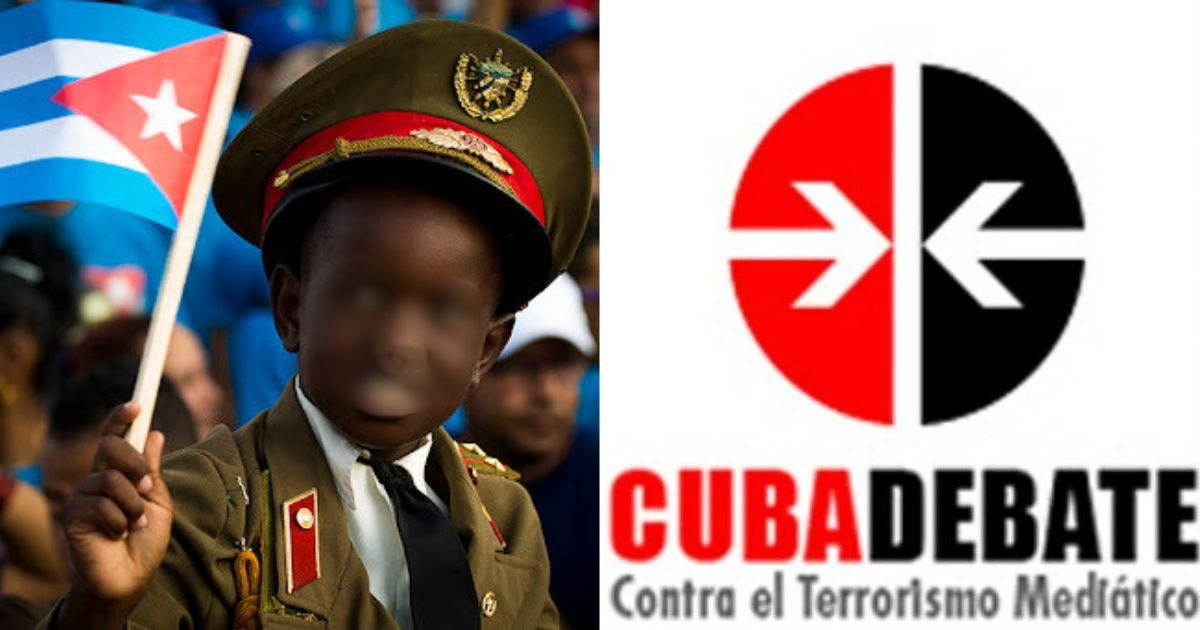
The state-run media outlet Cubadebate published an article on Tuesday titled "Trash Journalism: CiberCuba Profits from the Pain of Cuban Children," penned by its so-called Media Observatory. The piece accused our news platform of repeatedly showcasing images of minors in vulnerable situations, alleging violations of current Cuban laws.
However, the publication backfired dramatically. In a quintessential Cuban twist, nearly 90% of the comments on Cubadebate’s own Facebook post challenged, contradicted, or mocked the official narrative.
It seems the officials overlooked two critical points: that practice is the criterion of truth, and we work to inform the people, who speak loudly and clearly.
"If Cubadebate claimed that they are profiting from pain, then they are also acknowledging the existence of that pain and vulnerability," one user pointed out, highlighting a central contradiction in the article.
Other comments were equally blunt: "They show it, you cause it," "They talk about what you silence," and "It’s not monetizing; it's exposing what you hide, which is even worse."
Double Standards and Hypocrisy
Several users noted the official media's hypocrisy: a quick Google search reveals that Cubadebate regularly publishes stories about children in vulnerable conditions in the United States, Gaza, and other countries, framed as criticism of capitalism or imperialism, while keeping silent about the plight of children in Cuba.
"And you publish everything bad that happens in the U.S. and none of Cuba's social issues," one commentator summarized.
The most damning criticism pointed to the regime's own use of children: "And when you parade them on social media, reciting speeches and slogans, isn’t that using them too?"
This question is grounded in documented practices. The regime frequently and obligatorily involves children as young as six in the José Martí Pioneer Organization, where they receive uniforms and participate in daily ideological pledges.
Teenagers aged 14 to 17 undergo pre-military training in olive green uniforms as part of the Union of Young Communists and the Revolutionary Armed Forces.
No political event of the regime is complete without children being used as propaganda tools.
The Regime's Silence on Child Detention
Users also recalled what Cubadebate never mentions: the regime detained between 45 and 59 minors under 18 following the July 11, 2021 protests, with some facing sentences of up to 18 years in prison.
Three children aged 12 to 14 were imprisoned in Ministry of the Interior centers in Matanzas and remained detained for almost a year.
"Oh, but having 16-year-olds in prison isn’t bad, right?" another commenter questioned.
The Cubadebate article cites the Family Code (Law 156/2022) and the Code for Children, Adolescents, and Youth (Law 178/2025) as the legal frameworks allegedly violated.
The irony was not lost: these same laws, which prohibit the political use of minors, could equally apply to the regime's own practices.
This attack is part of a documented pattern. In November 2025, Cubadebate's Media Observatory launched a campaign against independent accounts on the social network X, accusing CiberCuba, elTOQUE, Cubanet, and Diario de Cuba of being "tools of destabilization."
In January 2026, it accused over forty popular video games of "politicizing" by portraying Cuba with negative stereotypes.
"No one profits and enriches themselves more from the suffering of Cubans than the PCC," concluded one commentator, summarizing the prevailing sentiment among those who responded to the post.
Cubadebate's Controversial Accusations Against CiberCuba
What did Cubadebate accuse CiberCuba of?
Cubadebate accused CiberCuba of profiting from showcasing images of Cuban children in vulnerable situations, alleging violations of Cuban law.
How did the public respond to Cubadebate's article?
The public response was overwhelmingly critical, with nearly 90% of comments on Cubadebate's Facebook post challenging or ridiculing the article.
What contradictions were highlighted in the comments?
Commenters pointed out the contradiction of Cubadebate acknowledging the pain and vulnerability of children while criticizing CiberCuba for exposing it. They also noted the regime's use of children for propaganda.