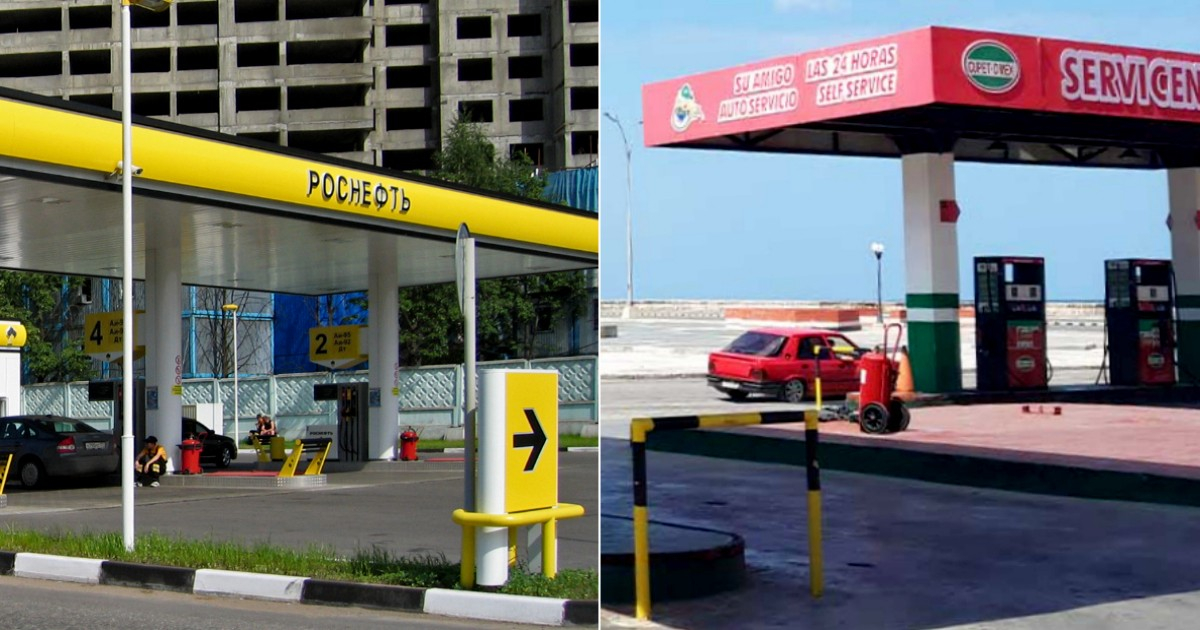
In April, Russia slashed its oil production by 300,000 to 400,000 barrels per day compared to the average output during the first quarter of 2026. This marks the most significant monthly drop since the COVID-19 pandemic, according to five anonymous sources reported by Reuters on Tuesday.
This reduction comes at a particularly dire time for Cuba, which has relied almost entirely on Russian crude since January 2026. The island lost its two primary suppliers: Venezuela, whose oil flow ceased with Nicolás Maduro's capture on January 3, and Mexico, which halted sales from January 27 to 29 following the implementation of Donald Trump's Executive Order 14380, imposing secondary sanctions on any country supplying oil to Cuba.
According to Reuters, Russia's production cut was triggered by Ukrainian drone strikes on critical export ports in the Baltic Sea—Ust-Luga and Primorsk—and the Black Sea—Sheskharis terminal in Novorossiysk—as well as attacks on refineries and the suspension of the Druzhba pipeline, Russia's last active oil conduit to Europe.
In March 2026, Russian export capacity was crippled, with up to 40% being shut down; by early April, this figure decreased to 20%, as reported by Novaya Gazeta, yet total production remains far below normal levels.
Impact on Cuba's Energy Crisis
Cuba requires between 90,000 and 110,000 barrels daily but produces only around 40,000. This shortfall has resulted in power outages lasting 20 to 24 hours daily, seven total collapses of the electric grid in the past 18 months, and over 1,200 public protests since January 2026.
In an effort to mitigate the crisis, Russia has sent two crude shipments. At the end of March, the tanker Anatoly Kolodkin delivered approximately 100,000 tons of crude—about 730,000 barrels—to the port of Matanzas, enough for merely seven to ten days of consumption.
A second shipment aboard the tanker Universal passed through the English Channel on April 8, escorted by a Russian frigate, with an estimated arrival in the Caribbean on April 29.
Sanctions and Financial Challenges
Both vessels face sanctions from the United States, the European Union, and the United Kingdom. Additionally, the Office of Foreign Assets Control (OFAC) General License 134A, effective since March 19, 2026, explicitly excludes Cuba, along with Iran and North Korea, from authorizations to trade Russian oil, effectively blocking alternative supply routes for the island.
Russia's fiscal crisis exacerbates the situation. Oil and gas revenue plummeted by 45.4% year-on-year in the first quarter of 2026, amounting to 1.4 trillion rubles (around $18 billion), according to meduza.io. Meanwhile, the federal budget deficit reached 4.58 trillion rubles between January and March, already surpassing the full-year target of 3.79 trillion.
This financial downturn might constrain Moscow's ability to continue providing free or subsidized shipments to Cuba in the medium term, despite public assurances from Russian officials. Foreign Minister Sergei Lavrov stated on April 15 that Russia remains committed to sending oil to Cuba.
FAQs on Cuba's Oil Supply Crisis
Why did Russia reduce its oil production?
Russia cut its oil production due to Ukrainian drone attacks on key export ports and refineries, along with the suspension of the Druzhba pipeline to Europe.
How does the oil production cut impact Cuba?
The reduction severely affects Cuba, which relies on Russian oil after losing Venezuela and Mexico as suppliers, causing extensive power outages and public unrest.
Are there any sanctions affecting Cuba's oil imports?
Yes, U.S., EU, and UK sanctions target the tankers delivering oil to Cuba. OFAC's General License 134A further restricts Cuba's ability to import Russian oil.