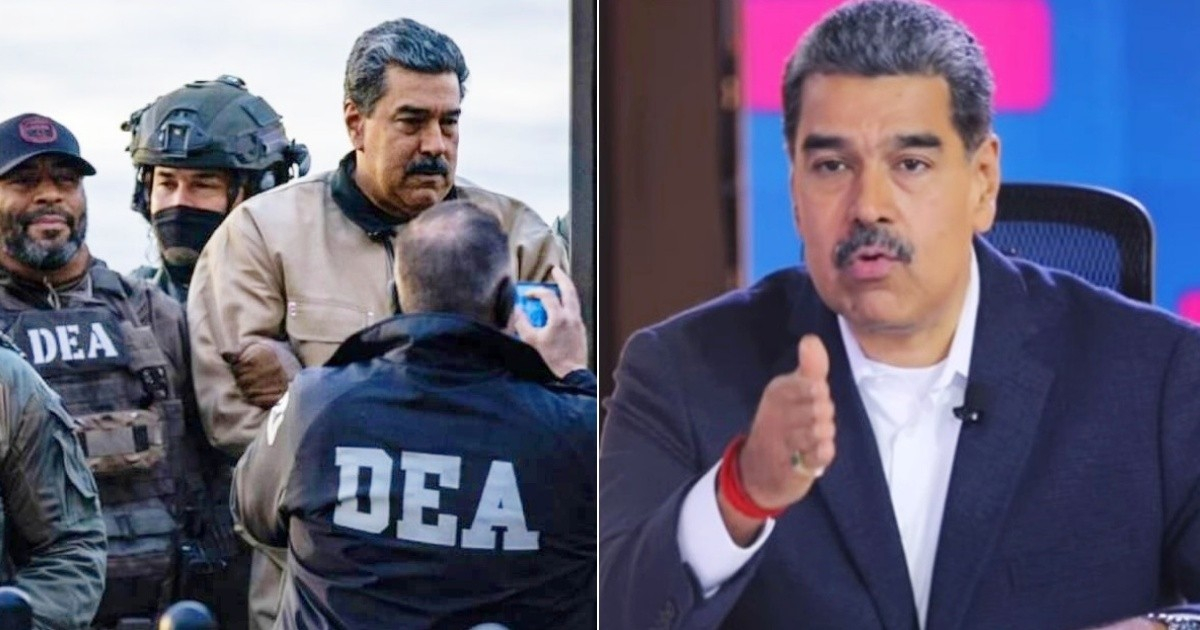
A message purportedly from Nicolás Maduro, reportedly sent from the Metropolitan Detention Center in Brooklyn, New York, emerged on April 19 following a government-backed call for a nationwide pilgrimage against sanctions.
The alleged letter, shared on Maduro's official Instagram account, expresses support for the initiative led by the "acting president," Delcy Rodríguez.
"We salute and support the call by our acting president, our sister Delcy Rodríguez, for this great national pilgrimage for a Venezuela without sanctions and in peace," the statement reads.
Blending political rhetoric with religious undertones, the message opens with a direct appeal to the nation:
"Beloved people of Venezuela, brothers and sisters of our homeland, peoples of the world: on this April 19, Independence Day, day of the people, day of a living nation, Cilia and I send words of faith, love, and hope."
From this introduction, the narrative unfolds as a call for sustained mobilization.
A Call for Unity Amid Sanctions
The document describes "a permanent pilgrimage for the unity, freedom, and happiness of our homeland," attempting to transform the protest against sanctions into a symbol of national unity.
Throughout the text, Maduro's message revolves around three core concepts: unity, freedom, and happiness.
On unity, he emphasizes the need for internal cohesion: "Venezuela must walk as one body, with many parts, many voices, and one soul."
This idea is expanded further: "Uniting all parts of the homeland means recognizing ourselves as one nation in action, a country that prays, works, produces, forgives, and walks united for peace."
The Quest for True Freedom
The tone becomes more doctrinal when discussing freedom.
"This is true freedom: the kind that serves, cares, builds, and seeks the common good. It is not freedom to hate, to divide, or to destroy," he declares.
He then introduces a biblical quote as a warning against confrontation: "If you bite and devour each other, watch out or you will be destroyed by each other" (Gal 5:15).
The message progresses towards a more spiritual dimension of political discourse: "Let us walk towards that spiritual maturity of the Homeland," reinforcing a narrative that intertwines faith, politics, and social mobilization.
Maduro's Message of Reconciliation
Towards the end, he stresses a unified nation: "There should be only one homeland. There should be only one hope, the will to make peace and happiness in permanent reconciliation."
He concludes with a direct exhortation: "Let this great national mobilization be a prayer, an encounter, sovereignty, work, and hope."
The closing of the message reinforces the religious tone: "May God bless Venezuela. May the Christ of peace accompany our people, and may the nation find faith, prayer, unity, freedom, and happiness."
This isn't the first message of this nature attributed to Maduro from his confinement in the United States.
In recent weeks, several letters and statements with a pronounced religious and political tone have circulated, some disseminated by his son, Nicolás Maduro Guerra, on social media.
However, the authenticity of these texts has been publicly debated, with analysts and users questioning how they could be issued from a high-security federal prison, fueling suspicions about possible intermediaries or the propagandistic use of these messages.
Power Struggles and Political Uncertainty in Venezuela
Meanwhile, in Venezuela, the political power dynamics are at a turning point. Delcy Rodríguez has exceeded 90 days as acting president, the initial limit set following Maduro's capture, and the Chavismo-controlled Parliament must decide whether to extend her mandate.
Although the message explicitly supports Delcy Rodríguez as "acting president," it also underscores Maduro's central role within Chavismo.
From prison, the Venezuelan leader not only endorses the official call but also establishes the ideological framework of the moment—unity, freedom, and reconciliation—in a tone more doctrinal than operational.
This narrative, laden with spiritual and symbolic references, suggests that beyond the formal exercise of power in Caracas, Maduro seeks to maintain his role as the principal political and moral leader of the Chavista project, even from behind bars.
In this context, the messages circulated from prison—whose authenticity has not been independently verified—appear to aim at keeping the official base cohesive and reinforcing a narrative of resistance.
The pilgrimage, scheduled to conclude on May 1, becomes a crucial stage: not only as a protest against sanctions but as an attempt to uphold Maduro's political leadership from confinement amid a crisis that combines international pressure and internal tensions.
Judicial Pressures Mounting on Maduro
The release of this alleged letter comes at a critical juncture for the Chavista leader.
Detained since January 3 during the so-called "Operation Absolute Resolution," Maduro faces charges in the United States for narco-terrorism, drug trafficking, money laundering, and corruption.
In recent days, his legal strategy has encountered further setbacks. Federal Judge Alvin K. Hellerstein prohibited his defense from sharing evidence with co-defendants who have not yet been arrested, including key Chavista figures like Diosdado Cabello and Nicolás Maduro Guerra.
This measure supports the prosecution's stance, which cites risks to witnesses and the investigation.
This ruling adds to the court's previous refusal to dismiss the case, as well as the blockade of access to Venezuelan funds for financing his defense due to existing sanctions.
Key Questions on Nicolás Maduro's Situation
What are the charges against Nicolás Maduro in the United States?
Nicolás Maduro faces charges of narco-terrorism, drug trafficking, money laundering, and corruption in the United States.
How has Nicolás Maduro communicated from prison?
Several messages attributed to Nicolás Maduro have been circulated, some shared by his son on social media, although their authenticity is debated.
Who is currently acting as president in Venezuela?
Delcy Rodríguez is serving as the acting president in Venezuela, pending further decisions by the Chavista-controlled Parliament.
What is the purpose of the national pilgrimage called by Delcy Rodríguez?
The pilgrimage aims to protest against international sanctions and promote national unity, freedom, and reconciliation.