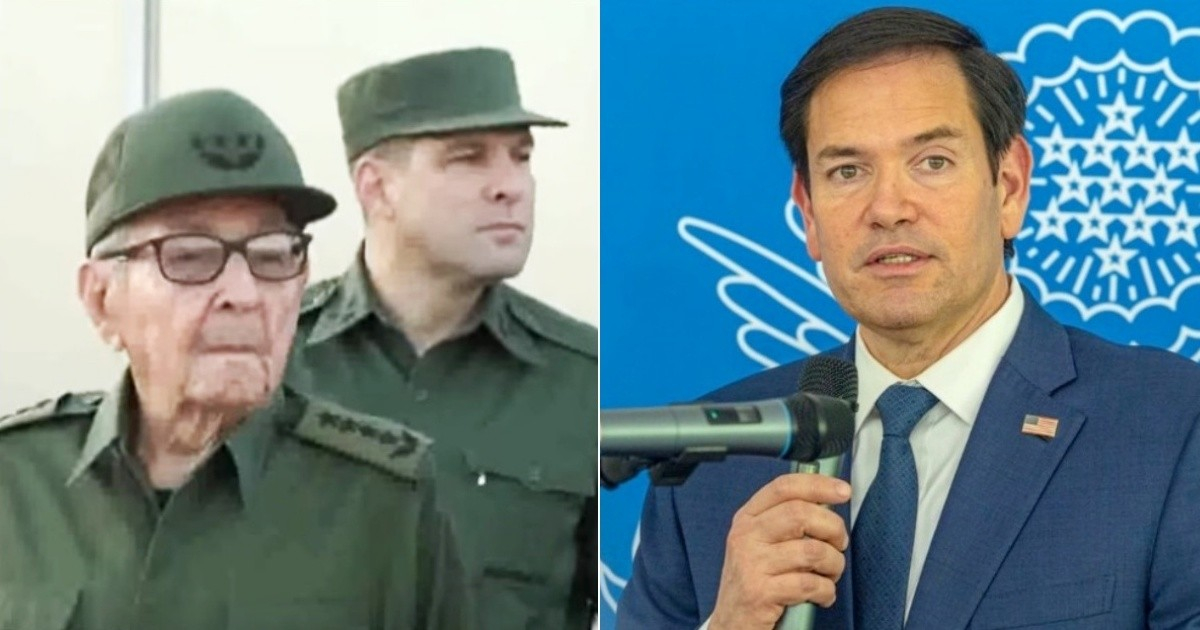
Recent revelations have added new layers to the covert interactions between Washington and Havana, confirming not just the scope of the diplomatic mission sent by Secretary of State Marco Rubio, but also the pressing demands placed on the Cuban regime during an intensifying economic and political crisis.
According to a Fox News report, the U.S. State Department has confirmed that Rubio dispatched a high-level team to negotiate in Havana, marking one of the most notable moves in U.S.-Cuba diplomacy in recent years.
The visit also had symbolic significance: "Last week, a U.S. government plane landed on the island nation for the first time since 2016," underscoring the importance of the mission.
U.S. Sees Opportunity Amid Cuban Crisis
As Cuba grapples with extended blackouts, fuel shortages, and a worsening humanitarian crisis, Washington perceives a strategic opening to exert pressure on the ruling elite. Fox News reports that U.S. officials believe there is potential to effect changes within Cuba's political framework.
"President Trump is committed to seeking a diplomatic solution if possible, but he will not allow the island to collapse and become a significant threat to national security if Cuban leaders are unwilling or unable to act," the report notes, citing official sources.
High Stakes and Diplomatic Demands
The report indicates that Trump is weighing "a range of options, from U.S. military intervention to a U.S.-led regime change," reflecting the high tension surrounding these negotiations.
Raúl Guillermo Rodríguez Castro, known as "El Cangrejo," emerges as a pivotal figure within the regime's power structure, even though he lacks an official position. During the April 10 visit, a senior U.S. official held a separate meeting with him, reinforcing his role as a direct interlocutor in these talks.
During their stay in Havana, the U.S. delegation went beyond protocol, presenting specific demands to the regime, including "internet access" and the release of political prisoners as initial conditions for progressing in any agreement.
The Trump Administration's Firm Stance
The Miami Herald provided crucial insights into the content and tone of these discussions, reporting that U.S. officials warned their Cuban counterparts of a "narrow window to reach a deal." A State Department official quoted by the Herald was explicit: "they have a brief time frame" to implement reforms and advance in releasing political prisoners.
Moreover, a key priority for the Trump administration was emphasized: "The Trump administration remains committed to the release of all political prisoners, including Luis Manuel Otero Alcántara and Maykel Osorbo."
The message was direct: "As President Trump has stated, a new era for Cuba will soon dawn. The Cuban regime should stop playing games while direct talks are underway. They have a small chance to reach an agreement."
Economic Reforms and International Concerns
The Herald also disclosed that concrete proposals were tabled, such as offering free Starlink satellite internet for the entire island and discussing compensation for properties confiscated from U.S. citizens, a historic conflict valued at over $9 billion.
Simultaneously, Washington stressed the need for "significant economic and governance reforms" to attract foreign investment and expand political freedoms. Concerns were also voiced regarding the presence of "foreign intelligence, military, and terrorist groups" in Cuba.
According to the Miami Herald, the discussions were preceded by "months of unofficial exchanges" between the United States and Rodríguez Castro himself, confirming the existence of a parallel negotiation channel.
During the visit, unusual activities were noted: a U.S. Navy MQ-4C Triton surveillance drone flew near Havana, signaling that security elements are also part of the equation.
Cuban Regime's Response
The official Cuban version, however, seeks to downplay tensions. MINREX official Alejandro García del Toro stated that the exchange was "respectful and professional," categorically denying the existence of ultimatums.
"In the context of the meeting, neither side set deadlines nor issued ultimatums," he asserted. From Havana, the emphasis was placed on the energy crisis, attributed to the tightening of U.S. sanctions.
"Lifting the energy blockade against the country was an absolute priority for our delegation," García del Toro declared, describing Washington's measures as an "unjustified punishment."
Amid this scenario, the Cuban regime faces escalating internal and external pressures. While it strives to project an image of control and dialogue, the conditions set by Washington—political prisoner release, economic opening, and freedom guarantees—place the leadership in an uncomfortable position.
Fox News encapsulates the atmosphere surrounding these negotiations: "They heard that Cuba's turn is next."
For now, the process remains shrouded in secrecy, but the pieces that have emerged suggest a far more complex, tense, and decisive negotiation than both sides have publicly admitted.
Key Questions on U.S.-Cuba Negotiations
What was the purpose of the U.S. diplomatic mission to Cuba?
The mission aimed to negotiate with the Cuban regime, presenting specific demands such as internet access and the release of political prisoners, in the context of Cuba's ongoing crisis.
Who is El Cangrejo and why is he important?
Raúl Guillermo Rodríguez Castro, known as "El Cangrejo," is the grandson of Raúl Castro and a key figure within the Cuban regime's power structure, acting as a direct interlocutor in negotiations with the U.S.
What are the potential actions the Trump administration is considering regarding Cuba?
The Trump administration is evaluating options ranging from U.S. military intervention to a U.S.-led regime change, reflecting the high stakes of the negotiations.