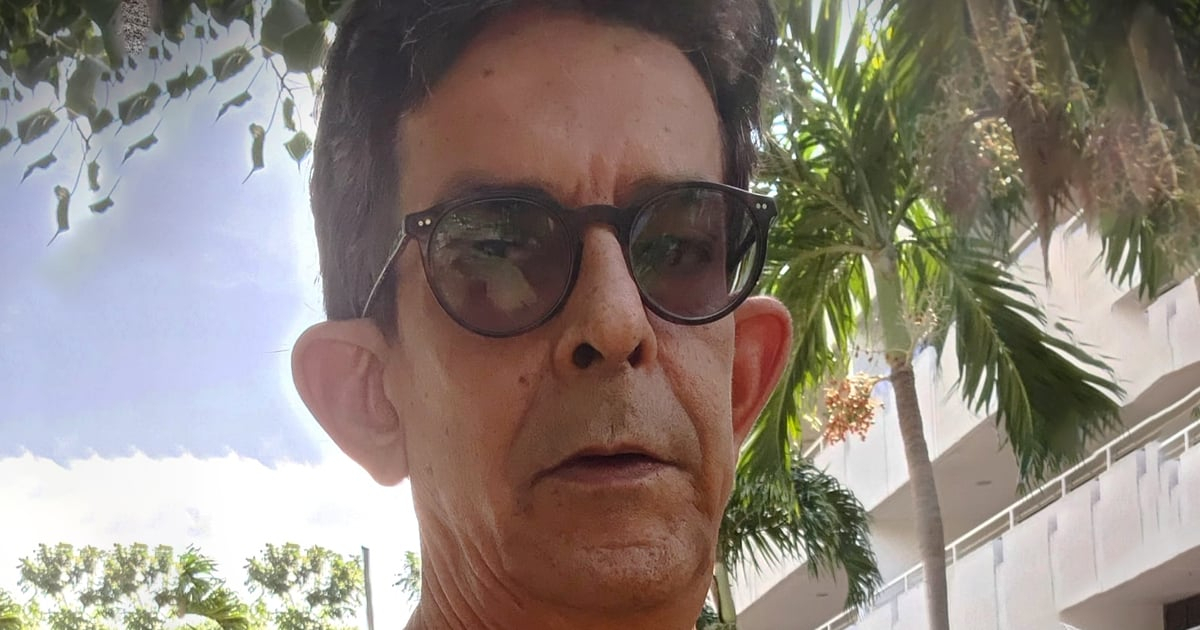
Cuban comedian Ulises Toirac has taken a critical stance against the V International Patria Colloquium, challenging the Cuban regime on its decision to hold political events during such turbulent times. He also made it clear that he will not participate in government campaigns.
On Facebook, Toirac posed the question, "Wouldn't a Patria colloquium be better if it included everyone and aimed for the good of all? Avoid war (and expenses during tough times). A war I don't want. I don't want it. But by holding colloquiums with just 'a part of' the people, I believe it encourages, rather than prevents, conflict."
Amid his remarks, Toirac also sarcastically commented on the temporary improvement in Havana's electricity supply, which conveniently coincided with the days of the colloquium and official events. "Having so much light is giving me the runs," Toirac wrote, echoing the widespread suspicion among Cubans who perceive this as political manipulation of the power grid.
One follower, Teresa Rebollar, supported his sentiment in the comments: "I knew it... so much electricity and an international colloquium (with the same usual faces) happening, it wasn't a coincidence."
Toirac concluded his post with another sarcastic jab, this time at the "My Signature for the Patria" campaign launched by Díaz-Canel on April 19 to gather support for the declaration "Girón is today and forever." He quipped, "I don't know... I'm exhausted, skeptical, without hope that they will even acknowledge the severity. (...) Ah... The chikungunya won't let me sign," referring to the health system crisis and the pain caused by the disease affecting thousands of Cubans.
The signature campaign was also publicly rejected by opposition figures such as Manuel Cuesta Morúa, activist José Daniel Ferrer, Lara Crofs, and intellectual Miryorly García, who urged people not to join the government's mobilization.
This post marks Toirac's peak of frustration after a week of continuous criticism: On April 16, he labeled the official event in Vedado as a "waste of resources"; on April 15, he responded to Díaz-Canel's interview with NBC by pointing out that 1.25 million Cubans emigrated between 2021 and 2024; and on April 13, he compared the dialogue between the United States and Cuba to a meeting between two distrustful animals.
One supporter, José Álvarez, summed up the sentiments of many Cubans: "The common people are the only true victims of both the external and internal blockades. No matter how tough things get, the fat cats running the show will always have electricity and luxuries for themselves and their families."
The V International Patria Colloquium, held from April 16 to 18 in Havana, gathered 154 international delegates from 23 countries and over 3,000 national participants. It was closed by Miguel Díaz-Canel.
Key Insights on Toirac's Criticism of the Patria Colloquium
Why did Ulises Toirac criticize the Patria Colloquium?
Ulises Toirac criticized the Patria Colloquium for being a political event held during difficult times in Cuba, arguing that it excludes many and might encourage conflict rather than prevent it.
What was Toirac's view on the temporary improvement in Havana's electricity supply?
Toirac sarcastically suggested that the improved electricity supply in Havana during the colloquium was a political manipulation to coincide with the event, reflecting general distrust among Cubans.
How did others respond to Toirac's post?
Many supported Toirac's views, with followers like Teresa Rebollar agreeing that the timing of the improved electricity was not coincidental, and others like José Álvarez highlighting the ongoing struggles of ordinary Cubans.